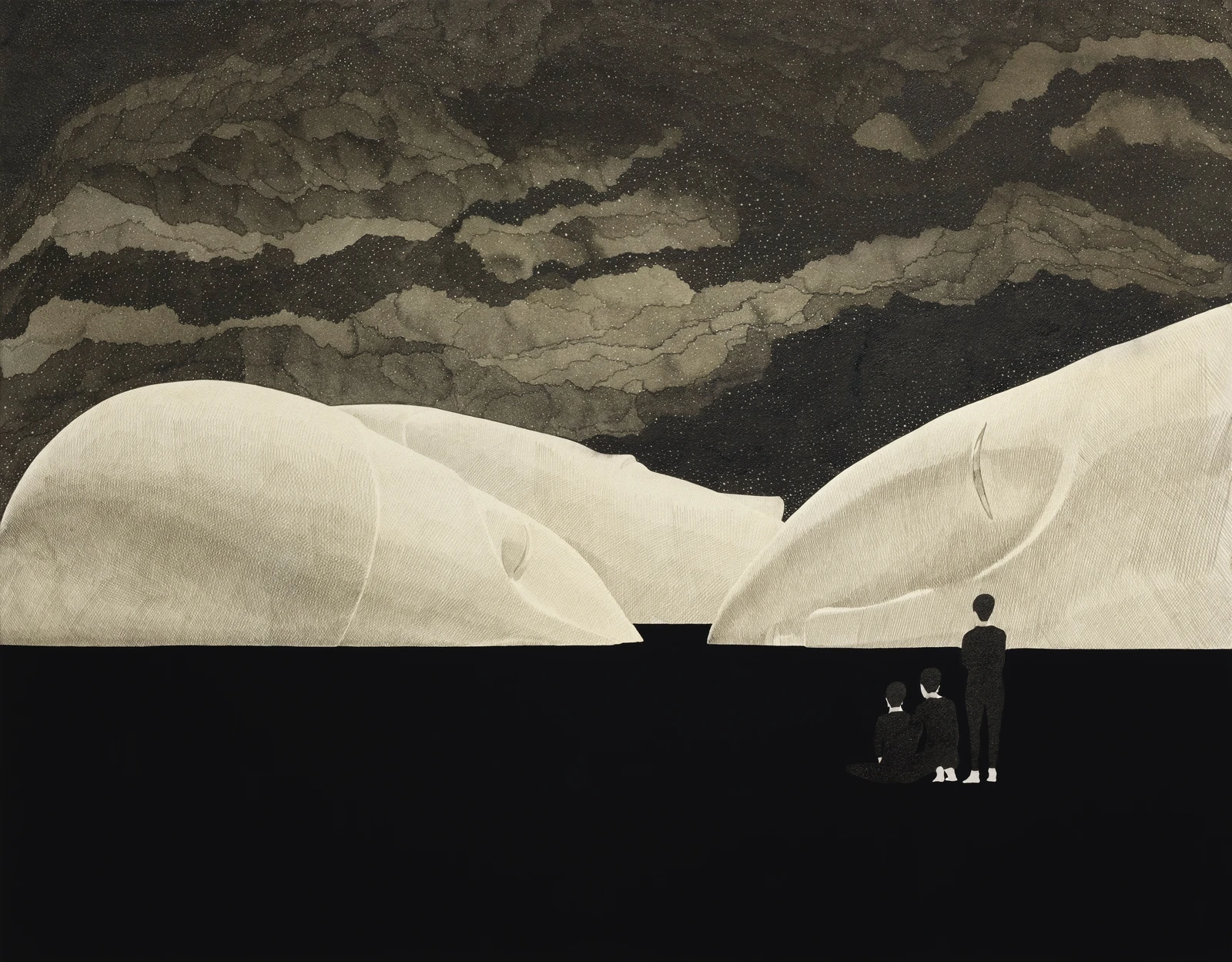
Tamara Kvesitadze’s work moves within a constant balance of opposites: stillness and motion, presence and absence, matter and body. Her sculptures are not merely objects to be contemplated but intimate encounters, thresholds connecting the subconscious and the conscious. Raised in a context that imposed silence and immobility, she chose to respond through gesture and transformation. Her kinetic sculptures move in infinite cycles: they open, can be crossed, dissolve, and reassemble, creating spaces that remain alive and in perpetual motion. For Tamara, the body is more than a surface; it is an archive of memory, wounds, and resilience. Her forms shift and recompose, becoming mirrors in which we can find or lose ourselves. In a world that seeks conclusions, Tamara’s works invite us to remain within the flow, suspended on that subtle line between clarity and ambiguity.


Tamara, your work merges art, engineering, and construction to explore movement as a profound expressive language. Your sculptures seem to pass through states, identities, transformations, as if the body is never truly still. Where does this urgency to tell stories through movement come from?
The phrase "everything flows" comes from an ancient Greek philosophy. This philosophy emphasized that change and movement are fundamental aspects of reality: nothing stays the same; everything is in a state of flux. I grew up in a patriarchal society where women carried the invisible weight of a system built by and for men. Movement became my way of resisting stillness, resisting silence, submission, and stagnation. My sculptures embody an urgency to shift things, to open up spaces that were once closed.
Before each work, is there an idea, a sketch, an intuition? How does the first movement, the one that will become sculpture, take shape for you?
The first impulse is mostly emotional, an inner pressure, a contradiction I can’t resolve in words. From that, a sketch might appear, or a model, or simply a thought. Intuition plays a big role. The idea of kinetic sculpture never comes from the thought of simply adding movement to a static sculpture.
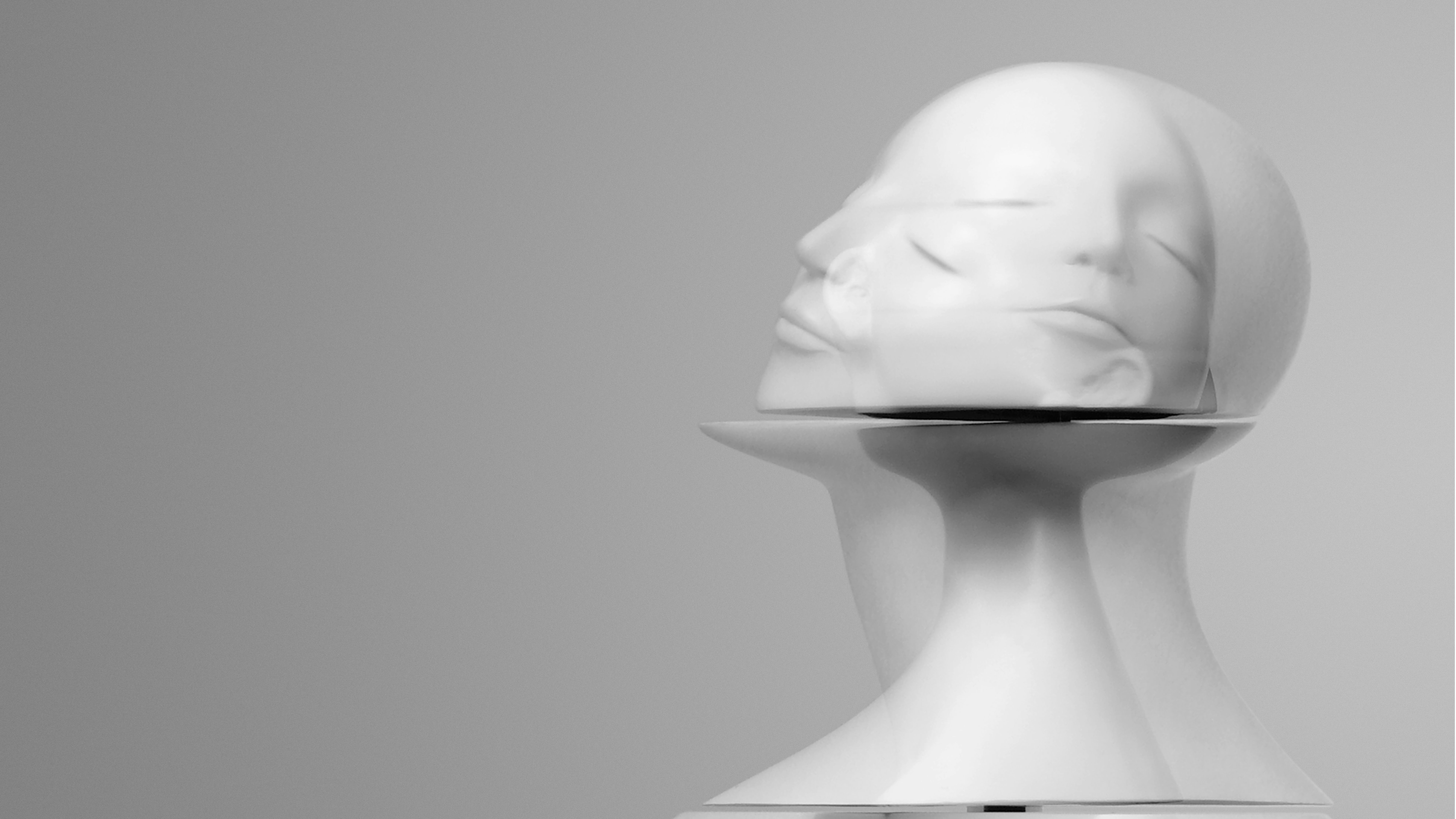
The kinetic sculpture “Man & Woman” is a silent choreography that repeats endlessly: two figures approach, merge, pass through each other, and separate. It speaks of love, but also of distance, tension, and impossibility. How did this powerful piece come to life? Is it more a celebration of union or a reflection on loss?
It’s both. This sculpture was created for the Georgian Pavilion at the Venice Biennale in 2011. I reduced the figures to their bare essentials: skeletons of form so that their gestures became universal. They pass through each other endlessly. It is a reflection of the ebb and flow of human relationships, merging, separating, reconnecting. It is about love, yes, but also about the impossibility of total unity. In Georgia, the sculpture “Man & Woman” is also known as “Ali and Nino”. "Ali and Nino" is a novel written by Kurban Said. It tells the love story of a Muslim boy and a Christian girl.
What does the body represent in your work?
The body is a vessel of memory. It’s never just a surface; it holds trauma, culture, emotion, resistance. In my work, bodies are often opened, split and moving.


The new issue of Shot explores the duality between reality and fiction, between what is seen and what escapes vision. Your works often seem to inhabit that very edge, where form is both presence and disappearance. What does it mean for you to truly see? And what do you choose, instead, to keep hidden?
To truly see is to sense what lies beneath the surface. It can mean knowing that you are on the right side. We all have something hidden. Sometimes we are brave enough to reveal these hidden things; at other times, we show them unconsciously or bury them deep within ourselves. Sometimes what is hidden carries more weight than what is visible. My artworks often exist at that edge, between visibility and disappearance.
What kind of relationship do you envision between the work and the viewer, the one who crosses it with their gaze?
I don’t see my sculptures as objects to be consumed but as encounters. The viewer brings their own history, fears, and longings, and meets a figure that is perhaps dissolving or reassembling. It’s a silent dialogue. I hope for more than observation; I hope for pause, for presence, for recognition.
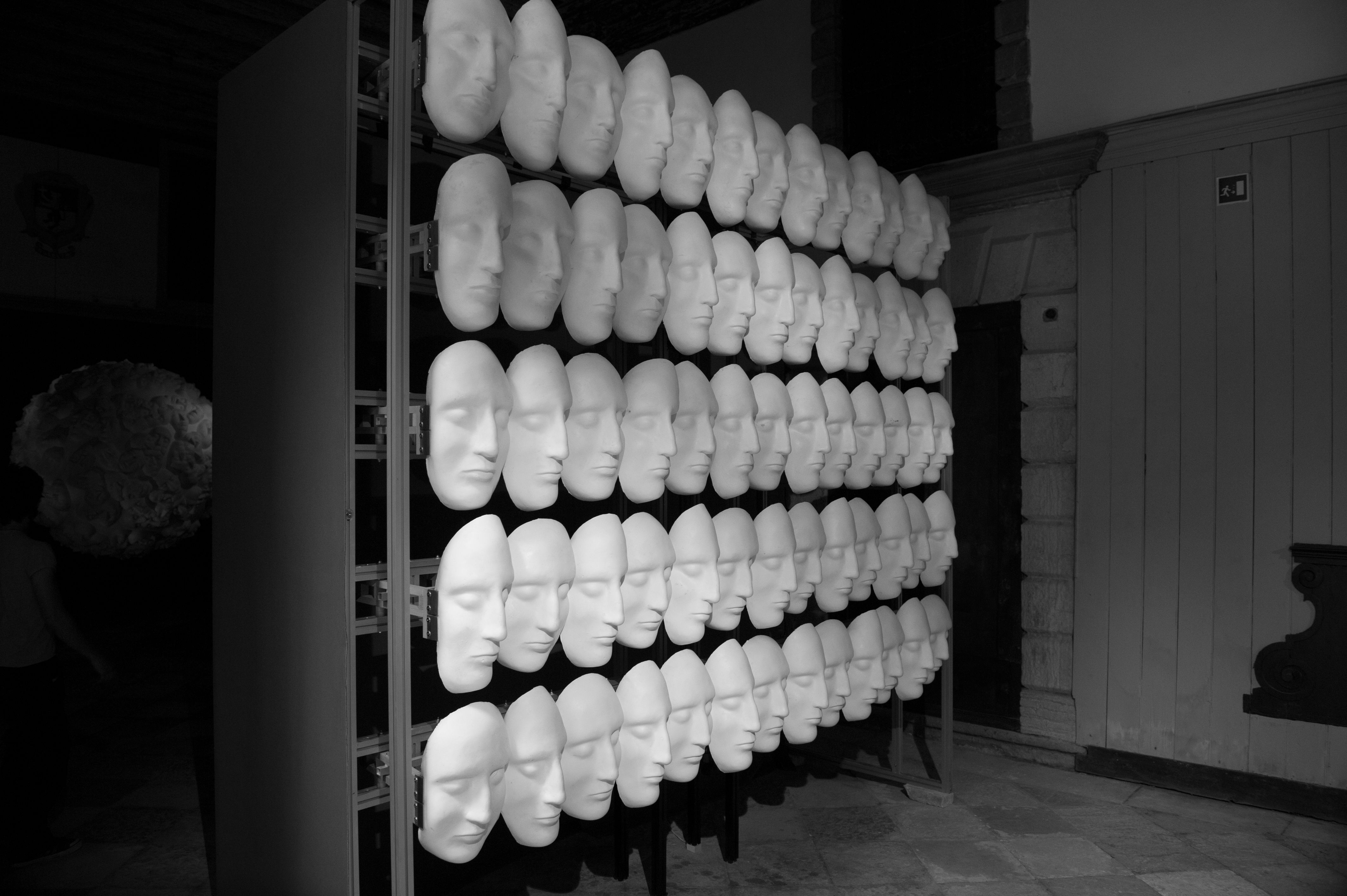
White, silent, enigmatic faces. In “F = F”, identity seems suspended, fragmented. What do these figures represent to you? And what were you interested in exploring through these forms, so quiet, yet so present?
It is a political work presented in a symbolic way. When something grows larger, something else somewhere can diminish. They are fragments of identity, of memory, neither complete nor stable. I wanted to explore a kind of presence that is quiet but undeniable. These faces don’t offer specific emotions or narratives; instead, they become mirrors. Viewers can find themselves in them, or lose themselves. That ambiguity is what interests me.
Are your sculptures a translation of the subconscious or an escape from the conscious?
They are bridges between the two. I often begin with something buried: an emotion, a fear, a memory, and bring it into the world through form. It’s not about escaping consciousness but transforming it. My work lives in that in-between space, where instinct and reflection meet.
You’ve said that since childhood, you’ve been drawn to what is infinite, what is in motion. Today, in a world obsessed with speed and closed forms, what does it mean to you to create something that never stops?
It’s an act of resistance. My sculptures don’t offer closure; they loop, they continue, they never end. In a time when everything is about results and finality, I want to create something open, continuous, unresolved. Infinity is the hope that nothing is fixed, and change is always possible.
Will the future of your work still revolve around the body and movement, or is something beginning to shift?
At this stage of my life, something has already started to change. The concept of the body and movement may remain in my work in a transformed way, or it may even completely disappear. These reflections form part of my upcoming exhibition in Berlin at KORNFELD Galerie, Under Shadows, a collaboration with Chinese artist Shunxiang Hu, co-curated by Tereza de Arruda. Both of us come from contexts where identity has been shaped, and often fractured by systems of power, silence, and expectation. Living and working together in Berlin, our dialogue took on visual form.