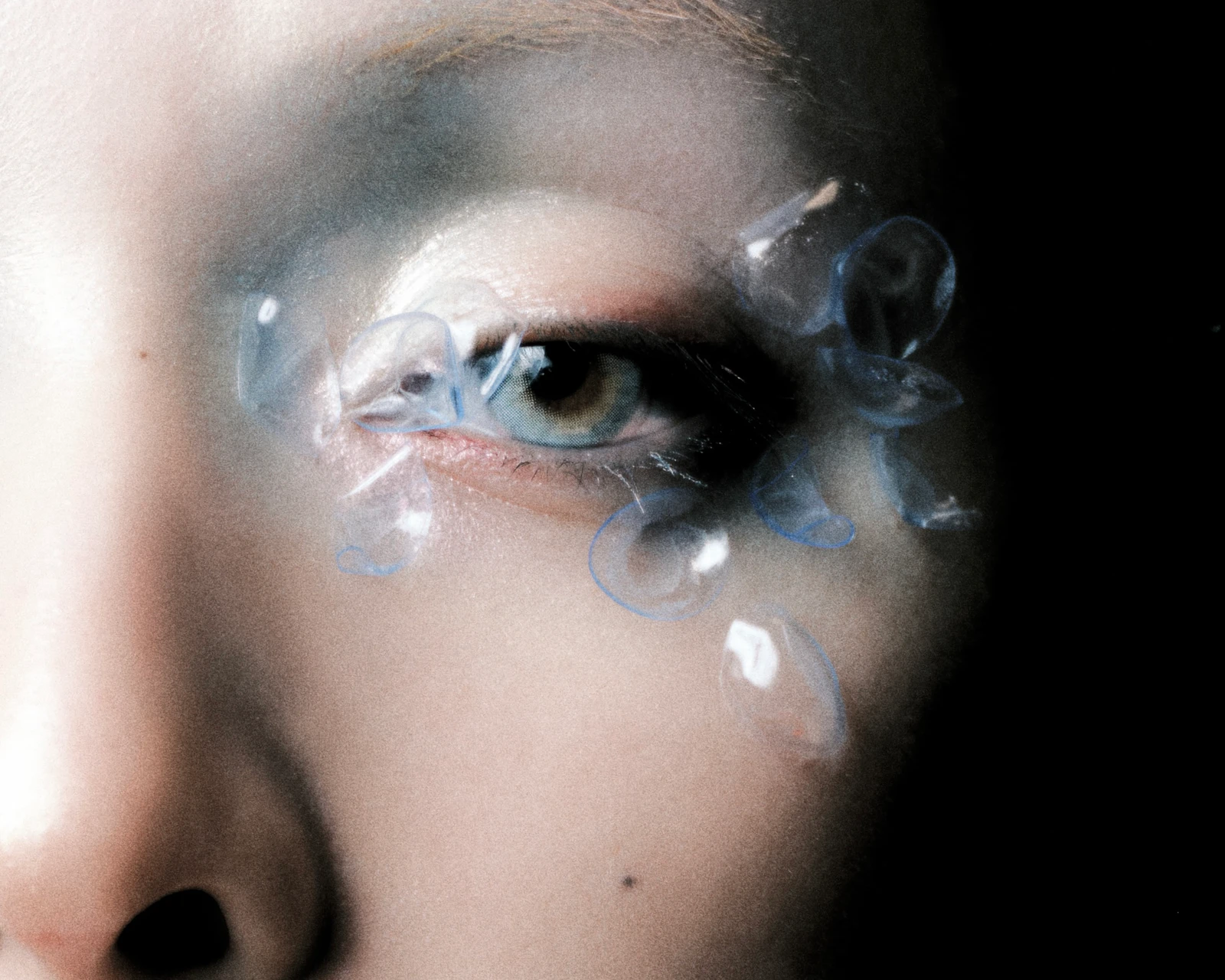
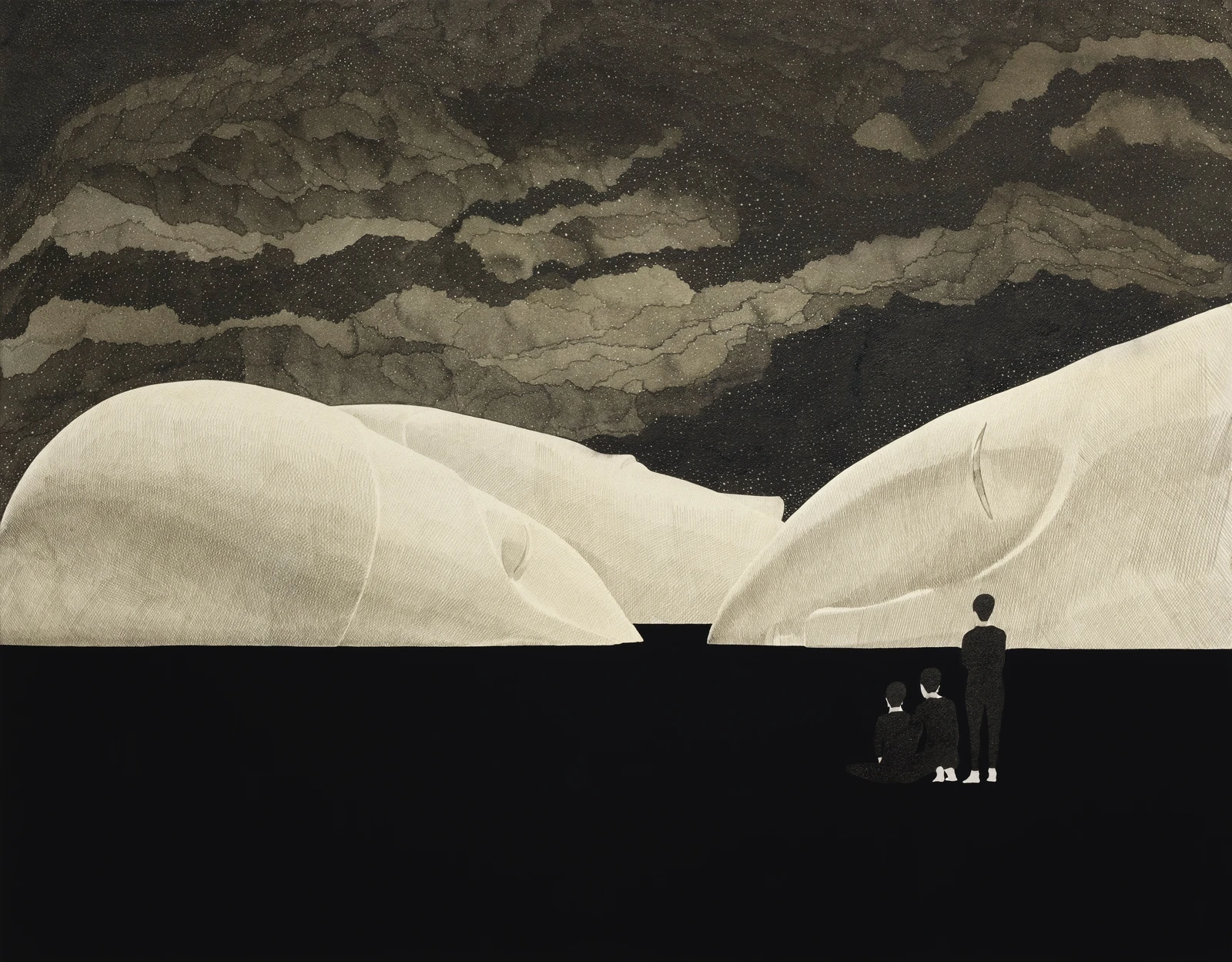
Osman’s gaze is a silent collision between ancient echoes and contemporary tensions, a search for stories that move beneath the surface of light and shadow. His practice unfolds in the layered dance between long exposures and the movement within each frame, where time does not freeze but stretches, revealing invisible narratives held within a single shot. His approach to photography is an act of breath and suspension, a ritual where light meets movement and illusion begins to take form. For Osman, photography is not about capturing beauty alone, but about building atmospheres and creating tension.


Osman, when did you first realize that photography would become your primary form of expression? And how has your artistic journey evolved since then, especially considering that set design and installations are now part of your work as well?
Growing up in a family with a background in cinema was a big advantage for me. Many members of my family work in the film industry, so visual storytelling has always been part of my life. I first encountered the camera as a child, during a period when I was acting. After that, I spent some time immersed in the Sufi tradition-I practiced as a whirling dervish, and the physical and spiritual depth of that ritual left a strong impression on me. For many years, I focused on that form of performance art. In my twenties, I reconnected with photography. I enjoy using long exposure in my photos because it feels like a reflection of the inner movement experienced during the whirling ritual. Sometimes I observe that movement from an external, centered gaze; other times, it feels like I'm stationary on the inside, watching the outside move. My artistic journey is shaped by the people, events, and moments I encounter. I reinterpret those influences through my own emotional lens. I see myself as someone who is always open to learning and growth. I love discovering new things, exploring different disciplines, and blending them into my own visual language. That's why the concept of "the journey" means so much to me: being on the road both physically and mentally, always curious, always evolving.
Your work is heavily inspired by ancient history and culture. What draws you to the past, and how does that past speak to the present in your images?
Ancient history has always fascinated me. I believe that during those times, people's minds were more connected to the spirit. Cultural events and symbols often reappear in my visual world as metaphors. Interpreting a past event or idea with the help of today's creatives opens up new perspectives for me. It's like opening a window from the present into the past. Each time, there's a new possibility, another story waiting to be told.


In your editorial ‘Shadowplay,’ the color red dominates many of the visuals, creating a strong sense of tension. What sparked that idea, and what did you aim to evoke?
Red has always felt like an inner eruption to me. In ‘Shadowplay’, the red represented emotions that were being held in and finally spilling out. I intentionally used harsh lighting and treated the shadows like characters themselves. Even though everything looked very controlled, there was an underlying sense of chaos. I didn't want the viewer to just see the beauty, I wanted them to feel the tension too. ‘Shadowplay’ is one of the works that best reflects my visual approach. The dominance of red represents a state of being within contradiction. We all move through the day with different energies, and I believe every emotional state carries its own color. Red is the color of the root chakra, Muladhara, it symbolizes survival, safety, and grounding. But it also shifts perception: sometimes objects appear as silhouettes, sometimes clarity fades into blur. That's why, in ‘Shadowplay’, red was more than just a color, it carried the energy of the story. I don't use red in every piece, but in certain narratives, I love integrating it intensely, depending on the rhythm. Because sometimes, the feeling comes before the image and red has a way of carrying that feeling straight to the viewer.
When you start a new project, where do you begin? And how much space do you allow for surprises or even mistakes in your creative process?
I have a personality that enjoys taking risks and learning along the way. I usually begin a project with a single word. I collect the emotional states that this word brings up in me, and then follow the paths that it creates. The process always starts intuitively but becomes more structured over time. I don't enjoy making mistakes, but I'm not afraid of them either. Every mistake helps me make better decisions the next time. Life itself is unpredictable, so facing surprises and errors in creative work just makes me more experienced. These moments add depth to the process, they make it more alive, more real.


What kind of emotional or intellectual response do you hope to evoke in people who engage with your work?
I'm still developing my visual language. I genuinely enjoy finding inspiration, sometimes it comes from a film I watch, a paragraph I read, or even a photo someone took as a keepsake. These encounters often transform into new stories for me. But they're also hard to describe when you try to explain them, the feeling tends to fade. Still, when one image meets another point of view, something happens there, an opening for inspiration. That's the kind of moment I hope to create in the viewer. A feeling they may not fully define, but somehow recognize. Something that quietly matches with a part of them. I think that's where the real connection begins.
What’s next for Osman Özel?
I think the journey itself is what’s next. I’m always in motion, both physically and creatively. Lately, I’ve been focused on refining my visual language: simplifying, slowing down, and allowing space for emotion and silence. I’m interested in stories that go beyond aesthetics, ones that touch something unspoken, something deeply human. There are a few new projects on the horizon that bring photography, performance, and installation together, blending disciplines to create immersive visual experiences. I’m also exploring more horizontal compositions in my work, leaning into a cinematic rhythm that mirrors how we move through the world. What’s next is unknown, and that’s the most inspiring part. I’m just trying to stay open, curious, and committed to telling stories that feel honest.