SHOT | Article Odile Decq

Odile Decq
Odile Decq Shot Magazine Interview Issue 14 Architecture
0:00
--:--

Odile Decq

Dare to Dream

By taking the discipline of architecture to its creative extremes, Odile Decq is renowned for her whimsical and cutting-edge projects that attempt to reimagine space and what is possible to create within this. As an architect, urban planner and academic, Odile Decq merges her bold creative language with the surrounding environment to create buildings that radically reconceptualise the relationships between human life and space. Particularly in the male dominated field of architecture, she has broken boundaries both due to her creative intuition and her struggle as a woman in this environment, thus proving to the younger generation that daring to dream is, indeed, the only way to change reality for the better. In this interview, we have the pleasure of speaking to the founder of Studio Odile Decq.

Odile Decq Shot Magazine Interview Issue 14 Architecture

How did your career as an architect begin and what inspired you most? 

I started just after my diploma in the early 80s, I was an urban planner in France and I was used to receiving comments from clients, politicians and other people I met saying they were surprised to see a young woman, as they were not used to seeing them in architecture. They sometimes asked me why I didn't work for an architect, in other words: why I wasn’t working for a man, although I was an architect myself. I had to fight to express who I was and why I was myself. But I succeeded. It took a little time, but step by step I became recognised as an architect. I started to be truly appreciated by the end of the 80s, when I won a competition for a project I built very quickly. I received awards all over the world for this building, my international recognition started to grow and, at this time, the French recognised me too.

What are the greatest difficulties you have found in your experience as a woman architect in a male dominated industry?

I do what I feel, what I intuitively want, and maybe as I have never worked for an architect, I don't have the usual way of doing things. For people, it was quite strange to see my appearance was different but, at the same time, it was helping me be different, do differently, be recognised because I was singular and individual, and not copying others. But it was a fight. I think it is still a fight for young women today. It's not easy, even after nearly 40 years, as it is still problematic to be a young woman architect. I know that this is the case because it is still a very male dominated profession. Even if more than 60% of architecture students today are women, only 10% of provision of firms is managed by women. Nearly 30% of women architects are registered, but only 10% are managing their own firms. These are very low numbers: this clearly is still a male dominated industry.
Odile Decq Shot Magazine Interview Issue 14 Architecture

Where does the intersection between the practical work of an architect and the creative work of an artist lie?

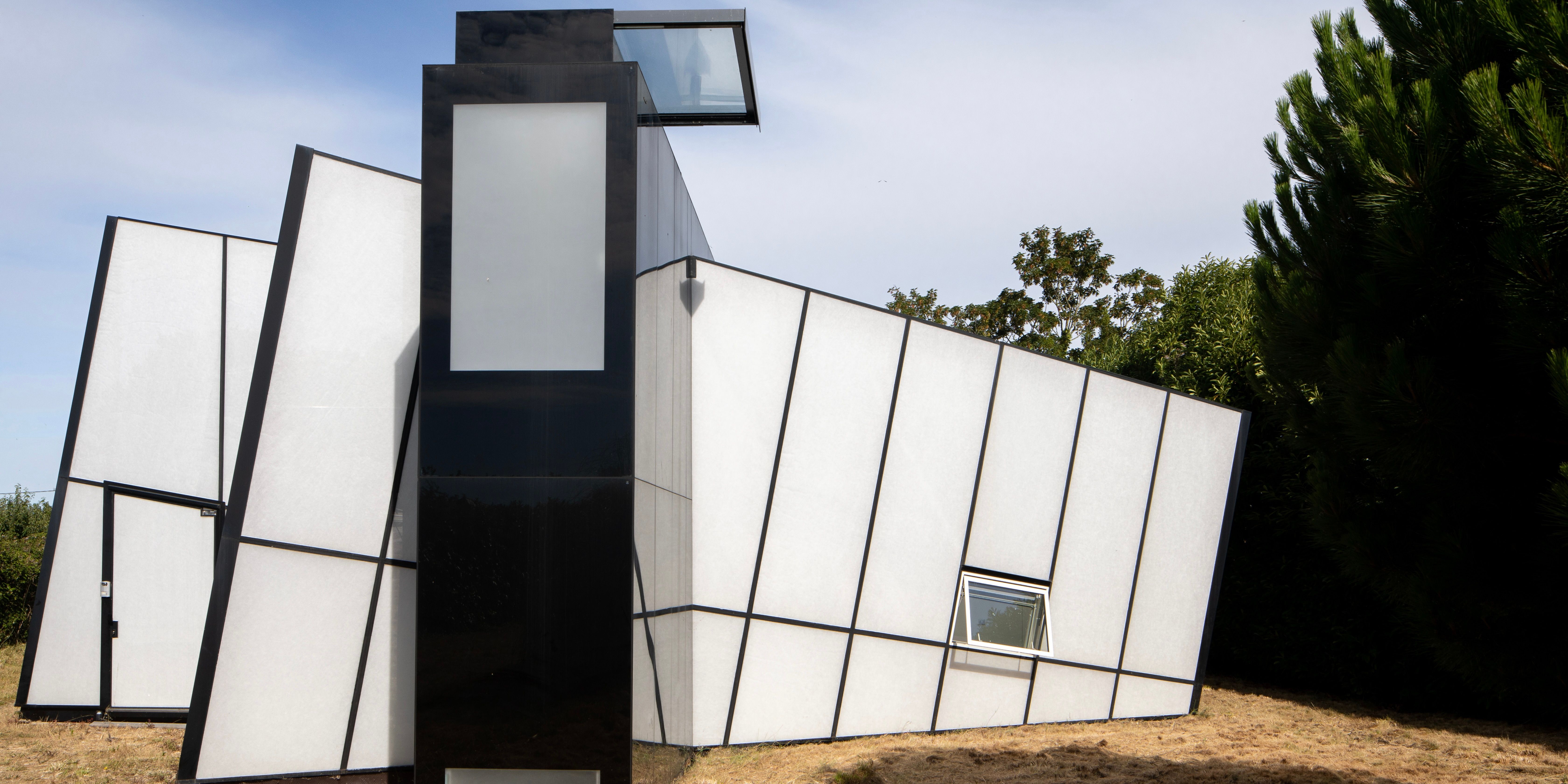
It is very difficult to understand where it is, because there is an artistic way of doing architecture. But this is not the same. This is why now I do more and more installation art to experiment in this field and bring more possibilities into architecture. In architecture you mostly work with a lot of constraints which you must manage in order to express what you want. It's not always possible to do everything or push further. But when you do an installation, you can express whatever you want. So for me it is a balance between these: it's helping me be more personal, do art and be more concerned with expressing art in architecture. I don't really see where the limit lies between them because this limit is fluid.

What is space, to you?

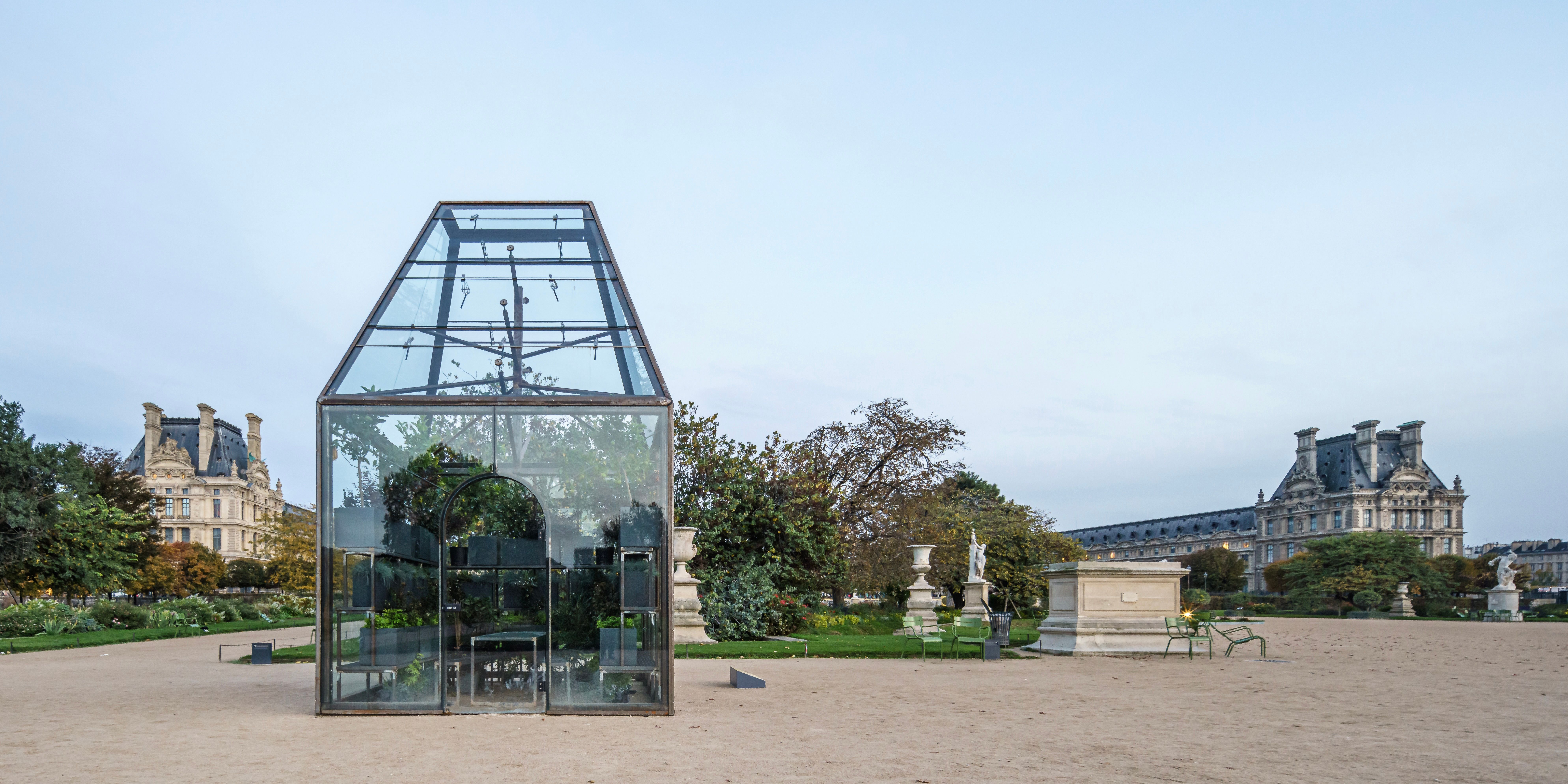
Space in architecture is somewhere relative to the human body. I love to make the body move, to provoke energy into a space. But sometimes you have to meditate on how you want to express the place of the body in space. This involves the limit, height, dimensionality, light, materiality, colour of a space: everything must be considered to make the human body express or move itself, but also feel comfortable. This is really important because the space of architecture is for providing people somewhere they feel comfortable and forget the hardness of their outer life. To me, this is not just theory: it's something that is really intuitive, organic, made for the body. I always feel myself into the space and try to make it so I can feel comfortable inside. When I have to describe our tasks to the people who work with me, I begin by explaining how we will proceed and what we must fulfil but, at the same time, how we can provide freedom and possibilities for people to come.
Odile Decq Shot Magazine Interview Issue 14 Architecture

If we view architecture as narrative, what is traditional architecture telling us about human life?

If you think about the ancient Greek forum, it was invented as an urban space for people to meet. I think that you must have the same generosity for humans when you design an interior, exterior or urban space, although the constraints, the conditions, the techniques are different. Yet you have to have the same generosity towards the human. Afterwards, you have to think about the evolution of society, of ways its ways of living and inhabiting. The evolution of architecture has evolved because of the evolution of society and ways of living. So this is not a question of theory. This is a question of how people live, what their social needs are, how they behave together. If you think about the bourgeois or the aristocrats or the poor, they have different habits: they had different uses of spaces and their building were reflecting that. Today we are living differently from the past, and our buildings are reflecting this.

What is the recklessness of being an architect who is pushing boundaries?

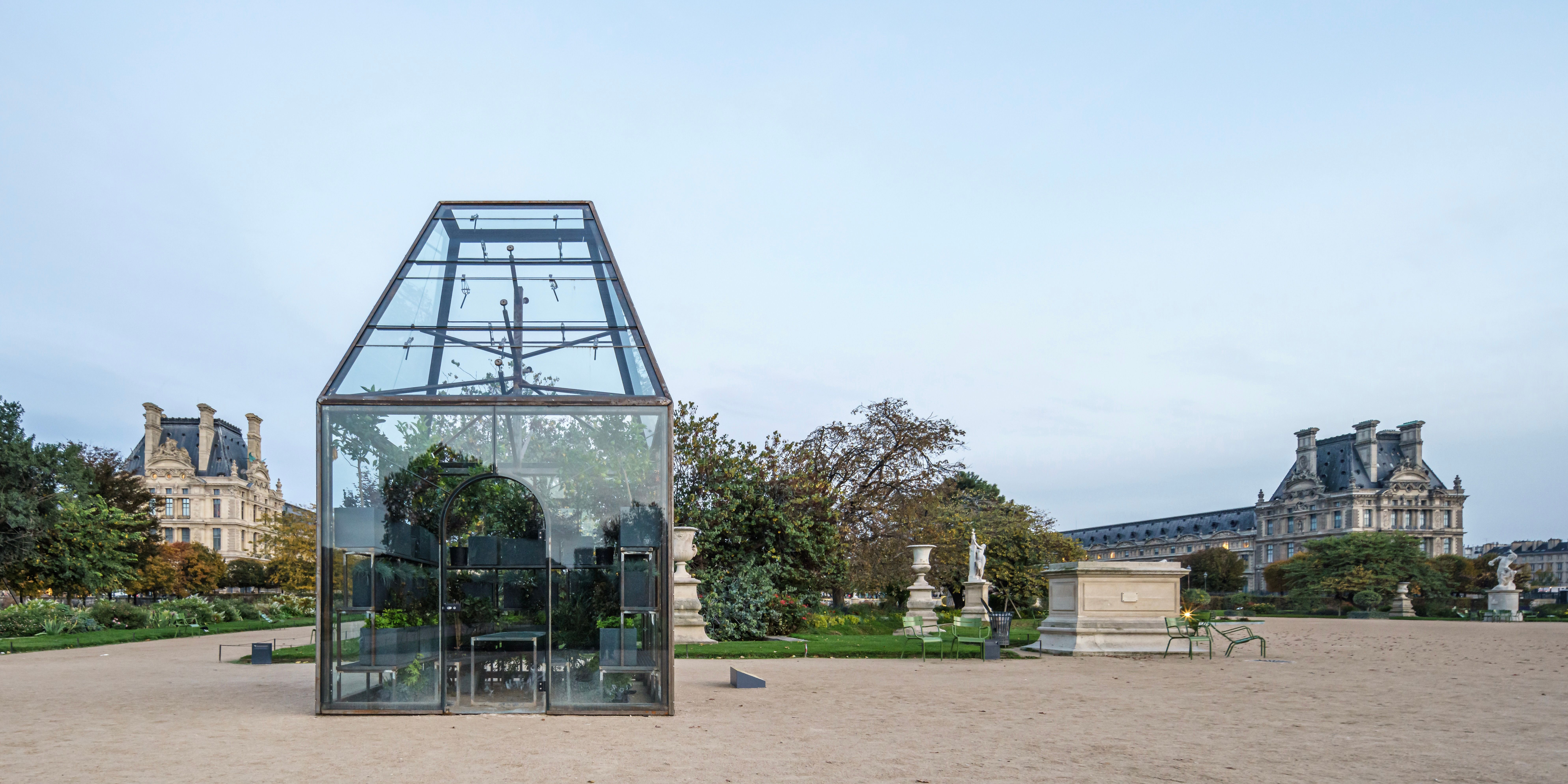
I never speak about breaking the model, but I push my students to go further, go beyond and not limit their view with what they are used to learning from institutions. If you don't go beyond, you are not looking at what will happen next. Especially when you are an architect, you are not building or designing something for yesterday. You are not designing for today either, because it would take too long to do so. You are doing something for the future. For this reason, you have to understand where a society is heading. For example, AI, virtual reality, the economy and other social problems today are all affecting your way of thinking and one must be able to imagine for the future. You have to open your mind to be curious about the world and understand what you can offer that could be beneficial for tomorrow. At the same time, you need to have hope for the future. This is why I always say that I'm jealous of my students, because they have to dream, invent, create, design for the new century. My generation was starting to work at the beginning of the 80s, we were born after the Second World War in a society where things were changing very quickly and we were in a hurry to push for change. Today, something has been broken and we have to reinvent, rethink, dream the future. I think that dreaming is important. Nobody dares to dream today, but I think that you need to invent and put your brain in relation with the future. They have this duty today. It's giving them hope for their future.
Odile Decq Shot Magazine Interview Issue 14 Architecture

What is womanhood, to you?

I don't know, because I have never lived as a man. I know how I behave and I act, but I don't know if it's different for others. I once said that the problem of being a woman in a field like this is not the problem of you, as a woman. It is the problem of the men that are in front of you, because they are not used to having women in the same positions or level as them. So it is the men that have a problem with us, not us with them, as we simply want to talk to them as equals. There is also another problem that I sense in the world today: the possibilities for women are shrinking again in many countries and places. This is a shame, because I come from a generation of people who were thinking that everything would change for the best and there would be more freedom, more openness for women. In many places these opportunities are now shrinking once more. And this is the problem. This is why we have to continue to fight and to show that we are women and we can do it.

More interesting

Sepideh Salehi Shot Magazine Interview Issue 14

Sepideh Salehi

As a brave, bold and elegant artist, Sepideh Salehi has been merging various visual languages and processes to explore the notions of home, family and cultural history. Born in Teheran, Iran, Sepideh’s artwork is profoundly soaked in her experience as a young Iranian woman during the authoritarian regime of the Islamic state, which has institutionalised the segregation of women and men, to this day, in what is now known as gender apartheid. The concepts of covering up, hiding and privacy have thus underpinned the layers of collage, photography, painting, printmaking, calligraphy that the artist has combined to explore the relationship between the inner and outer vision of female identity. As well as this, Sepideh is interested in exploring how one’s environment, memories, belonging may be intertwined with their personal narratives to reimagine realities and propose new visions. In the obscured faces of her photographic collages, such as the iconic Mohr Portrait, the connection between identity, landscape and unknown is dissected and reconfigured to understand how women are wrongly perceived in their society and to question how the female self-perception is conditioned by its environment. As a sign of protest, her faces are covered, unrevealed, obscured from the viewer to allow for their identity to mature in secret. For this reason, Sepideh merges post-1979 Teheran cultural history with elements of her own past, in order to depict the struggles of female oppression against the injustice of abusive political regime, and to bring together a new, unknown gaze beneath the layers of one’s identity.

Mary Sibande

Mary Sibande is a multidisciplinary artist from South Africa, who has dedicated much of her creative practice to unearthing her personal, as well as cultural history. Born and raised during the last decade of the apartheid era in South Africa, her creative practice was profoundly conditioned by the important historical changes she experienced first-hand in the years prior and following the segregation of black people on behalf of the country’s white minority government. Governed by the theme of colour and its emotional connotations, the artist’s works have travelled through phases and continue to explore the possibilities that colour offers as an expression of both racial and emotional meaning. Through her sculptures and photography, Mary Sibande has delved into the history of her own female forebearers to bring back to the surface images of a collective history of black female bodies that was previously buried beneath layers of discrimination, unfreedom and injustice. By weaving these threads together, she has brought these women’s lost perspectives, abandoned ambitions and forgotten narratives to the present, in a way that will be able to also inform the fabric of the future.

Kimiko Yoshida Shot Magazine Interview Issue 14

Kimiko Yoshida

Hiding beneath masks of identity, searching for absence, circulating in the layers of time, culture, custom: Kimiko Yoshida explores the nature of being oneself, whilst letting go of all that is attached to this notion. By covering her gaze with drapes, masks or emblems, she becomes one with her background and the elements adorning her being, thus learning to question what it means to be an individual, to dress oneself with an identity. Her self-portraits serve to present a collection of photographs where the environment and subject are always the same, yet constantly portray something alien to itself. There is in fact a gap between the representation and signification of these images, where identity is captured as a static object that is able to transform, deflect, convert or recast itself in various ways, to the point of becoming no longer recognisable. Born in Tokyo, Kimiko was formed in Japan until 1995, when she decided to keep pursuing her academic career as artist and photographer in Paris. Through her examination of identity and her depictions of its illusion, Kimiko is able to raise essential questions around the female identity and, in the words of Rimbaud, “find strange, unfathomable, repugnant, delicious things”. Indeed by letting go of the dominance of our ego, we will take these things in, we will understand.

Cristina Mittermeier Shot Magazine Interview Issue 14

Cristina Mittermeier

The dusky pink trio of feeding flamingos, the ethereal vision of a lonely humpback whale or the current of a colourful shoal of fish are only some of the rich collection of photographs that Cristina “Mitty” Mittermeier has caught and brought back to land from the depths of the natural world. With her talent and profound ecological sensibility, Cristina has become one of the leading nature photographer of our day and has co-founded SeaLegacy, a global agency for the ocean aiming to bring together climate action and sustainable solutions by supporting scientific endeavours and conservation strategies. In her explorations of both the natural and human realms, Cristina attempts to bridge these worlds through her photography, in an attempt to instil awe and convey the beauty of ecologies that are often distant and unseen. In this interview, she tells us about how her relationship to the natural environment has developed, how her journey as a woman has affected her works, and how we must understand how much is enough in order to find harmony with our wounded and depleted earth. It all starts with a sense of enough.

Mary Mattingly Shot Magazine Interview Issue 13

Mary Mattingly

As our environment is becoming more and more tainted with the remnantsof our consumption, it is essential to take a step back to reconsider how we engage with the objects we possess, remembering the journey that not only precedes them, but also will follow once they are outwith our control. Do objects come with responsibility? This is the question which defines our relationship with the material world and lingers behind the artistic devotion of Mary Mattingly, a visual artist based in Brooklyn, NYC. Her works range through photography, collaborative sculpture, performance and land art, expressed in some of her collective projects such as Swale, an edible landscape floating on a barge in New York for fresh food foraging; Public Water, a public artwork and campaign on the city’s water supply chain; or the Waterpod Project, exploring the possibility of nomadic and mobile water-communities. The building of these independent living systems repre-sents a need to reimagine the ways we will live together as a community in the present and future. Along with these urban ‘ecosystems’, Mattingly has also thoroughly explored the themes of sustainability, possession and waste, tracing the maps which underlie the life of objects that surround us every day. Through her series ‘Nomadographies and Wearable Homes’ and ‘House and Universe’, she was able to capture the nature of humankind as a constituent part of the environment, constantly roaming and transforming with it. Through the contrast of local and non-local spaces, whose interdependency is ever so evident in supply and waste chains, Mattingly presents an allegorical collection of photographs embracing the connection between climate disasters and consumption. In 2013, she decided to bundle almost all of the objects she possessed in seven large bundles which were pushed or rolled through the streets of New York. Afterwards, she began a digital archive of all these objects, emphasising their history before parting with them: from their extraction from the earth, to their journey into the hands of makers and distributors, to the impact of chemicals dispersed in the air and water. In her own words, each object is embedded with trauma. Though this practice, she wished to shed light not only on the weight that reduces our mobility, but also on the material relationships within the objects themselves and their impact on others. In her photographs, it becomes clear how the answer to the question is yes: we are responsible for our waste of time and the Sisyphean burden of objects we collect throughout our lives, but we are also able to take the lead and cultivate our lightness.

Maïmouna Guerresi Shot Magazine Interview Issue 14

Maïmouna Guerresi

In her works, the Italian-Senegalese artist Maïmouna Guerresi portrays the sacred nature of humanity by merging influences from her own personal ancestry and a plurality of cultures. Particularly inspired by Islam and Sufi mysticism, Maïmouna draws from these philosophies to represent messages that are universal in nature, as they appeal to human spirituality devoid of any particular localism, through bare backgrounds, giant figures and plain robes. With simple beauty, she delves into the realm of religion and mystique accompanied by an elegant and graceful language which she developed throughout her artistic development in the Veneto region of Italy. In her works, Maïmouna elevates the human condition to one of spiritual being, of symbolic meaning, of profound understanding.

Hanan Roz Shot Magazine Interview Issue 14 Firetti Contemporary

Hanan Roz

With the delicate and elegant silhouettes of these bodies, fluctuating as ghosts in cages of wire mesh, the expectations that are constantly put on women’s bodies are challenged in a radical yet subtle manner. Hanan Roz, the Lebanese artist and creator of this collection of sculptures, here explores the hidden dichotomies of toughness and fragility, beauty and pain, expectations and reality, both in their material and symbolic forms. By incorporating her personal experience as a woman into the process of creating these delicate yet arduous bodies, she explores the meaning of femininity and beauty, thus offering the viewer a sense of this journey. Hands are reaching out from skins made of wire, whilst headless and limbless bodies sensually dance within their invisible nets. Each sculpture incarnates a diverse expression of the feminine body, shedding light on its metaphysical structures, its innate diversity, its beautiful strength.

© 2026 SHOT. All rights reserved.

Terms of UsePrivacy PolicyCookie Policy

© 2026 SHOT. All rights reserved.

Terms of UsePrivacy PolicyCookie Policy