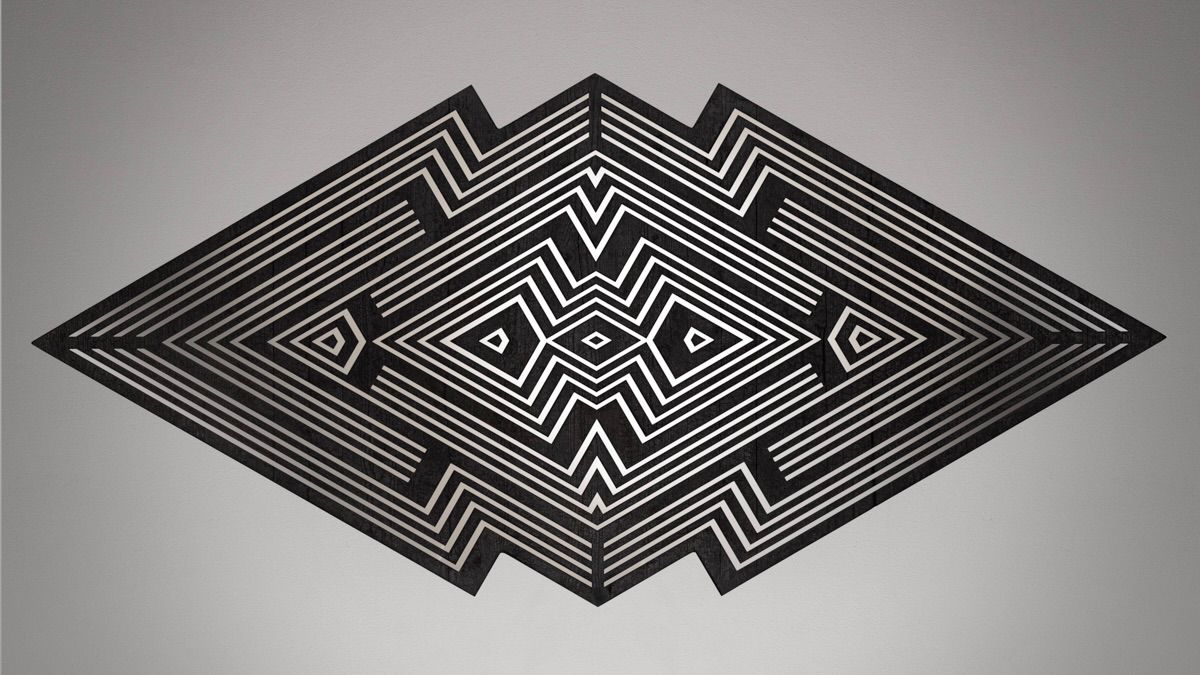
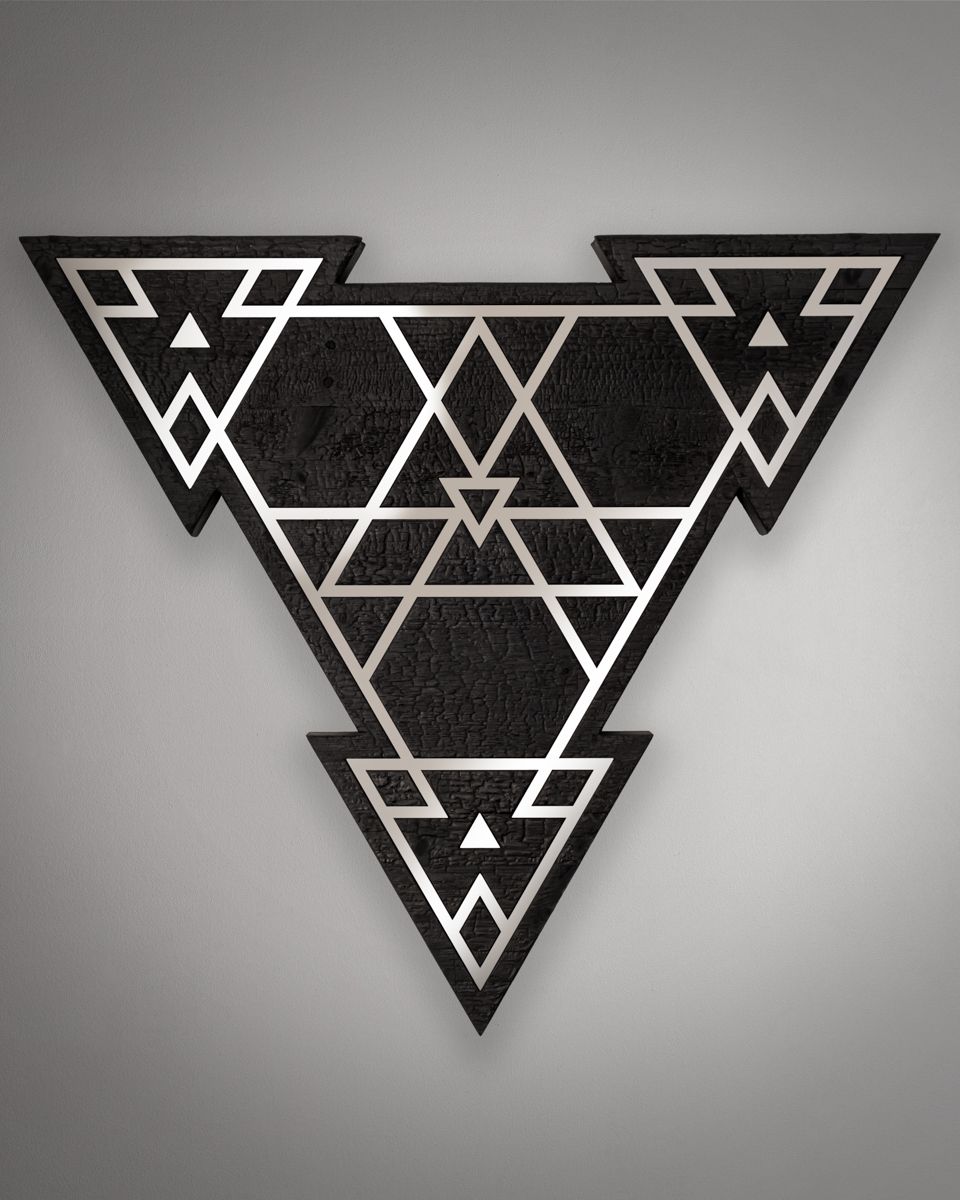
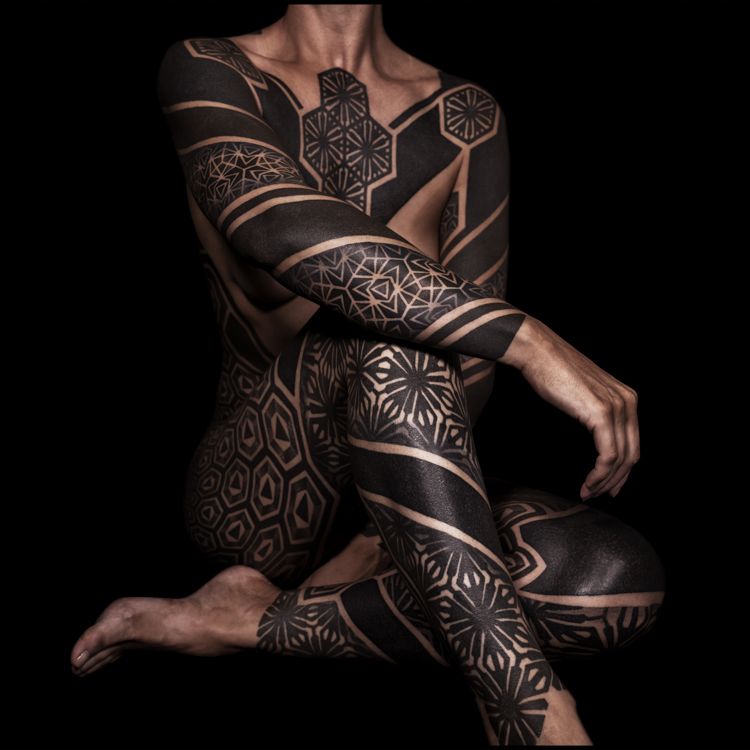
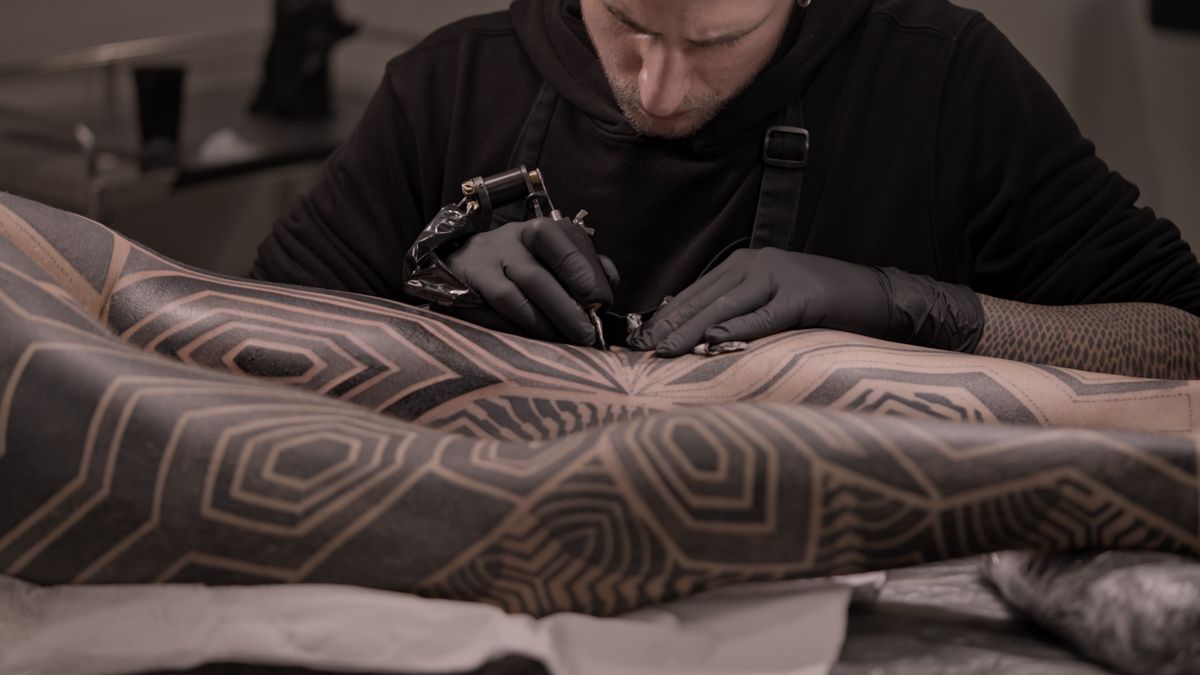
Geometry, precision, and artistry define the core of Lewis's work. A visionary artist based in Lisbon, Lewis masterfully integrates these elements into his multidisciplinary practice. Renowned for his dotwork technique, he transforms the human body into a canvas of symmetrical, geometric designs. This technique emphasizes the body's natural symmetry. Lewis's artistic expression extends beyond tattooing to include paintings, murals, wood, and metal. His work is characterized by a striking use of black and silver, creating a powerful visual contrast that enhances the depth and impact of his designs. Always pushing the boundaries of geometric artistry, Lewis continues to explore new mediums and collaborations, challenging traditional concepts and inspiring curiosity and wonder in his audience.
Lewis, thank you for taking the time to discuss and share your thoughts with Shot magazine. How your interest in geometric and optical art developed? What drove you to explore these concepts and how have you transformed them into a genuine artistic vision?
My love for geometric and optical art began when I first encountered the work of Victor Vasarely. His art had a profound impact on me, and even at the young age of 10, I knew I wanted to become an artist, creating paintings and sculptures. When it was time to choose a university, I was torn between interior architecture, industrial design, and graphic design. Ultimately, I chose the latter and completed my bachelor's degree in Switzerland. Studying graphic design for several years equipped me with a set of tools that I now use in my own artworks and in tattooing. It also taught me how to create more complex patterns and geometric shapes than I could achieve by hand.
Moving from Switzerland to Paris and now settling in Lisbon, how have these different environments influenced your artistic style and the way you approach your work?
I don’t necessarily think that my environment influenced my artistic approach. I have a quite isolated way of living/working, and I spend a lot of time in the studio. I lead a rather isolated life, spending most of my time working in the studio. However, when I first began tattooing, being in Switzerland provided an opportunity to work with clients who had larger budgets. This allowed me to charge higher rates than I might have elsewhere, enabling me to establish my own private studio from the beginning. Paris, on the other hand, offered a great access to art supply stores and industries such as laser cutting, CNC machining, and printing. Now, living in Lisbon, I find I have more support and can employ more assistants than I could in Paris.
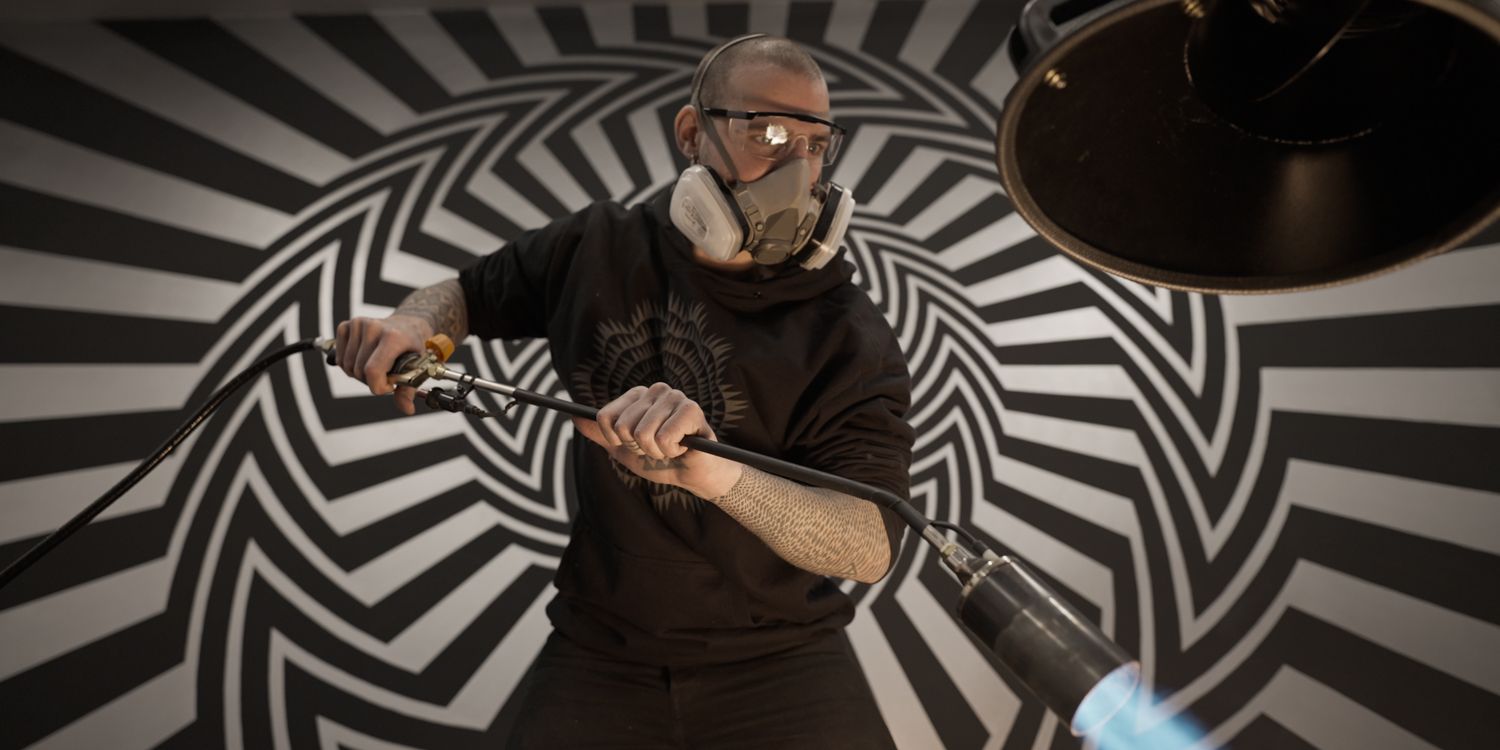
Lewis, your dotwork technique in tattooing, as well as in your other works, seems to reflect an 'out of the box' creative thinking. Can you tell us more about why you decided to use this technique and if you have faced any challenges in perfecting this method?
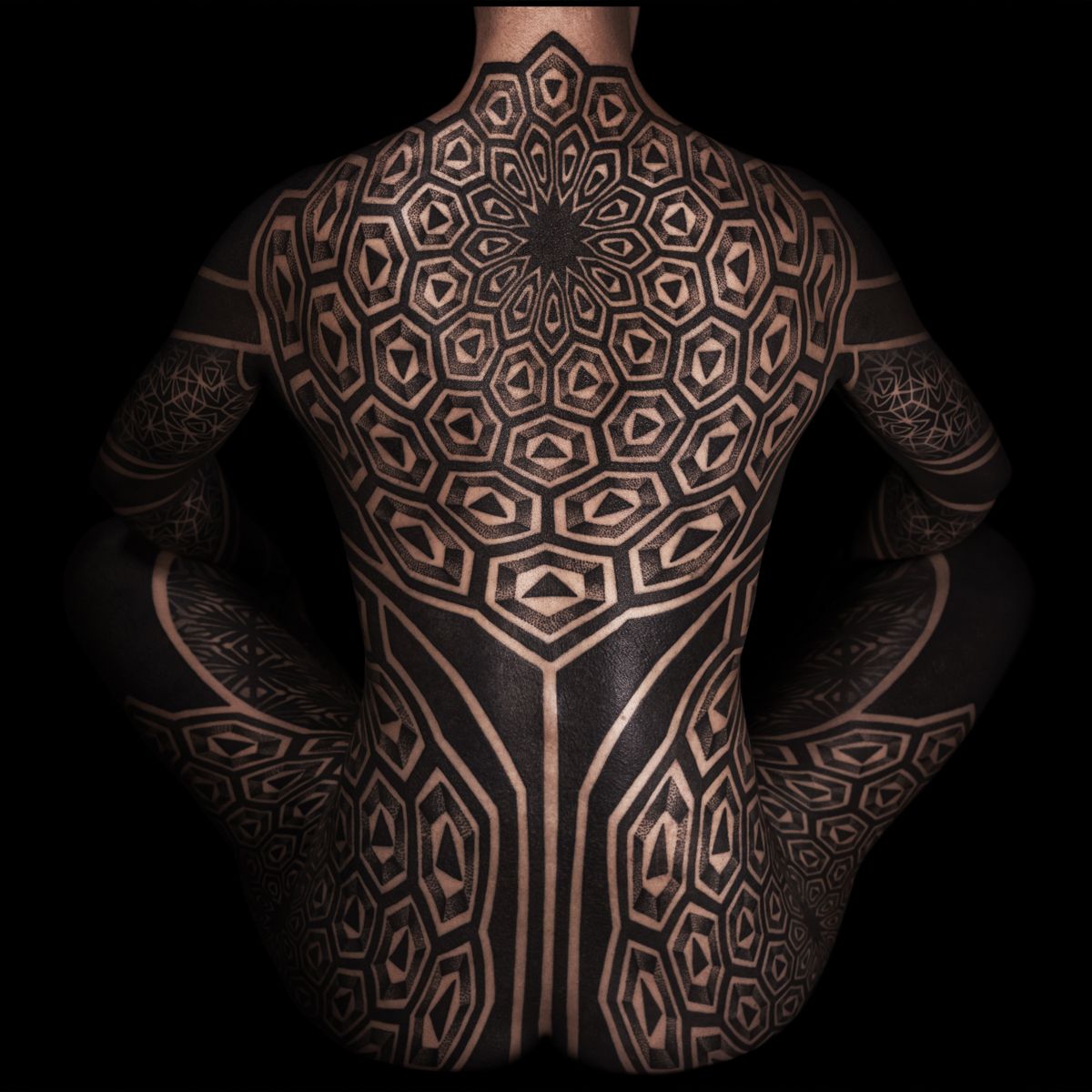
When I was very young, I visited the MET in New York City with my granddad. He asked me to choose my favorite piece of art from the entire museum. I selected “The Forest at Pontaubert” by Georges Seurat. Over a decade later, when I began creating illustrations using dots on paper, he reminded me of that day and suggested that my connection to this technique might have started then. Although the most notorious use of the dotwork technique in art can be traced to the late 19th century with the pointillism movement, we can find its application in tribal art, woodworking, ceramic, textile for centuries. Same as for tattooing, technically speaking, the dotwork technique has been used for centuries as all primordial forms of tattooing where created by poking dots into the skin. In the 2000s, “dotwork” started to be used a lot for geometric tattooing as the technique allowed to insert less ink into the skin than we would do when tracing a line. This allowed to create a greater amount of details and resulted in a better long term ageing of the tattoo.Choosing dotwork for my tattooing came naturally. I knew I wanted to work with geometric designs and dotwork was the best technique for applying these designs to the skin. I don’t consider my technique to be particularly unconventional; rather, I’ve adapted a widely used method to my own geometric style. What sets my work apart is its scale. My decision to use the entire body as a canvas and focus on symmetrical projects is what I believe makes my approach “out of the box”. What fascinates me most about tattooing is using the body as a single, interconnected canvas. I enjoy making each part connect and playing with the distortion and movement of the body. Since the human body is naturally symmetrical, I find it more natural to enhance its shape through symmetrical designs.
Working on larger pieces allows you to witness personal growth in your clients. Was there a particular experience where you felt this transformation was particularly profound?
When going through such a process of large coverage, I often observe a noticeable increase in their self-esteem and confidence. While I can't share specific personal experiences as they relate to my clients' private lives, I do witness their transformation while noticing how they look at themselves in the mirror. My hope is that this newfound sense of pride extends into other aspects of their lives over time.
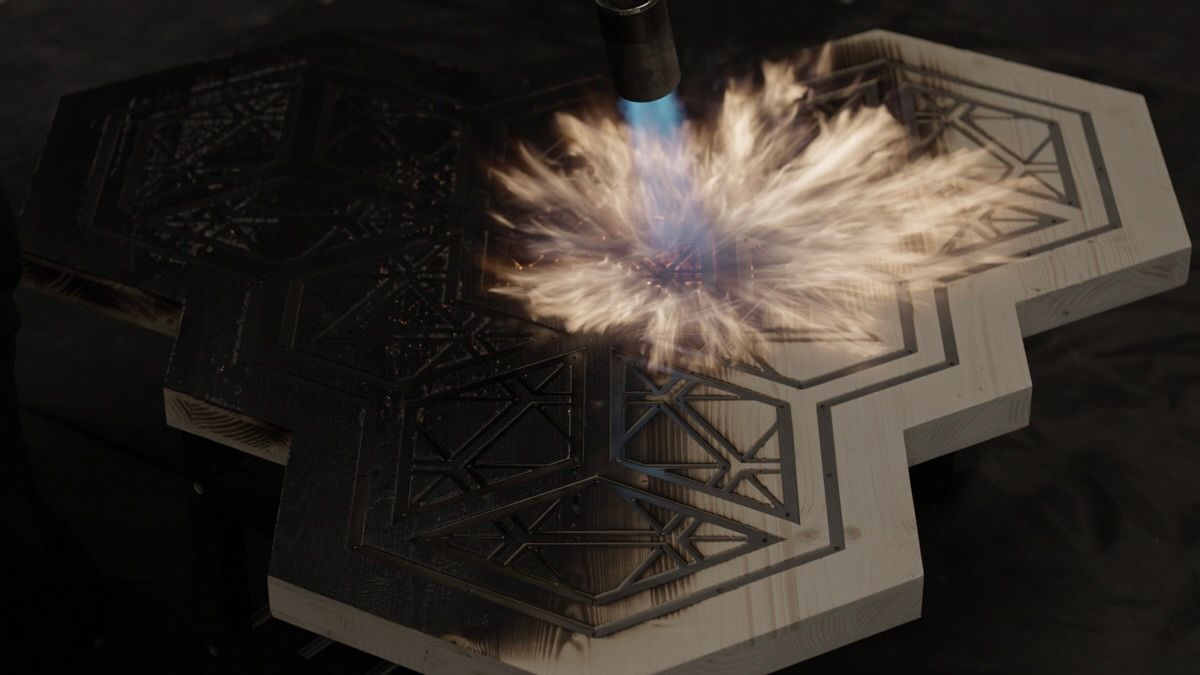
Beyond tattooing, you also work on artistic projects using various mediums including paintings, murals, wood, and metal. What drove you to expand your artistic expression beyond the human body as a canvas? Have you ever felt a sense of incompleteness that propelled you in this direction?
Although it might seem from my portfolio that that my work as a plastician evolved from my work as a tattoo artist, it's actually the opposite. My ultimate goal has always been to create fine art pieces, but I also always wanted to emain free and flexible in my creative process, and tattooing allowed me to create some of the art pieces I envisioned without relying on external support.
Lewis, your pursuit of precision and geometry in your work seems to be an integral part of your artistic process. Does this same precision reflect in your personal life? How do the concepts of order and form influence your worldview beyond your artistic studio?
I believe that every artist’s personality structure is reflected in his personal life. If an artist truly embodies their work, it will resonate in his private life as well. Consequently, I appreciate having things organized and in the right place in all aspects of my private life.
You primarily use the color black in your works. What is the reason behind this choice?
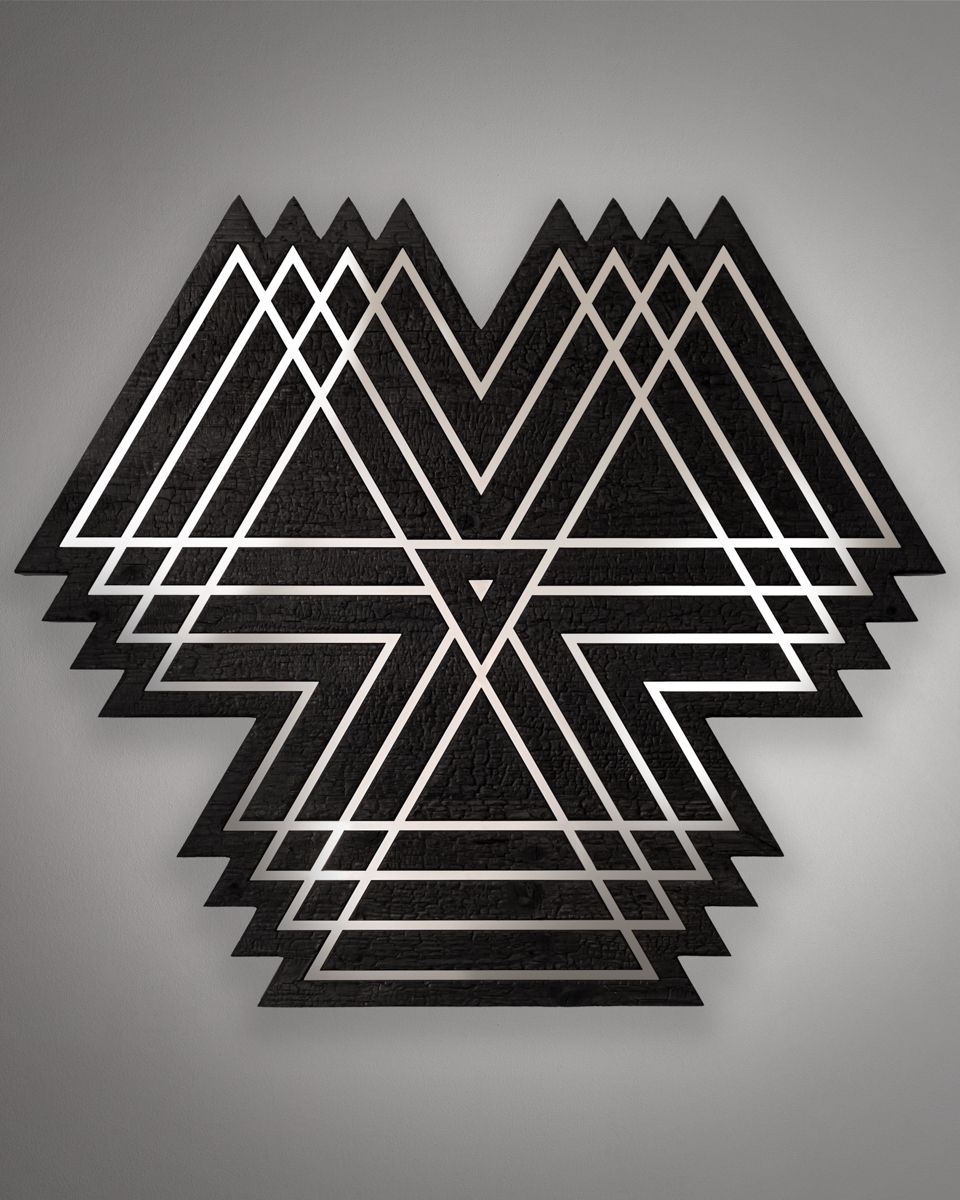
I like the depth of the color black; it is present, calm, and strong, making a clear impact. I also enjoy contrasting it with silver, whether through the use of stainless steel in my art pieces or silver paint in my murals. I believe this contrast creates a beautiful interplay between darkness and light.
What message or emotional response do you aim to evoke in your audience through your art, whether it's through tattoos or other forms of expression?
Surprise and curiosity. I like when people say: “Oh I’ve never been seen anything like this before.” I like to push boundaries and elevate the way things have been done and bring them to the next level of possibilities.
If there were no order and geometry, how would that affect you?
Without order and geometry, I would probably feel much freer. From a creative standpoint, working with geometry can sometimes be challenging, limiting, and restricting. It often feels like both a blessing and a curse. I often joke that in my next life, I won't create anything symmetrical. The rigidity in my work frequently impacts my private life, and vice versa—the rigidity in my private life influences the style of my work. Sometimes, I miss the softness and organic fluidity that must be sacrificed to stay aligned with my creative vision.
Lewis, what lies next for you in your artistic journey?
In recent years, I have expanded my artistic pursuits beyond tattooing, still focusing on geometric designs but applying them to various mediums like paintings, murals, wood, and metal. Recently, I have begun working with furniture design, driven by the idea of integrating my geometric patterns into practical objects. Similar to my previous projects using charred wood and metal, I am now inlaying stainless steel into materials like wood and concrete to create unique pieces. Also I have always wanted to incorporate my work into fabric and couture. Eventually, I aim to either start my own fashion project or collaborate with a brand. Time will tell.