SHOT | Article Le Fawnhawk

Le Fawnhawk
Le Fawnhawk Shot Magazine Interview Desert
0:00
--:--

Le Fawnhawk

Desert Threshold

The desert taught her to remove, to recognize the shape that silence can take. In Le Fawnhawk’s work, essential geometries rise like portals between earth and sky, suspended between reality and dream, in dialogue with the landscapes that hold them. Each installation becomes an invitation to slow down, to observe, to reconnect with that sense of inner vastness so often muted by the noise of the world. For Le Fawnhawk, beauty is not found in perfection but in honesty, in aging materials, in solitude that speaks, and in the marks that remain.

Le Fawnhawk for Shot Magazine Interview Issue 16
Le Fawnhawk Shot Magazine Interview Desert

Your work has often been described as modern surrealism, yet far from excess. Your visual world is essential, meditative, deeply connected to nature and spirituality. How did you arrive at this need to reduce, to strip down, to seek truth through the minimum?

I think the desert taught me. Out there, you begin to understand that silence has shape. There’s no need for excess when the land itself is speaking. Over time, I found that the more I removed visually, emotionally, materially, the closer I got to something real. It became less about editing and more about listening. What remains is what’s meant to be there.

How does a work come to life in your creative process? Do you begin with a specific image, an emotion, a symbol?

It usually begins as a sensation I can’t quite name, something just beneath the surface. Sometimes it’s a symbol, other times a visual flash or even a sound. I don’t force it. I let it rise on its own timeline. My job is to follow it, stay present, and allow it to take shape without overworking it.
Le Fawnhawk Shot Magazine Interview Desert

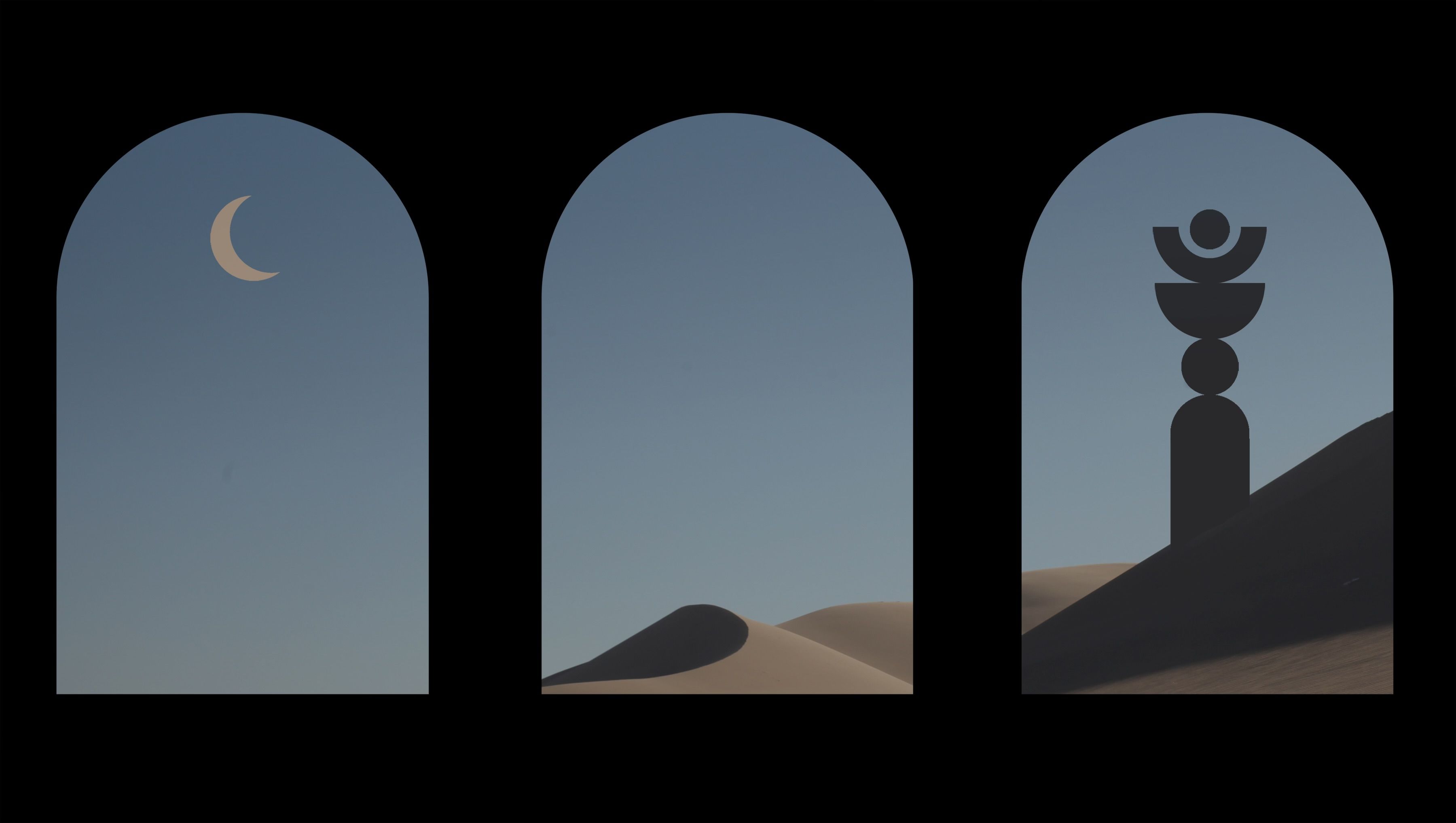
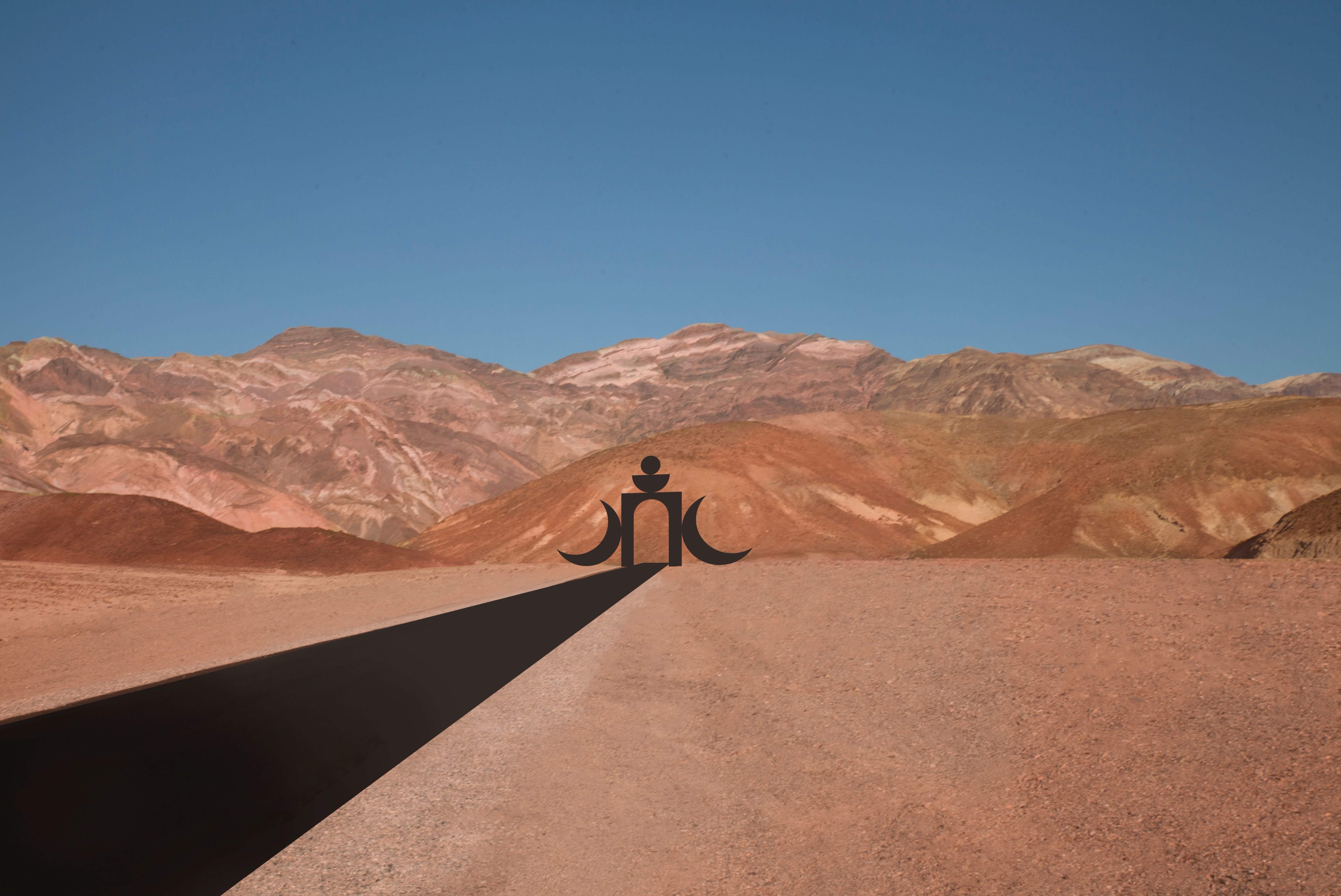
Your art is marked by monumental totemic forms, often set within vast desert landscapes. What draws you to this combination of essential geometry and expansive nature? And what does the desert represent for you, both personally and symbolically?

The desert is my church. It’s where I go to remember. The geometry I work with feels like a kind of ancient language. Simple, essential, and eternal. When placed in the vastness of the landscape, those forms feel like they’re in conversation with time itself. The desert, to me, is both a mirror and a threshold. Empty enough for you to see yourself clearly, and wide enough to hold something greater than you.

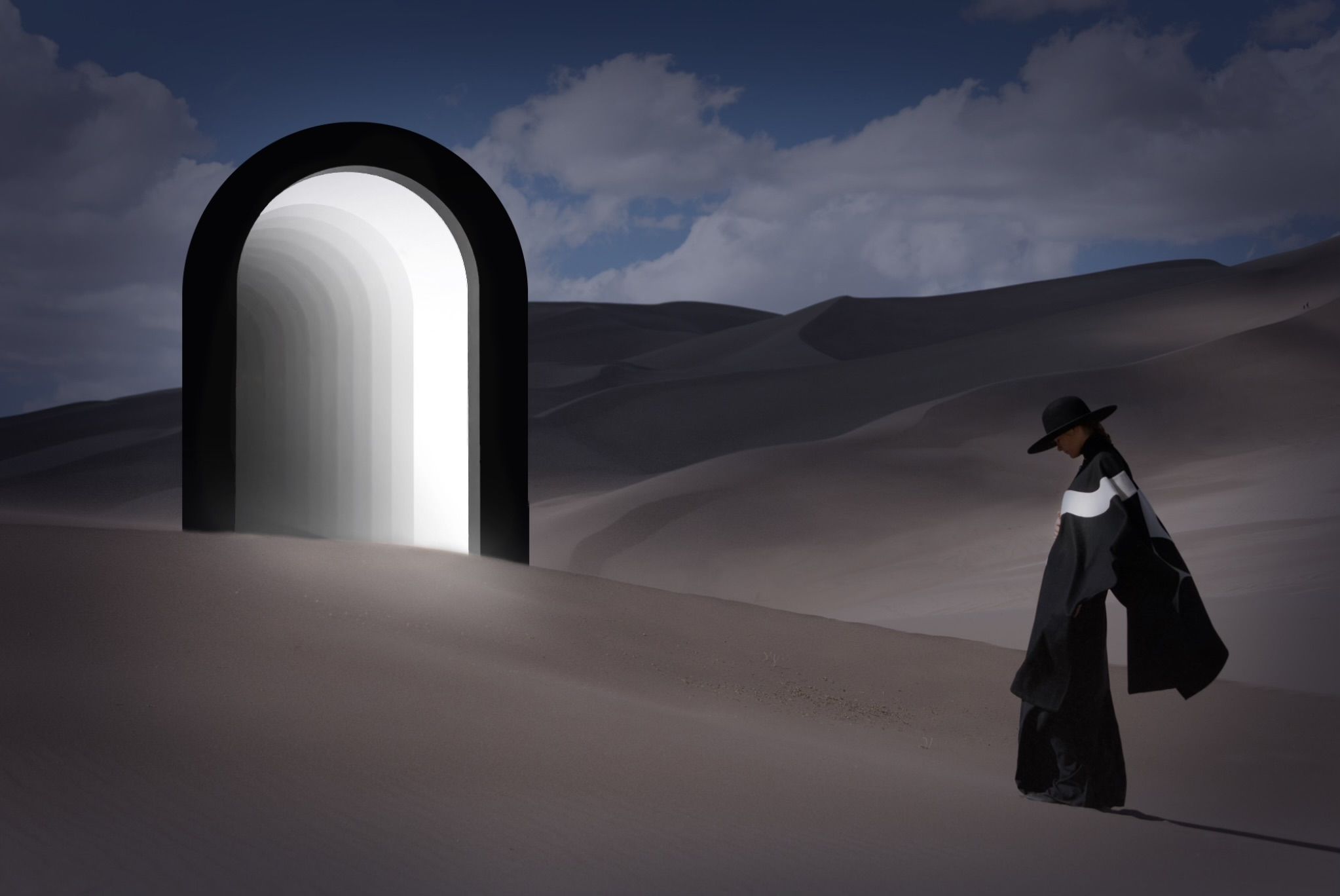
Your works often appear as portals suspended between the real and the surreal. What role does illusion play in your visual language?

I see illusion not as trickery, but as invitation, an opening. It helps create space for the viewer to question what’s real and what’s remembered. That in-between is fertile ground. It’s where transformation can happen.
Le Fawnhawk Shot Magazine Interview Desert

Do you believe art can reveal truths that remain invisible in everyday reality?

Yes, absolutely. Art gives form to what we know in our bones but can’t always say. It speaks in symbols and silence—things we feel before we understand. In a way, it reminds us of truths we already carry but forgot how to access.

You often speak of a “monumental spirit.” In a fragmented world, how can we reconnect with that sense of inner greatness?

By getting quiet. By letting go of the noise, the comparison, the urgency. That spirit is already inside us. It’s not something we need to earn. It’s remembered through presence, nature, ritual, and creative expression. We just have to return to it, again and again.
Le Fawnhawk Shot Magazine Interview Desert

You have recently begun exploring sound as part of your work. What kind of sensory experience do you envision for the future of your installations?

I want my work to feel like entering another frequency. Sound has the ability to bypass the intellect and go straight to the body. I see it as another layer, like light or form that can shape how people move through the space, and maybe even shift how they feel in their own skin.

What does ‘beauty’ represent to you?

Beauty is resonance. It’s when something external aligns with something deep inside. It’s not about polish or symmetry, it’s about truth. I see beauty in aging materials, in solitude, in the rawness of something unguarded. It’s a kind of honesty that doesn’t try too hard.

You are currently working on bringing your digital sculptures into the physical world. How does your work shift when moving from the digital realm to material form?

It becomes more human. Digital is fluid and limitless. But the physical brings gravity, weight, imperfection. I love that translation. It’s like pulling something down from the ether and giving it a body. Suddenly, it can cast a shadow. It can be touched. It’s alive in a new way.
More interesting

Alien Wang

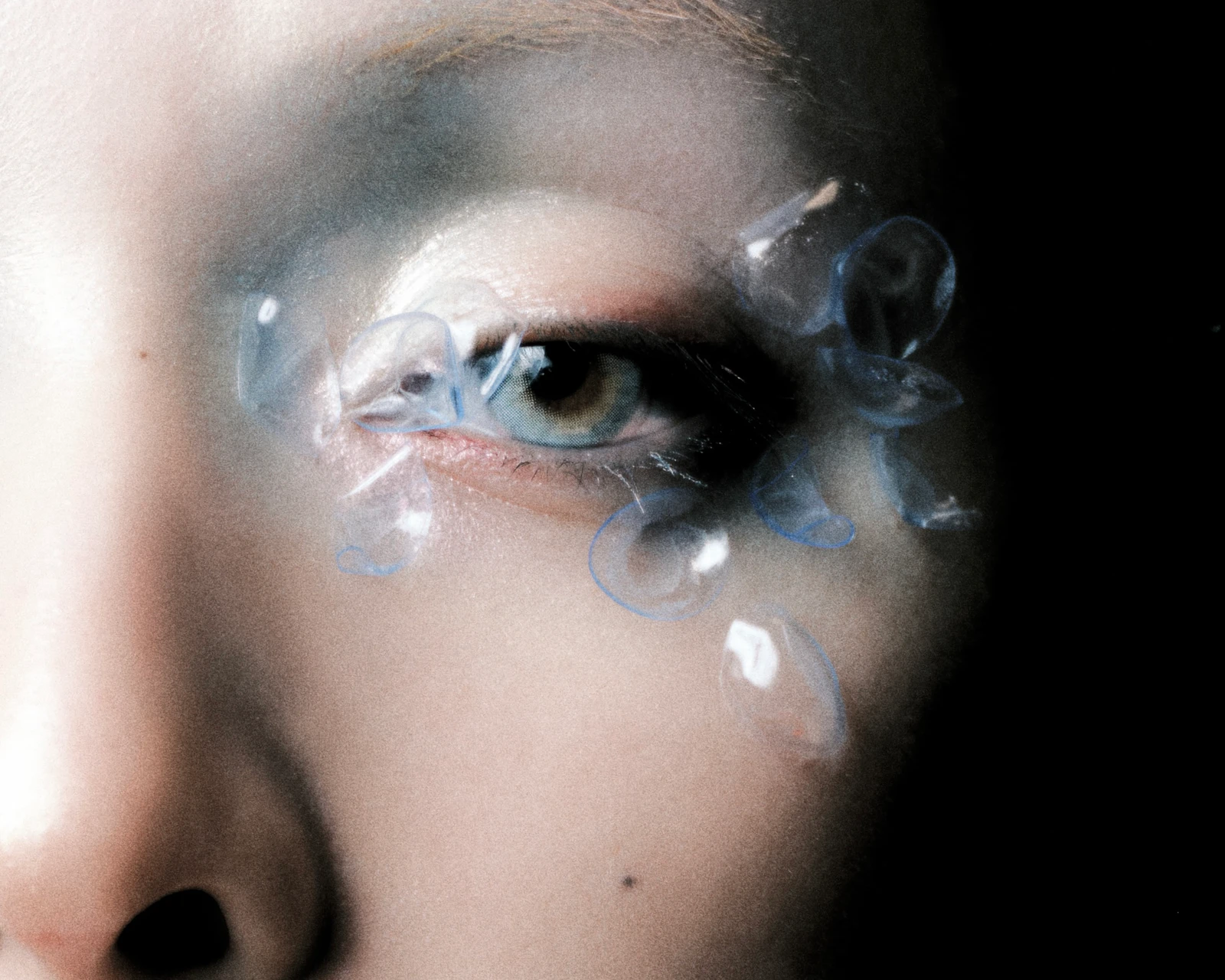
The essence of Alien Wang’s imagery lies in a silent dialogue between reality and the surreal. A Taiwanese-born photographer and director, Alien merges fashion with industrial elements and conceptual storytelling to craft immersive visual narratives. For him, photography is not a fixed language but a living mirror, an emotional process where colour becomes psychological projection and light channels energy. His work flows through unstable states of perception, oscillating between dream and presence. Rather than guiding the viewer’s gaze, he embraces ambiguity, allowing instinct and invisible forces to shape meaning.

Andres Reisinger Shot Magazine Interview Take Over Series

Andrés Reisinger

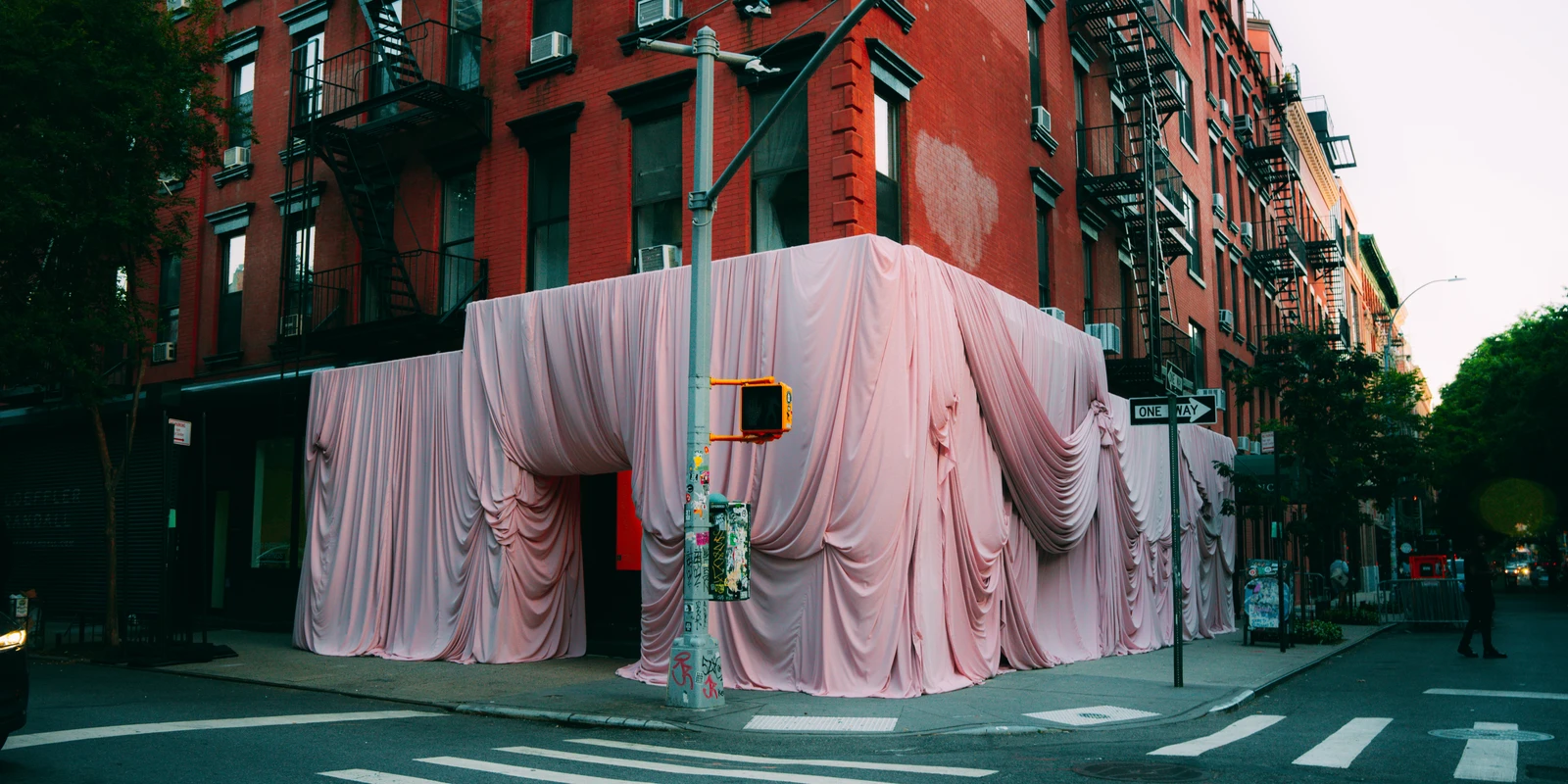
Visual artist and designer Andrés Reisinger creates works that inhabit the threshold between the real and the digital. His practice spans installations, objects and images, blending technology, artificial intelligence and a handcrafted sensibility, transforming spaces and forms into experiences suspended in time. Pink is a recurring signature in his visual vocabulary, a tool for emotional exploration that moves between memory and imagination. Rather than illustrating future worlds, Reisinger expands our perception of the present.

Tamara Kvesitadze

Tamara Kvesitadze’s work moves within a constant balance of opposites: stillness and motion, presence and absence, matter and body. Her sculptures are not merely objects to be contemplated but intimate encounters, thresholds connecting the subconscious and the conscious. Raised in a context that imposed silence and immobility, she chose to respond through gesture and transformation. Her kinetic sculptures move in infinite cycles: they open, can be crossed, dissolve, and reassemble, creating spaces that remain alive and in perpetual motion. For Tamara, the body is more than a surface; it is an archive of memory, wounds, and resilience. Her forms shift and recompose, becoming mirrors in which we can find or lose ourselves. In a world that seeks conclusions, Tamara’s works invite us to remain within the flow, suspended on that subtle line between clarity and ambiguity.

Moonassi Shot Magazine Interview Paintings

Moonassi

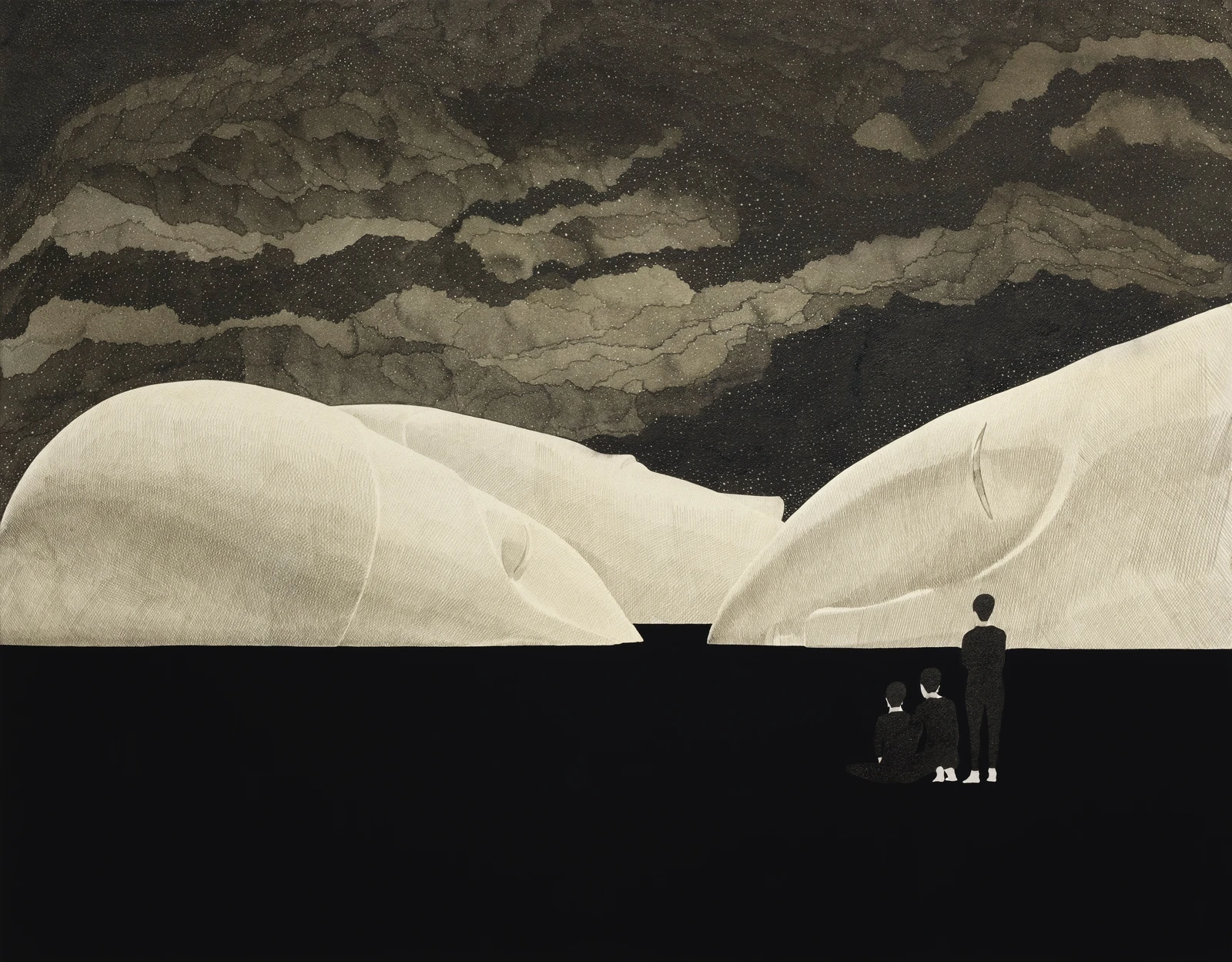
Between black ink and white paper, Moonassi builds a language that feels like a silent diary. His lines fall lightly, holding invisible tensions, memories, contradictions, thoughts that do not need to become explanations. Faceless figures emerge from the background not to tell a story, but to welcome the stories of those who observe them. Black, a constant presence in his work, does not close but opens up, holding shades that shift with the light, with time, with each gaze. Moonassi does not seek conclusions or fixed messages. He chooses the simplicity of tools and the complexity of perspective, letting the work remain, speaking quietly in his place.

Kristian Schüller Interview Shot Magazine Issue16 Fashion Art Photography

Kristian Schüller

Behind every photograph by Kristian Schuller lies a question: who is the person truly standing in front of the lens, where do they come from, and what story do they carry? From this curiosity, his visual language takes shape, one that blends discipline and spontaneity, allowing imagination to complete what the image suggests without ever fully revealing it. For Kristian, photography is never just an image but a suspended fragment of a larger narrative, an invitation to get lost in the nuances, contrasts, and tensions held within each frame. Preparation and instinct coexist on set, where every detail is meticulously planned, yet space is left for the unexpected, because it is within that margin that the image truly comes alive.

Osman Ozel Interview Shot Magazine Issue16 Fashion Art Photography

Osman Özel

Osman’s gaze is a silent collision between ancient echoes and contemporary tensions, a search for stories that move beneath the surface of light and shadow. His practice unfolds in the layered dance between long exposures and the movement within each frame, where time does not freeze but stretches, revealing invisible narratives held within a single shot. His approach to photography is an act of breath and suspension, a ritual where light meets movement and illusion begins to take form. For Osman, photography is not about capturing beauty alone, but about building atmospheres and creating tension.

Matthieu Bourel Shot Magazine Interview

Matthieu Bourel

Introspective, Symbolic, and Fragile: these three words encapsulate the essence of Wolfgang Stiller's profound artistic evolution. A master sculptor who delves deeply into themes of human impermanence and mortality, Stiller's creations are both evocative and thought-provoking. His iconic "Matchstickmen" series, born from his involvement in a film project about the Japanese occupation of Nanjing, poignantly reflects the fragility and fleeting nature of human existence. These sculptures serve as a metaphor for the exploitation of human resources and a stark reminder of life's transient beauty. 

© 2026 SHOT. All rights reserved.

Terms of UsePrivacy PolicyCookie Policy

© 2026 SHOT. All rights reserved.

Terms of UsePrivacy PolicyCookie Policy