Behind every photograph by Kristian Schuller lies a question: who is the person truly standing in front of the lens, where do they come from, and what story do they carry? From this curiosity, his visual language takes shape, one that blends discipline and spontaneity, allowing imagination to complete what the image suggests without ever fully revealing it. For Kristian, photography is never just an image but a suspended fragment of a larger narrative, an invitation to get lost in the nuances, contrasts, and tensions held within each frame. Preparation and instinct coexist on set, where every detail is meticulously planned, yet space is left for the unexpected, because it is within that margin that the image truly comes alive.


Kristian, thank you for sharing your thoughts with Shot Magazine. Do you remember the moment when photography first entered your life not as a simple curiosity, but as a necessary language to express yourself? What did it make you feel back then, and how has that feeling evolved over time?
I come from an artistic household: my father was a dramaturge and director at the theater, and my mother was an art teacher. Early on, I was fascinated by the exciting possibilities of expressing my own creative ideas. Even as a twelve-years-old, I loved letting my mind wander and leaf through the books at school. There were pictures that made me dream, a woman in the shadows, barely recognizable, who I fell in love with and whose story I imagined. Or a propeller plane approaching NYC, who are the passengers, where do they come from, what is their story? I was fascinated by all the secrets that can be hidden within a picture, and I wanted to create pictures like that too and I still do!
Berlin has, in many ways, been an integral part of your artistic and personal journey. What role did the city play in your formation, and how has it influenced, or perhaps even challenged, you in shaping your creative vision?
I have lived in Berlin, Paris, and New York with my wife Peggy, with whom I work closely, and it was and still is wonderful. What fascinated me about Berlin from the very beginning was its incredible history. The films from the Weimar period, such as Metropolis, M or Nosferatu have strongly influenced my love of light and shadow. In no other city in the world did so much creativity meet so much darkness. This city has a very special history that can still be felt today. Nowadays, you are much freer to choose where you live, you are connected to the world, and if you are needed, you set off.
Your work often evokes a balance between dream and reality, between what is visible and what remains hidden. What does it mean for you to truly see through the lens, and what do you consciously choose not to show?
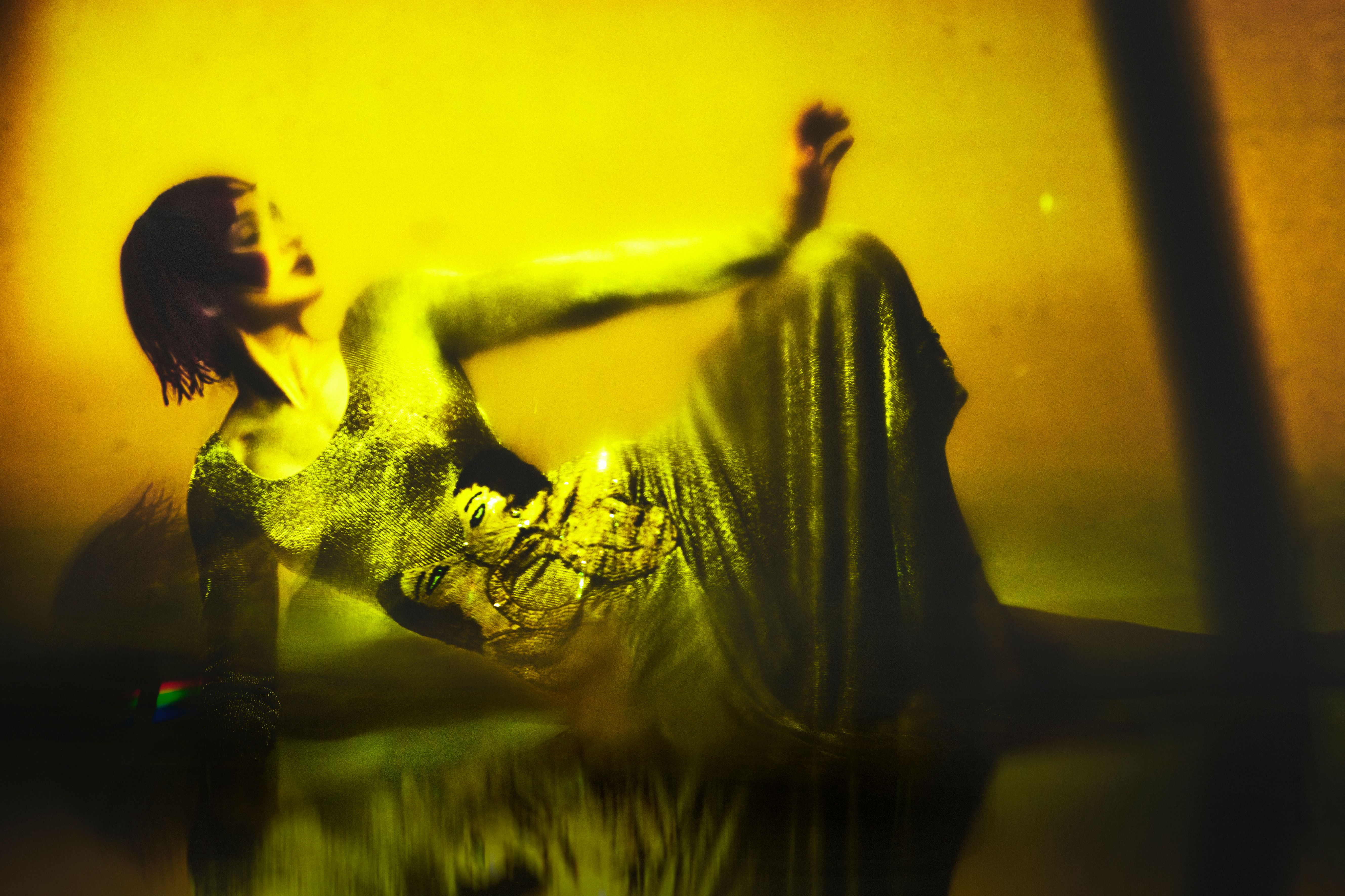
A photo is always an interpretation. Everything I don't see stimulates my imagination. You can photograph an interesting woman or man, naked and in focus, and everything is on the presentation tablet. But isn't it more exciting when you dress them again with light, allowing the viewer to complete and complement everything unseen in their imagination? I love giving an image depth and layers.
You studied with two extraordinary mentors, Vivienne Westwood and F.C. Gundlach. What is the most profound lesson they left you with, one that still guides your work today?
During my time at the HdK, I was lucky enough to study with Vivienne Westwood and F.C. Gundlach. Both professors have influenced and shaped my artistic work to this day. They taught me to see the creative process and its translation into something real and material as a wonderful journey that you take throughout your life.
How much of your unconscious, dreams, fears, memories, enters your images? Do you see photography more as a way to explore what lies within you, or to give shape to what’s missing on the outside?
The two are inseparable. The creative process is always an expression of the self. However, I believe that the desire to create your own world is the main driving force. As Pippi Longstocking famously said, “I make the world the way I like it.”
Where does the first spark of an image come from? Do you begin with an emotion, a color, a story?
It all starts with the search for a story: who is she or he, where do they come from, and where is the journey going? The final photo looks like a cut-out from a movie, while the before and after is told by the imagination.


In your photographs, control and freedom seem to coexist, meticulous planning and visual spontaneity. Is there something you deliberately allow to happen in the moment, and something else that must adhere precisely to your initial vision?
The basis is solid planning and preparation so that everyone in the team knows where the journey is going. On the day of the shoot itself, there is also room for improvisation. Without the discipline of preparation, you get lost; without the freedom of improvisation, it never becomes truly exciting.
In your images, color builds entire worlds, it ignites tension, suggests emotion, and creates distance from reality. What role does color play for you in the creative and narrative process?
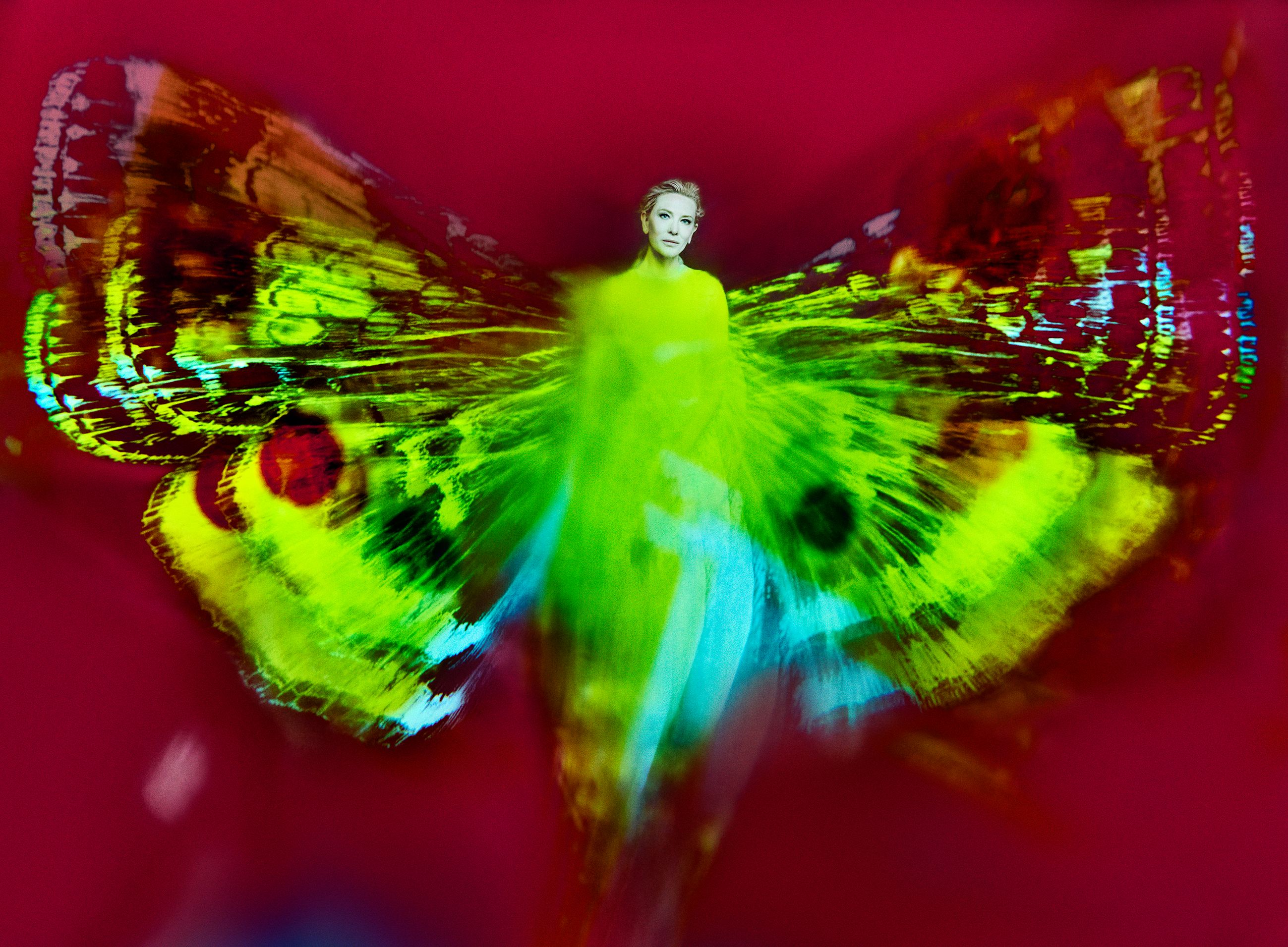
I always share the story that I grew up as a child in communist Romania, where the streets and the concrete faces of politicians were a dreary gray-on-gray. People countered this with humor and ingenuity. When I arrived in the West, I was blown away by the lights and colors that has influenced me to this day. In Berlin, I was later influenced by Expressionism films from the 1920s. In a way, our pictures are an interpretation of this world of light and shadow, but in color.
Is there something you’ve always tried to capture through photography, but that still seems just out of reach?
I think it's like the horizon: you can never truly reach it. The next shoot is always the most exciting, and there’s always a bit of nervousness about whether it will turn out well.