SHOT | Article Kimiko Yoshida

Kimiko Yoshida
Kimiko Yoshida Shot Magazine Interview Issue 14
0:00
--:--

Kimiko Yoshida

Identity as Fantasy

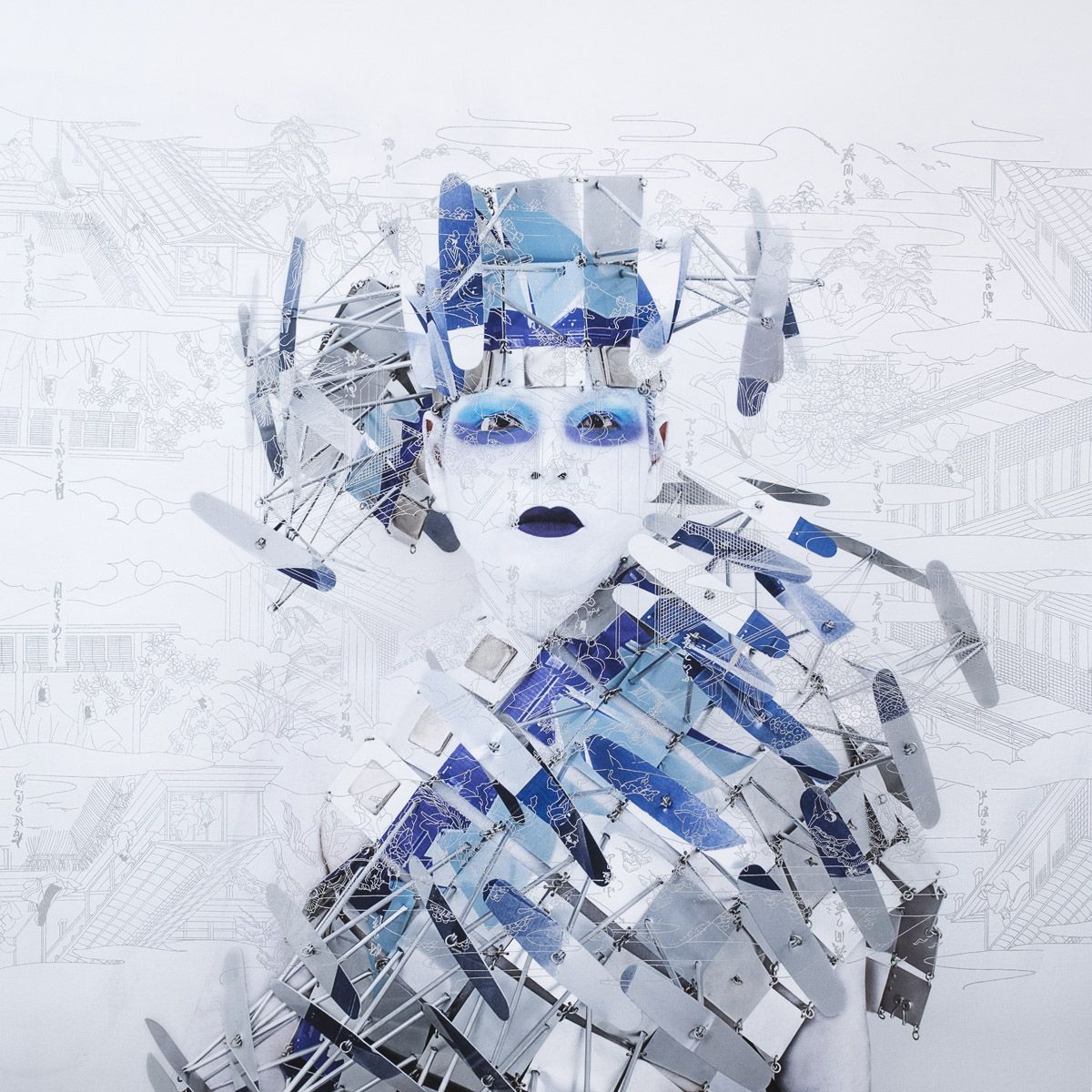
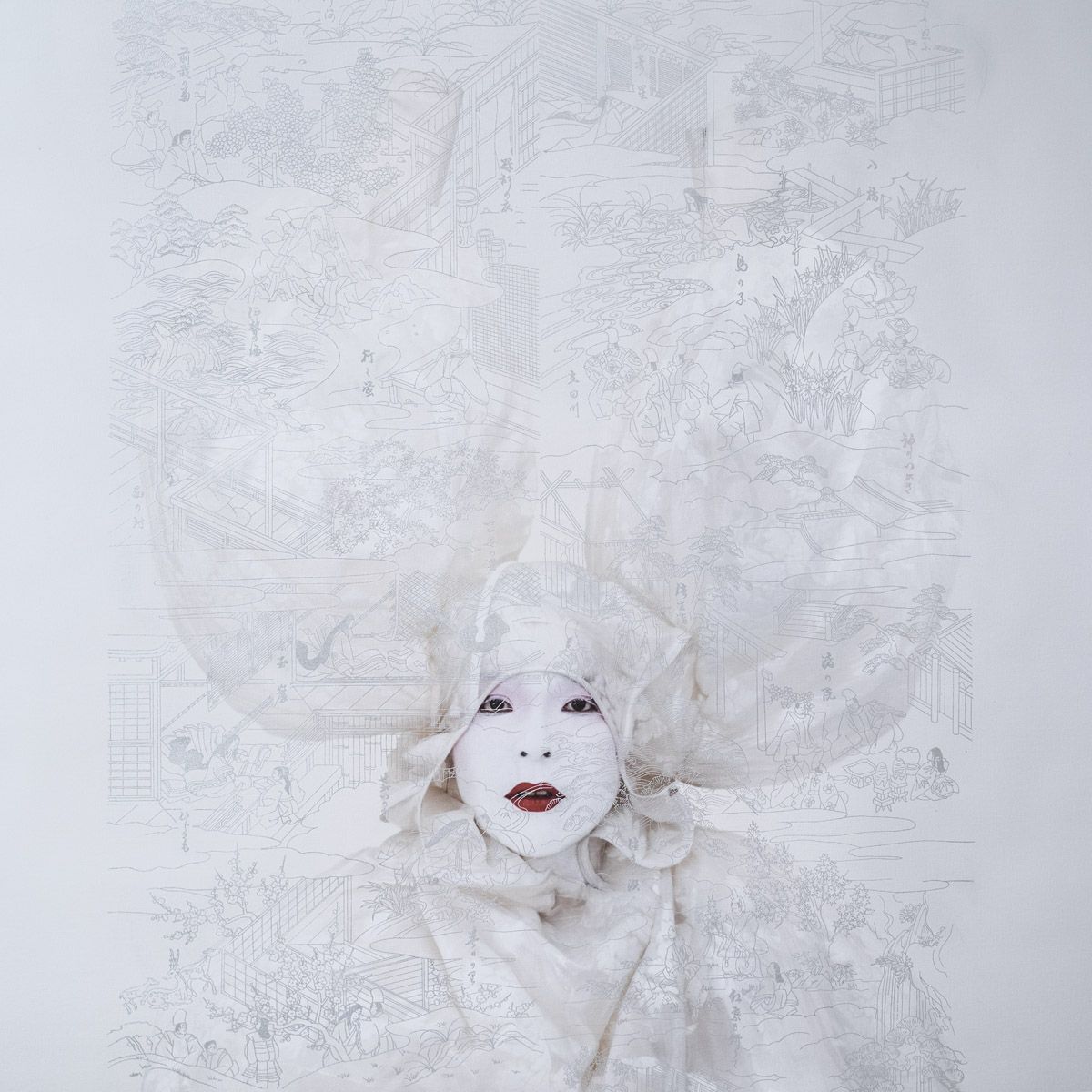
Hiding beneath masks of identity, searching for absence, circulating in the layers of time, culture, custom: Kimiko Yoshida explores the nature of being oneself, whilst letting go of all that is attached to this notion. By covering her gaze with drapes, masks or emblems, she becomes one with her background and the elements adorning her being, thus learning to question what it means to be an individual, to dress oneself with an identity. Her self-portraits serve to present a collection of photographs where the environment and subject are always the same, yet constantly portray something alien to itself. There is in fact a gap between the representation and signification of these images, where identity is captured as a static object that is able to transform, deflect, convert or recast itself in various ways, to the point of becoming no longer recognisable. Born in Tokyo, Kimiko was formed in Japan until 1995, when she decided to keep pursuing her academic career as artist and photographer in Paris. Through her examination of identity and her depictions of its illusion, Kimiko is able to raise essential questions around the female identity and, in the words of Rimbaud, “find strange, unfathomable, repugnant, delicious things”. Indeed by letting go of the dominance of our ego, we will take these things in, we will understand.

Kimiko Yoshida Shot Magazine Interview Issue 14

Kimiko, thank you for taking the time to discuss your works and share your thoughts with Shot magazine. How did your journey as an artist begin, and what inspired the red thread of your self-portraits throughout the years?

I always knew I was born as an artist. At Chuo University and at Tokyo College of Photography in Japan, then at École nationale supérieure de la photographie in Arles, and at Studio national des arts contemporains-Le Fresnoy in France, I learnt everything about photography techniques, before studying art history. Self-portrait is not a subject for me. I just found out that self-portrait is the most practical, most convenient, simplest and at hand material. The subject of my art is a reflection on the conditions of possibility of representation. My quasi-monochrome self-portraits, large, square, subtly lit monochromic photographs, constitute my signature works since 2001. The conceptual protocol behind my self-portraits is invariable: always the same minimalist etiquette, same setting, same subject, same lighting, same framing. Thus, the same face is repeatedly portrayed but is never identical to itself. The more the figure is repeated, the more different it becomes. No digital editing, no photoshop manipulations: make-up only and direct shooting. 

In The Conceptual Protocol of My Self-Portraits you write that “art is a subtle process of transposition, an assiduous struggle with the state of things”. What has art helped you metabolise, understand or overcome?

Art modifies the subjective symptom, transposes one thing into another thing, transforms the existing state of what is: to create art is not to accept the things that exist as they are, it is to give form to one’s destiny, it is to struggle against death.
Kimiko Yoshida Shot Magazine Interview Issue 14

Your artwork also reflects a scission between presence and absence, where the self is concealed beneath other elements. What is the role of absence, in your works? Has this absence helped you discover more about your identity?

What have I discovered while creating art? First. Identity is a cliché, a stereotype, a ready-made idea, an imaginary fantasy, an ease of language that current discourse conveys and repeats at will to avoid thinking about what constitutes what is lazily called “identity”. Second. Absence is what is present in any representation; whether in painting or photography, what is re-presented is not present: therefore, any image speaks only of an absence. In other words, there is a constitutive lacking in the image and it is precisely what is missing in the image that eroticizes the gaze.

In your series Time Travellers, you explore identity as a fluid thing in relation to time. Deleuze writes about identity as an inevitable illusion. What are the greatest challenges that identity faces in our current societies, in your opinion? 

I am mainly concerned with the history of art: that is the main meaning of Time Travellers. Identity is a fantasy, identity is what is made up of a random accumulation of chance identifications. Deleuze is right to say that it is an imaginary illusion and Jacques Lacan is right with his metaphor of the onion: when we peel an onion and we isolate the superimposed peels which constitute it, in the end we check it: there is no nucleus.

Kimiko Yoshida Shot Magazine Interview Issue 14

What is the role of “otherness” and “diversity” in your works?

Otherness is what combats the contemporary ideology of identity, roots, communities.

What is womanhood, to you?

Can we really say that there is a feminine art? A women’s literature? Are Artemisia Gentileschi or Rosalba Carriera or Élisabeth Vigée Le Brun painters first? Or women? Are Colette, Virginia Woolf, Louise Labbé, Madame de La Fayette, Jane Austen or Simone de Beauvoir first and foremost writers? Or women? Am I an artist first? Or am I essentially, ontologically, transcendentally a woman? A Japanese? A European? Looking for her identity? In search of her supposed roots? Of an imaginary community? A woman who fails to change the state of things as it exists, as it is received, as it is accepted? Art is what transforms, isn’t it? Art is what opens a free space for the play of Time and simplifies the depthless intimacy of absence. Art is the absence of a response to what is lacking and the artist here is the one who, through travesty, dissimulation and inauthenticity, keeps open in her work the question of separation, disappearance, and distress. Without the lack and the distress, the absence and the oblivion, would something like art exist?

More interesting

Aleah Chapin Shot Magazine Interview Issue 14

Aleah Chapin

Aleah Chapin is a visual artist from Seattle, USA, who has been painting human bodies to question, reconsider, reimagine and subvert their traditional role in western culture. Female bodies in particular are portrayed as they are dancing, laughing, interfolding, embracing each other, to explore the notions of aging, gender and beauty as we see them genuinely unfold before our eye, balanced within a misty landscape, against the backdrop of a forest or amongst dragonflies. Aleah’s early paintings depict natural bodies that recount their own stories, that become expressions of the forces of life, as opposed to the values through which we are taught to understand them in our contemporary society. Her most recent works stand in stark contrast with the immaculate realism of the previous, representing a radical shift inwards to a more abstract, emotional, psychological dimension. This conceptual understanding of living within a body, of finding a way home to ourselves, was prompted by the turbulent times that have shaken our world in the last years, thus leading the artist to seek for greater meaning in a visual language that relies on colours, shapes and feelings, putting forth a more comprehensive and universal message. Nonetheless, throughout her works, Aleah Chapin consistently invites new conversations on the same question: what does it mean to exist within a body today?

Sepideh Salehi Shot Magazine Interview Issue 14

Sepideh Salehi

As a brave, bold and elegant artist, Sepideh Salehi has been merging various visual languages and processes to explore the notions of home, family and cultural history. Born in Teheran, Iran, Sepideh’s artwork is profoundly soaked in her experience as a young Iranian woman during the authoritarian regime of the Islamic state, which has institutionalised the segregation of women and men, to this day, in what is now known as gender apartheid. The concepts of covering up, hiding and privacy have thus underpinned the layers of collage, photography, painting, printmaking, calligraphy that the artist has combined to explore the relationship between the inner and outer vision of female identity. As well as this, Sepideh is interested in exploring how one’s environment, memories, belonging may be intertwined with their personal narratives to reimagine realities and propose new visions. In the obscured faces of her photographic collages, such as the iconic Mohr Portrait, the connection between identity, landscape and unknown is dissected and reconfigured to understand how women are wrongly perceived in their society and to question how the female self-perception is conditioned by its environment. As a sign of protest, her faces are covered, unrevealed, obscured from the viewer to allow for their identity to mature in secret. For this reason, Sepideh merges post-1979 Teheran cultural history with elements of her own past, in order to depict the struggles of female oppression against the injustice of abusive political regime, and to bring together a new, unknown gaze beneath the layers of one’s identity.

Cristina Mittermeier Shot Magazine Interview Issue 14

Cristina Mittermeier

The dusky pink trio of feeding flamingos, the ethereal vision of a lonely humpback whale or the current of a colourful shoal of fish are only some of the rich collection of photographs that Cristina “Mitty” Mittermeier has caught and brought back to land from the depths of the natural world. With her talent and profound ecological sensibility, Cristina has become one of the leading nature photographer of our day and has co-founded SeaLegacy, a global agency for the ocean aiming to bring together climate action and sustainable solutions by supporting scientific endeavours and conservation strategies. In her explorations of both the natural and human realms, Cristina attempts to bridge these worlds through her photography, in an attempt to instil awe and convey the beauty of ecologies that are often distant and unseen. In this interview, she tells us about how her relationship to the natural environment has developed, how her journey as a woman has affected her works, and how we must understand how much is enough in order to find harmony with our wounded and depleted earth. It all starts with a sense of enough.

Maïmouna Guerresi Shot Magazine Interview Issue 14

Maïmouna Guerresi

In her works, the Italian-Senegalese artist Maïmouna Guerresi portrays the sacred nature of humanity by merging influences from her own personal ancestry and a plurality of cultures. Particularly inspired by Islam and Sufi mysticism, Maïmouna draws from these philosophies to represent messages that are universal in nature, as they appeal to human spirituality devoid of any particular localism, through bare backgrounds, giant figures and plain robes. With simple beauty, she delves into the realm of religion and mystique accompanied by an elegant and graceful language which she developed throughout her artistic development in the Veneto region of Italy. In her works, Maïmouna elevates the human condition to one of spiritual being, of symbolic meaning, of profound understanding.

Anastasiia Koval Shot Magazine Interview Issue 14  Photography Fashion Model New York

Anastasiia Koval

Born in Ukraine, Koval embraced a career as a model at a very young age before moving to New York City. Surrounded by the style and personalities of her fellow models, Koval began to photograph them as they were drinking wine, smoking cigarettes or choosing their outfits. In this way, her passion for photography naturally emerged as she began capturing stolen moments and natural settings, allowing her to express herself through this creative practice. This is how her art project began, As I See You by Koval.

Mary Mattingly Shot Magazine Interview Issue 13

Mary Mattingly

As our environment is becoming more and more tainted with the remnantsof our consumption, it is essential to take a step back to reconsider how we engage with the objects we possess, remembering the journey that not only precedes them, but also will follow once they are outwith our control. Do objects come with responsibility? This is the question which defines our relationship with the material world and lingers behind the artistic devotion of Mary Mattingly, a visual artist based in Brooklyn, NYC. Her works range through photography, collaborative sculpture, performance and land art, expressed in some of her collective projects such as Swale, an edible landscape floating on a barge in New York for fresh food foraging; Public Water, a public artwork and campaign on the city’s water supply chain; or the Waterpod Project, exploring the possibility of nomadic and mobile water-communities. The building of these independent living systems repre-sents a need to reimagine the ways we will live together as a community in the present and future. Along with these urban ‘ecosystems’, Mattingly has also thoroughly explored the themes of sustainability, possession and waste, tracing the maps which underlie the life of objects that surround us every day. Through her series ‘Nomadographies and Wearable Homes’ and ‘House and Universe’, she was able to capture the nature of humankind as a constituent part of the environment, constantly roaming and transforming with it. Through the contrast of local and non-local spaces, whose interdependency is ever so evident in supply and waste chains, Mattingly presents an allegorical collection of photographs embracing the connection between climate disasters and consumption. In 2013, she decided to bundle almost all of the objects she possessed in seven large bundles which were pushed or rolled through the streets of New York. Afterwards, she began a digital archive of all these objects, emphasising their history before parting with them: from their extraction from the earth, to their journey into the hands of makers and distributors, to the impact of chemicals dispersed in the air and water. In her own words, each object is embedded with trauma. Though this practice, she wished to shed light not only on the weight that reduces our mobility, but also on the material relationships within the objects themselves and their impact on others. In her photographs, it becomes clear how the answer to the question is yes: we are responsible for our waste of time and the Sisyphean burden of objects we collect throughout our lives, but we are also able to take the lead and cultivate our lightness.

Hanan Roz Shot Magazine Interview Issue 14 Firetti Contemporary

Hanan Roz

With the delicate and elegant silhouettes of these bodies, fluctuating as ghosts in cages of wire mesh, the expectations that are constantly put on women’s bodies are challenged in a radical yet subtle manner. Hanan Roz, the Lebanese artist and creator of this collection of sculptures, here explores the hidden dichotomies of toughness and fragility, beauty and pain, expectations and reality, both in their material and symbolic forms. By incorporating her personal experience as a woman into the process of creating these delicate yet arduous bodies, she explores the meaning of femininity and beauty, thus offering the viewer a sense of this journey. Hands are reaching out from skins made of wire, whilst headless and limbless bodies sensually dance within their invisible nets. Each sculpture incarnates a diverse expression of the feminine body, shedding light on its metaphysical structures, its innate diversity, its beautiful strength.

© 2026 SHOT. All rights reserved.

Terms of UsePrivacy PolicyCookie Policy

© 2026 SHOT. All rights reserved.

Terms of UsePrivacy PolicyCookie Policy