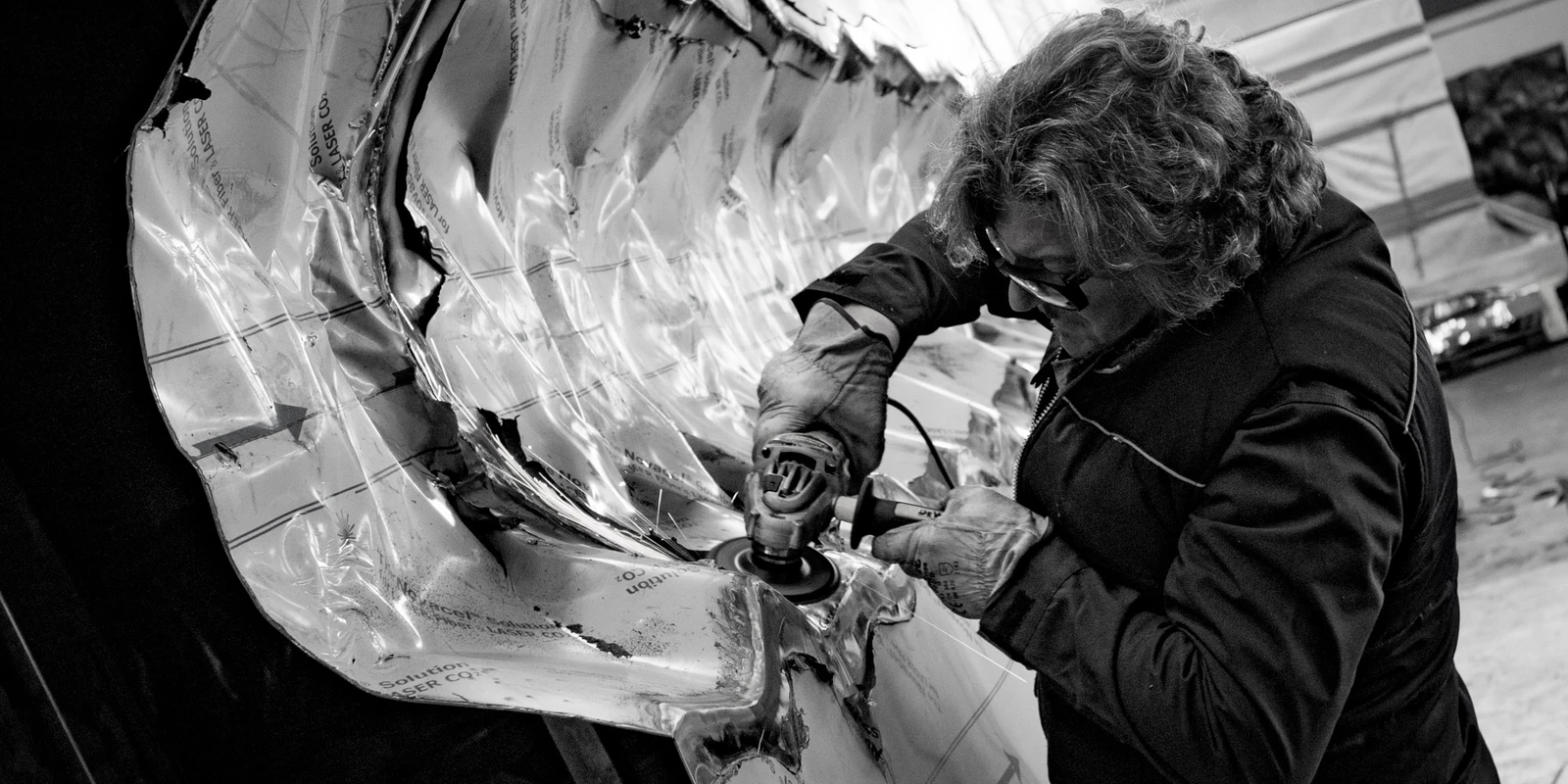
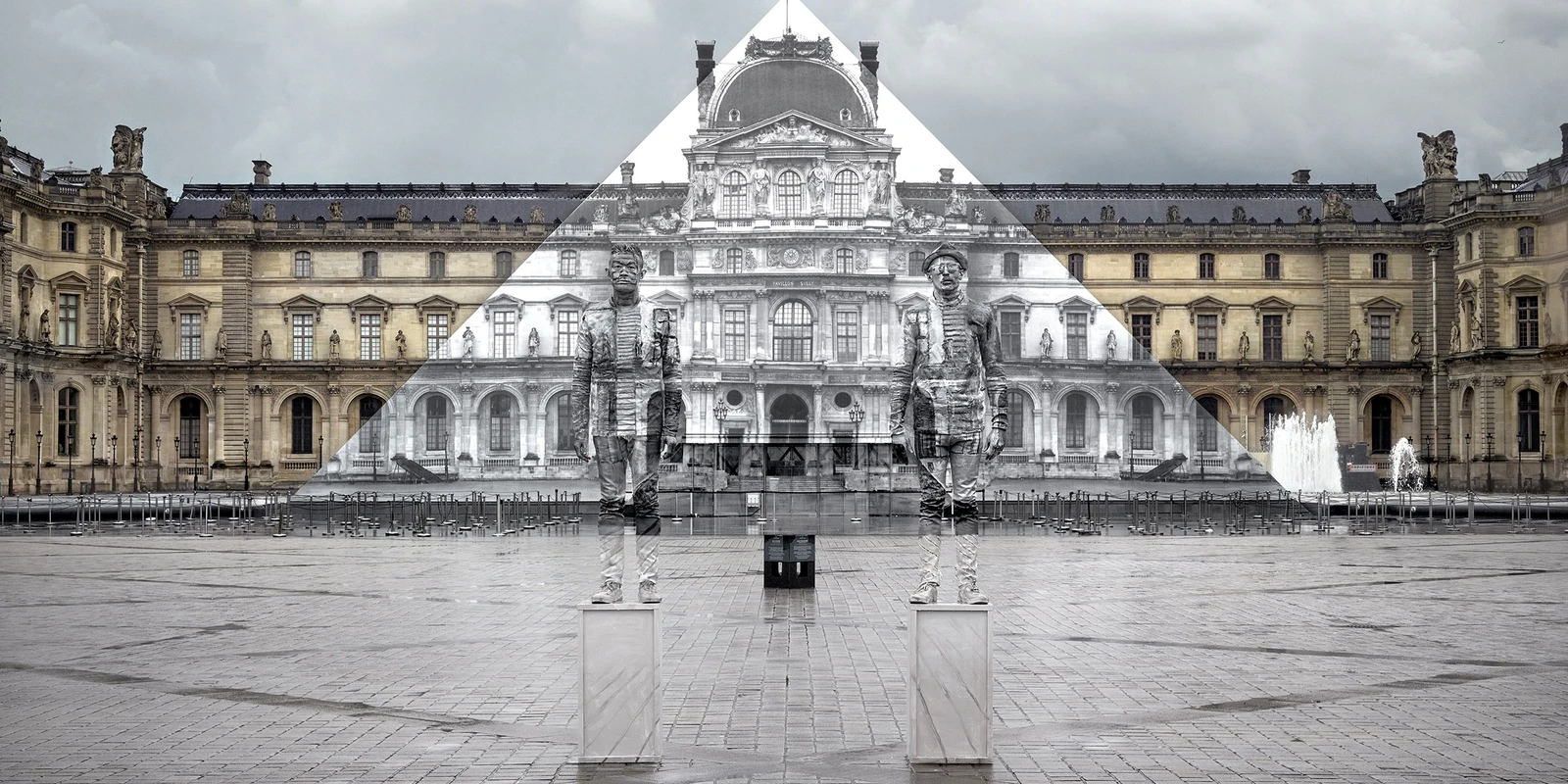
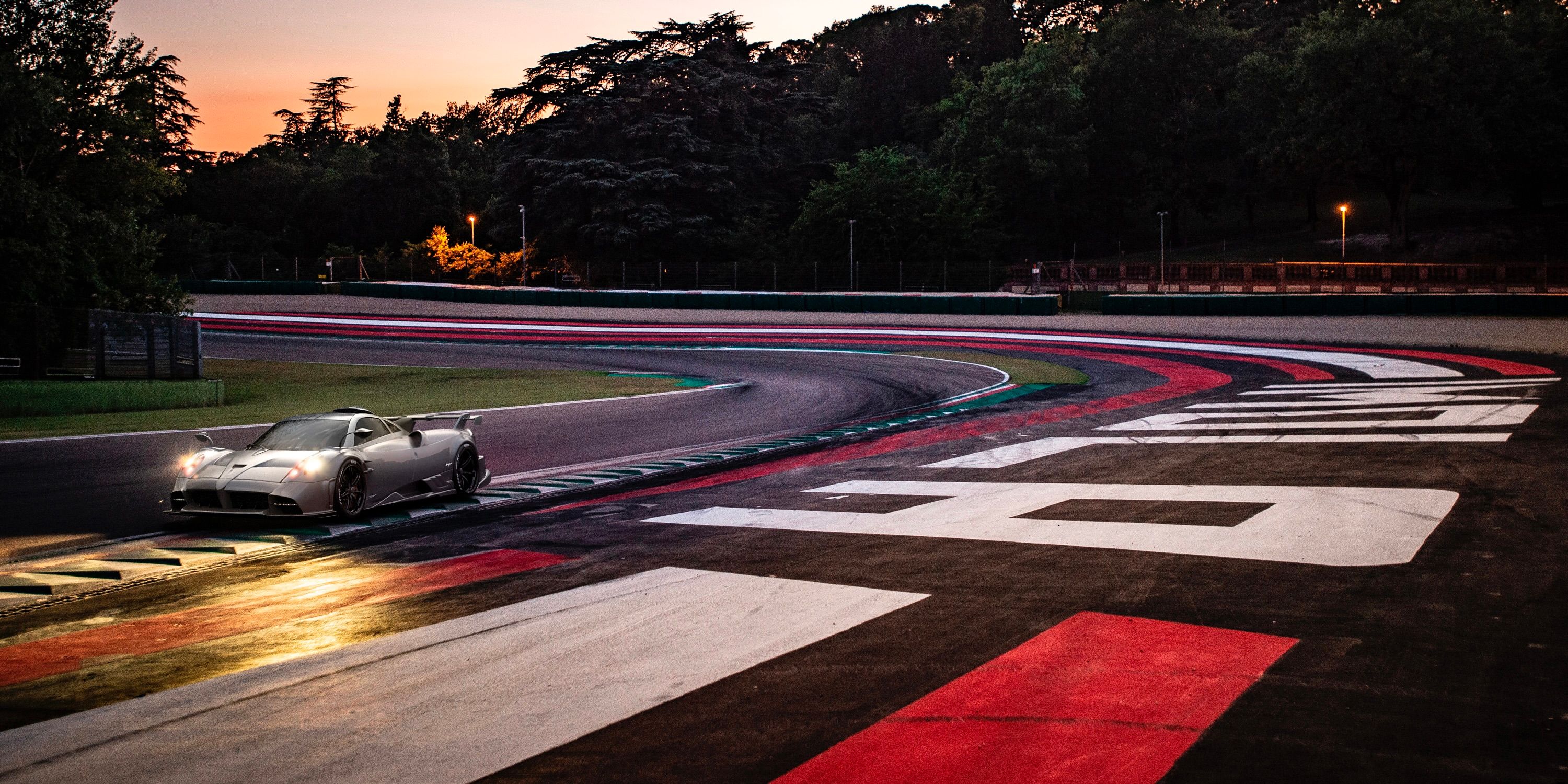
Pagani Automobili is today one of the most renowned sports car manufacturers in the world. Founded in 1998, the company was conceived by the Italo-Argentine creator Horacio Pagani, who had been inspired by the lessons of the greats in the world of automotive, along with a life-long passion for beauty and scientific research. From San Cesario sul Panaro, Modena, where it all began, the technical precision and creative performance of Pagani Hypercars has left many in awe all around the globe, finding a perfect balance between aesthetic and function, a philosophy inspired by Leonardo da Vinci which rests at the core of this company’s values. In this small portrait of Horacio Pagani, in conversation with the racing driver Federico Crozzolo and the founder of Shot magazine Alex Amok, we speak of the history of a dream, the great inspiring Italian masters and the quest that carries on towards the future. Here we catch a glimpse of the soul and mind behind the myth of Pagani.
Alex Amok: Today we have the pleasure of talking with the founder of Pagani Automobili, defined as ‘the last automotive artist’ of our time. How did your journey begin, and what inspired you to start?
Horacio Pagani: Let’s say that since a young age, I have always been very lucky as I was moved by great passion and curiosity. In spite of living in La Pampa, Argentina, I soon discovered the automotive world and realised I was fascinated by both its aesthetic and technical aspects. When I was around 10 or 12 years old, I used to buy a magazine called Automundo,which was mostly about race cars, but whenever a new model was launched by Lamborghini or Maserati they dedicated few pages to them. I increasingly became interested in this type of vehicle and started creating drawings and little models, sometimes even made out of Nesquik tin cans, but always with a back engine. This was also the common denominator of Lamborghini, Ferrari, Maserati: they were all made in Modena. I used to tell my mother, who had a profoundly artistic spirit, ‘Mum, I will go to Modena to design cars’. Somehow, even from a place as distant as La Pampa, I knew there was an energy in that place that could attract people from very far away, leading them to do what we are still doing today. What has been created in this area, by those who wrote history and those who are less known, has created a magic energy. It is important to realise that we are here because of what other people have left behind them in the last hundred years.
AA: Who inspired you to ignite your creativity?
HP: Another important thing that influenced my personal and professional life is an American magazine that my father used to read, Selezione dal Reader’s Digest: here I first read a quote that Leonardo Da Vinci wrote over 500 years ago, on how science and art are two disciplines that can walk hand in hand. For a young boy who had a natural inclination for creativity, this opened up a whole new world, which was the path I wanted to tread. This encounter with Leonardo was crucial and he has been my mentor for over 50 years now. I have a collection of over 500 books about him that I continue to read and discover almost every day. Leonardo helped us realise that beauty can become functional and I believe that in our work, rather than focusing on one single detail, we try to apply this to the whole creation. This search for beauty must always be married to a confrontation with the scientific realm.
AA: So it seems that your design is influenced by the two branches of Italian history, linking the great artistic masters, such as Leonardo da Vinci, and the technological masters of the modern automotive industry.
HP: Yes, I have a great passion for design in general. When I was 18, in Argentina I opened a little workshop where I designed the most varied things that people asked for, from stools to caravan pick-ups. Now we also have a division within our company, called Pagani Arte, where we are designing private jets and even a line of furniture. The sector is so vast and when you are curious about it, it can take you to many different sectors. If you only focus on motorcars for example, you risk missing out on many other enriching possibilities.
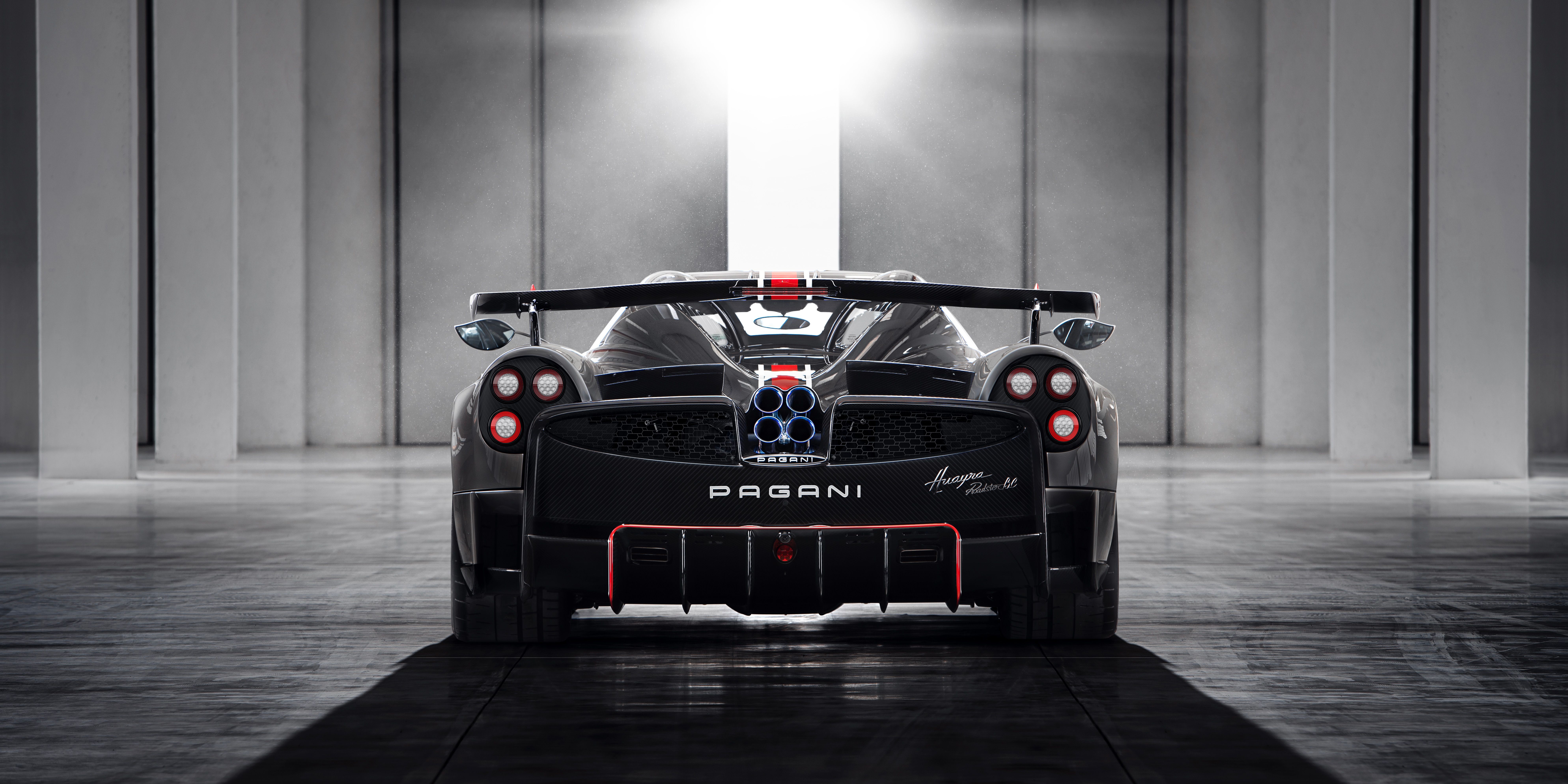
AA: I remember watching an interview and I was impressed by the way your company focused all its precision and care on one simple bolt, almost surgically. That’s what captured my attention the most, something that is so small and invisible yet becomes the uniqueness of a product.
HP: I think that at the start it wasn’t an easy thing to communicate to our clients, as people are used to the performative side of a car, beyond the emotional side. Today, as our brand is 22 years old, our client is prepared to spend much more money on a vehicle because they are searching precisely for this as they share our philosophy. This is what makes Pagani: each vehicle is created with our bare hands and has its own personality, which requires time. We are very demanding with ourselves, but now our clients have also become as demanding as us, rightly so.
AA: Just another question before Federico moves to the technical aspects, as I am interested in the dream. When you started your business, what were you expecting?
HP: I had always had the dream of becoming a constructor since a very young age. Just think that when I was 12 years old, during the school year I would conceive of an automotive and design it. I would then wait until the school year was finished to create a small model of it. My friends at the time, who followed and supported me in my passion, impatiently waited for this model. I used to tell them: ‘This is the car I prepared for the Salon of Geneva, or Torino.’: I was so convinced about what I was doing all those years ago, that now I am basically still doing the same thing. I embraced this dream and worked every day to build it by gratifying myself. I believe it is important not to wait for the distant day we achieve something, in order to be happy or feel satisfied. I believe that each step we take on the ladder of life must already be a stimulus to be happy. If we wait for that moment in the future to be happy, we will feel unsatisfied with our daily work. On the contrary, if we employ the joy that lies within our small steps, it becomes a positive energy that fuels us, just like a car. For this reason, I think we should be happy for each day and night we live through. If your question is whether I believed Pagani would become what it is today, I would probably say no, as I wasn’t thinking about the bigger picture back then. For instance, my first automotive models were called ‘Mara’, for example, after the names of my mother Marta and my father Mario. When I had to give the company a name, I never thought about calling it ‘Pagani’ or feeing into any mania of grandeur. I wasn’t interested in this, but someone suggested the name to me so it was more of an external idea.
FC: Do you think that this transition may take away from the peculiarity of a car: the foundational motor and the soul of a vehicle? Will there be an emotional loss?
HP: I believe that the electric supercar is still a young project. Research must continue and there are already some electric cars that live up to expectations. Racing cars, although often distant from new technologies, will soon follow. As I was once told by a Formula 1 driver, the acceleration of these cars is incredible even though these are objects that weigh over 2 tonnes. Today, I think that the role of safety is not considered as much as it should be, as these vehicles can become very dangerous in the wrong conditions. Nonetheless, we must strive to use creativity and imagination to make electric cars as emotionally engaging as others. After all, even a bicycle has its beauty.
FC: Another thing I’d like to talk about is the success of one of your creations, perhaps the jewel in the crown: what elements have contributed to the success of Zonda, which has become the icon of your company?
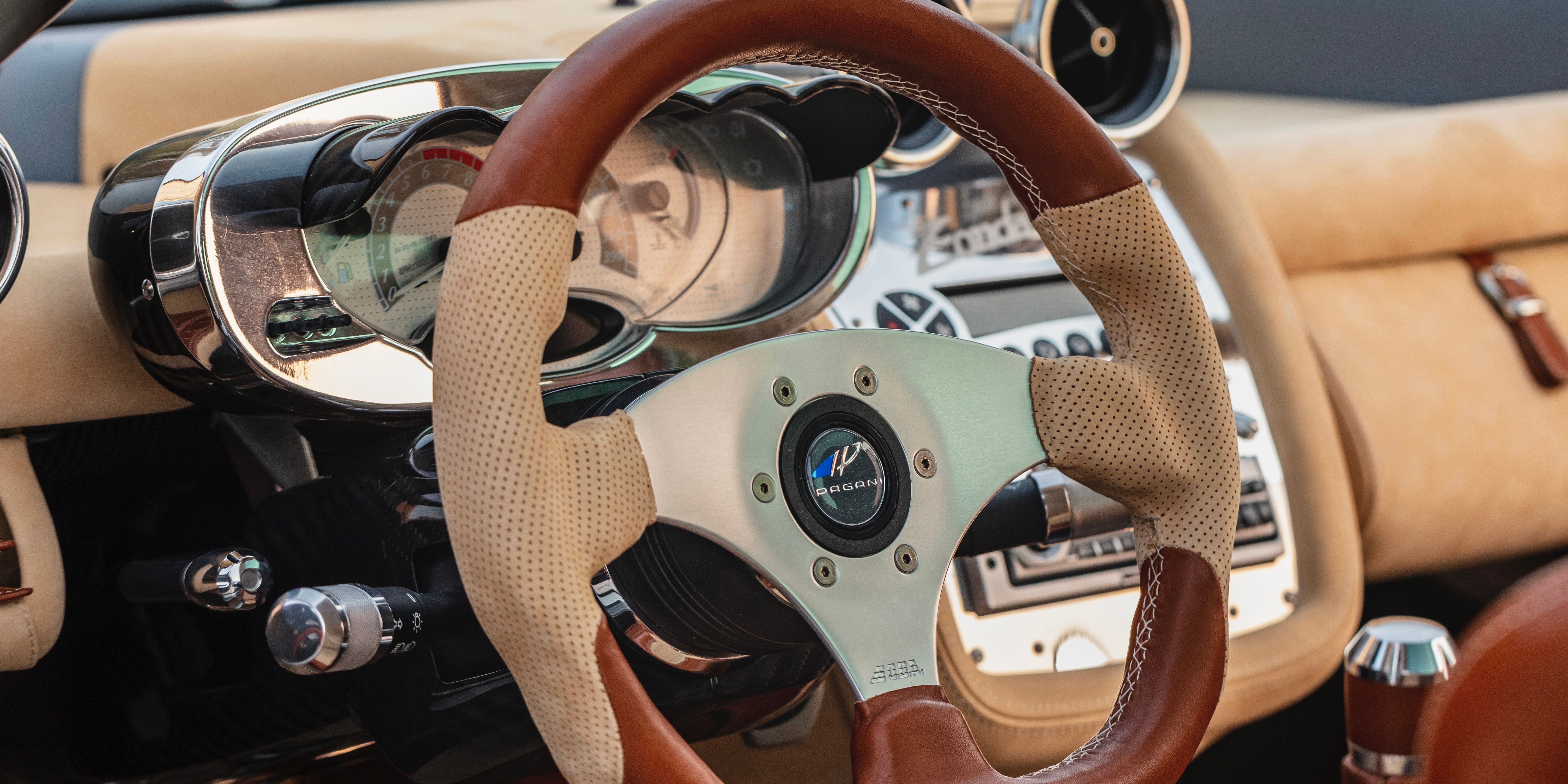
HP: I think that those who grew up with Zonda, stayed in love with Zonda. This was the vehicle that was defined by British journalists as the ‘hypercar’, and it was the source of this concept due to its lightness, innovative technology, manoeuvrability. Those who invested in it at the start, held onto it as its value increased throughout time. I believe this also a reason which contributes to the satisfaction of our clients for Zonda.
FC: On a more personal level, I would like to ask you about your relationship with the Argentine race driver Fangio, who has been a big part of your life. What was the most important lesson you learned from him?
HP: Fangio is one of those people who have, directly or indirectly, influenced my life. Amongst these I would also count people like Einstein or Theresa of Calcutta, who I didn’t have the opportunity to meet personally but have greatly impacted my formation: what characterises them all is their dedication, curiosity and pronounced sensibility, which makes them humble and dedicated to the common good. Fangio was like this: he had been world champion of Formula 1 five times, yet he was even loved by his rivals. He was much more important as a human, rather than a champion. He was a very good person, simple and modest just like my father, who was a baker, not a scientist.
FC: What are the values that you seek and that move your company’s line forward every day?
HP: As I mentioned earlier, we have the Leonardesque aspiration of bringing art and science together, we try to make the clients our main employer, and we wish to keep rigorously following these values which have so far determined the success of our work. We use the word ‘colleague’, as we do not like creating hierarchies within our occupation. As you may know, the Italian or Argentinian mentality is quite egocentric, which doesn’t promote collaborative teamwork. The German work ethos is much stronger and consistent than the Italian, simply because they are better at working together. If there is not a collective change in the way we work, we will not go far. Additionally, we should learn to respect and venerate our history: as ours is extraordinary, we must listen to this through the elders and those who have lived and suffered. We must always remember that even the mountains come to an end: we must cultivate what has come before us.