Firetti Contemporary has established their place in the Dubai art scene with their debut opening show beginning on 22nd March 2021. The gallery aims to be a platform where art and creative concepts align from the region and beyond, encouraging global engagement through the creation of meaningful and sustainable collections. By representing both established and emerging artists from all over the world, Firetti Contemporary strives to build a multidisciplinary art space with a strong identity to an international platform. Bringing together like-minded individuals and pioneers of the artistic and expressive future, the gallery assembles a dynamic curation of works that encourage the importance of individuality as well as establishing collective alignment.By embracing the central place that art can play in sustainability and social issues, their mission is to become a vehicle for change, instilling values in our society through the inspirational power of art. These notions have already shifted into reality beginning with a solo exhibition by international sculptor Helidon Xhixha.
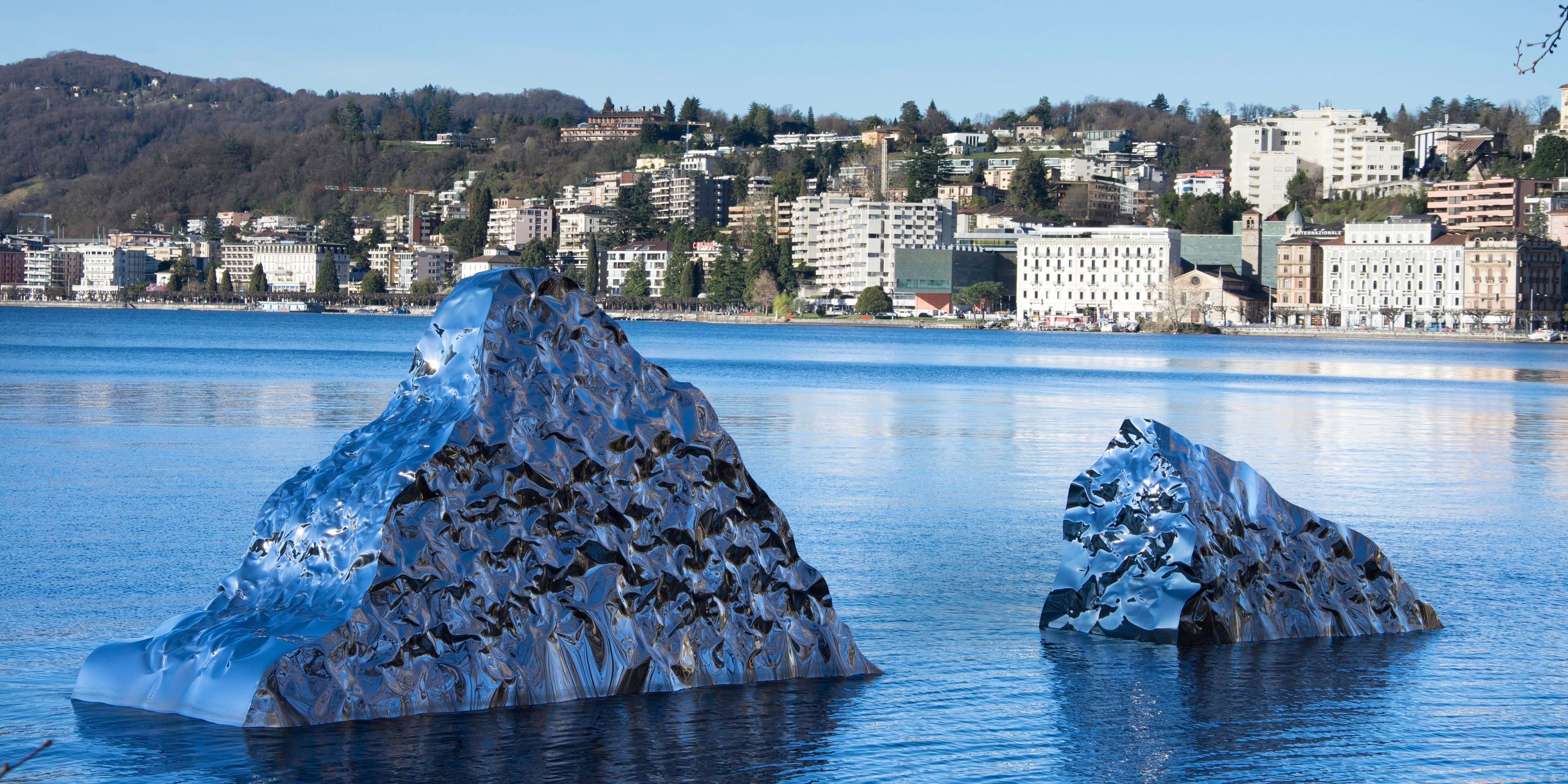
Recent decades have seen Helidon Xhixha rise to the top of the contemporary art scene, receiving high levels of praise from renowned art critics on an international platform. The vision and innovative technique of Xhixha, who lives and works between Milan and Dubai, translates into a monumental form of public art that redefines the relationship between sculpture and nature. His highly distinctive works adopt a skilful manipulation and distortion of metals and other materials, which enjoy exciting and playful relationships with external forces such as light and reflection. Helidon Xhixha’s unique sculptural language is often cited as being best received when exhibited outdoors on a monumental scale. Several critics have described Helidon Xhixha as one of the most interesting sculptors in the international contemporary art scene. His works are imbued with a rhythmic aesthetic tension, with surfaces and volumes all highly engaged in a solemn, spatial inquest. Xhixha’s role focuses in creating art that uses its beauty to incite positive dialogue on issues that need to be addressed. ICEBERG is by far the most symbolic and impactful work by Xhixha, in support of the awareness of global warming and the melting of polar glaciers. The piece provoked thoughts on the impact of climate change, a topic often explored by the artist. ICEBERG was presented at the 56th Venice Biennale in 2015, travelled around Europe and was installed in Lugano before being exhibited by Firetti Contemporary in Dubai.


How do you place sustainability in relation to architecture and spatial environments through your art?
My work is about observing architecture and its context. I aim to engage in a dialogue with the contemporary built environment and its surrounding nature that we all, somehow, base our identities on. The geography and architecture of my native Finland, where light and darkness play a big role and inform much of my work. I often include light as an element in my work, as it is an inherited aspect of architecture and space, intangibly connecting them to time and the cycles of nature. I am interested in exploring how light changes and influences the perception of forms in different materials, transcending physical, hard shapes and transforming them into a soft play of shadows and illumination.
What is the difference between artificial and natural places, in your opinion? How can the artist bring these together?
Artificial places cannot exist without a human touch; for example, most parks are artificial places. I think there are more and more artificial forests that are controlled by humans, who, for instance, choose what kind of trees grow there. Humans tend to like to control everything on this planet, including nature, animals, and even other humans, for our own profit.I think land art and environmental art, particularly Robert Smithson’s Spiral Jetty in the Great Salt Lake of Utah, are the perfect example of artworks that bring the artificial and natural together. Really, any art form that is in harmony with its surrounding environment or nature, including site-specific installations or performances. My own artistic interests circle around these topics, as well. For example, I have created site-specific installations on a frozen lake and on a rocky outcropping in a remote forest in Finland. My work 2x2 (Heartbeat) which deals with loneliness and isolation, was installed in 2013 and still exist in its original location in the forest. The piece consists of a life-size wooden house containing an animated light. It has been interesting to see how the perception of this work has changed with the transformation of the nature that surrounds it.
How did your approach to charred wood begin?Was it your first choice of medium in your artistic journey or have you experimented with other mediums prior?
Prior to working with charred wood, I used many other mediums, including photography, video, installation; and materials,such as casted concrete, sand, and charcoal. Earlier in my career, I photographed a range of architectural structures, such as abandoned houses I found in Finland and rudimentary, site-specific structures I fabricated myself, using dramatic lighting, often during the twilight hours or in darkness.Using the charred wood in my sculptures happened accidentally. I didn’t want to paint the wood’s surface, since paint tends to completely cover up the wood grain. I tried using vinegar to oxidize the wood, but that didn’t work out, so I just ended up charring everything. The rest is history, as they say. Charring wood also references my childhood in rural Finland, where I learned from observing nature. The Finnish aesthetic is all about simplicity and treating traditional materials in a natural way. It has a lot of similarities with the Japanese aesthetic called wabi-sabi, which is about finding the beauty in imperfection, the impermanent and incomplete, and believing in the fundamental uncontrollability of nature. Yakisugi, the ancient Japanese process of charring, is actually a technique used by craftspeople to preserve and finish wood with fire. It was commonly used in rural areas in Japan for the fences and facades of buildings to naturally protect the wood from decay, water, and insects, and to make them fireproof. It is now getting more and more popular in Western architecture.
Do you believe that art can have a significant impact onsociety and individual behavior?
Yes, I do. Art and culture have been part of our lives for millennia and there is no question about their impact on ourbehavior. Now, when the world is experiencing ecological, political, and humanitarian turbulence, we need art more than ever to remind us that things can be different. Art brings forth the possibility of change, which we should embrace wholeheartedly in order to save humanity from its worst impulses. That said, we not only need more art, but it also needs to take more risks. It is okay to say things that not everyone wants to hear.
Would you encourage aspiring and young artists to experiment with wood, given the fact that in the visual art world, sculptors have shifted towards the use of more classical materials such as marble and bronze?
Absolutely! There are so many ways that artists can use wood in their work.They can even combine it with other materials. However,I would also encourage artists, in general, to use more organic and sustainable materials, and recycle as much as possible. There are so many great materials thrown away that artists can use and experiment with.
How do you feel your artwork will be interpreted in the Dubai art scene?
First of all, I am so excited to show my new works at Firetti Contemporary in September! This is my first exhibition in the Middle East and I am really looking forward to showing these works to new audiences. My work will be shownin a group show alongside other artists who arealso working with sustainable materials. I will exhibit two large wall sculptures and two smaller ones, all made of charred wood. For me, there is something ominous and mysterious about these pieces—the charred surfaces reflect historical memories, the passage of time, loss and remembrance, decay and destruction, and emotions, such as loneliness and yearning. I think my work will be well received in Dubai, since the city is known for its innovative and bold architecture, which can feel a bit like an architectural puzzle. I am also interested in engaging more in the dialogue about sustainability and social issues with the audiences at Firetti Contemporary.