SHOT | Article Edoardo Tresoldi

Edoardo Tresoldi
Edoardo Tresoldi Shot Magazine Interview Issue 12
0:00
--:--

Edoardo Tresoldi

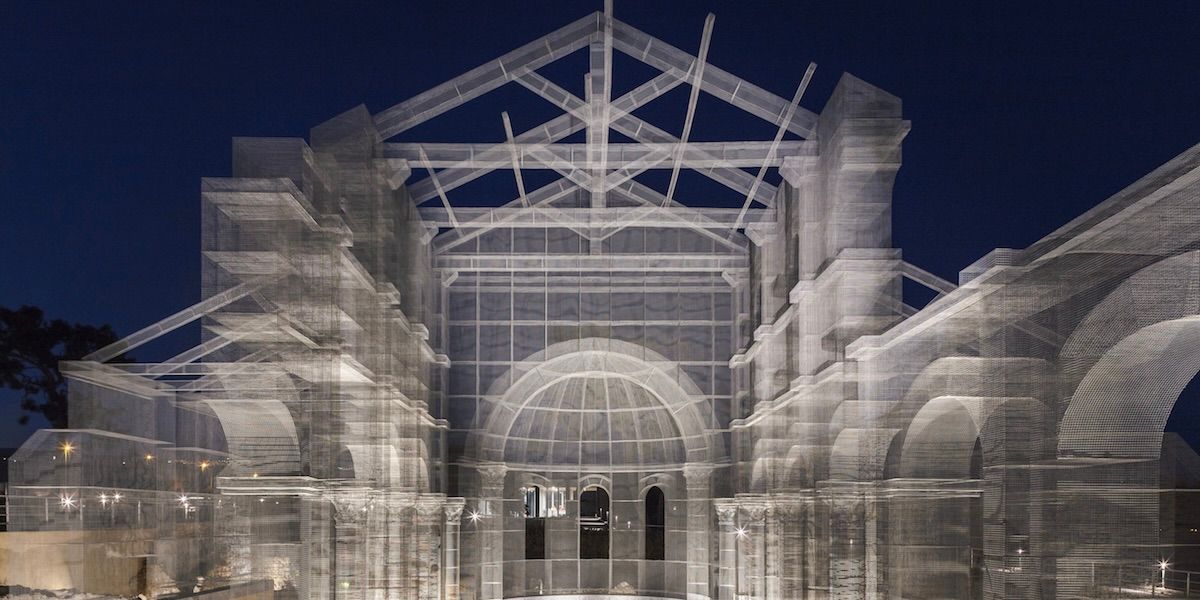
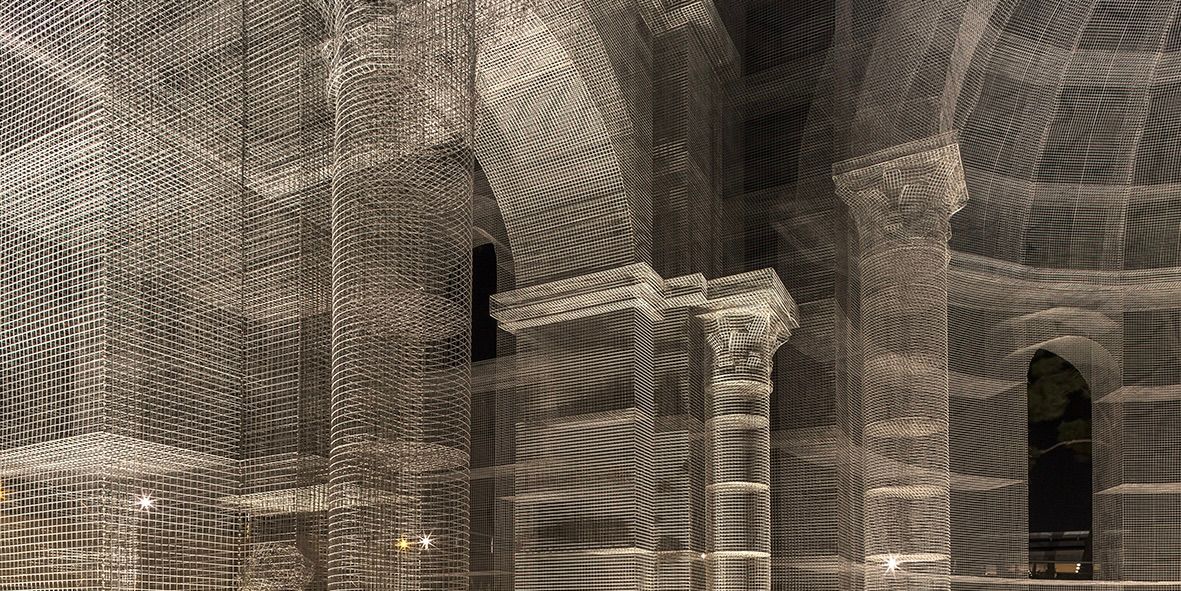
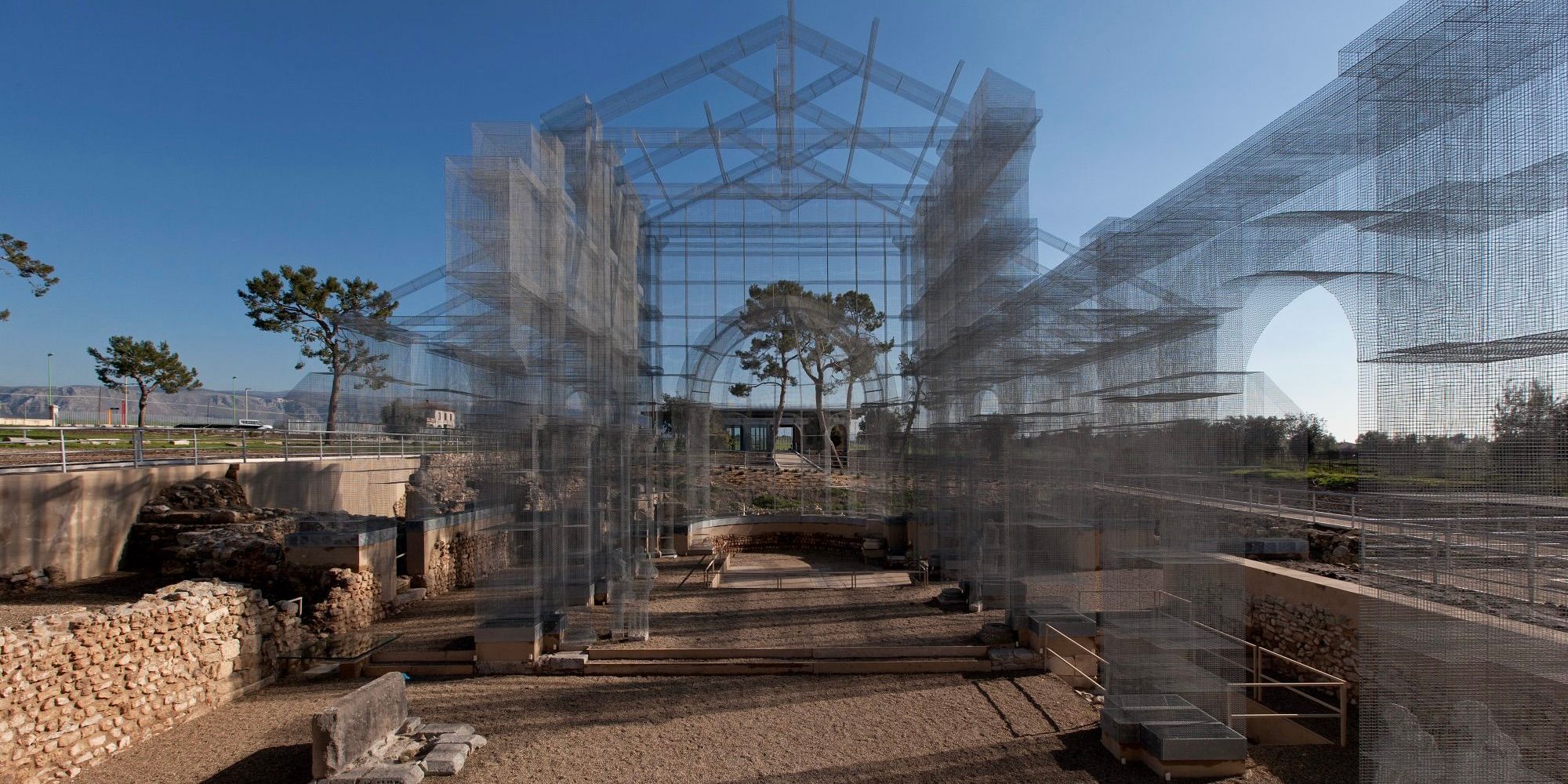
There is a new concept of matter growing in the world of visual art that is becoming constantly more and more powerful but somehow less tangible, a faint presence which enables new perceptive canals in our sensibility that learns to decipher the language of transparency and its powerful meaning, so neglected in the past. This rediscovery of absence is the main tool in the works of young artist Edoardo Tresoldi, considered among the 30 most influential European artists under 30 by Forbes. Born and raised in the countryside near Milan, he was inspired by the enormous open spaces that surrounded his childhood, and after gaining important artistic experiences in music, sculpture, cinema and scenography, he started imagining a parallel dimension suspended in time to fill the vastness with something very similar to a scaffolding of reality. Through his polyhedric experimentation, Edoardo soon reached a high level of success by trusting and following his artistic inclinations, which offer a peculiar view of reality in a different form, no longer based on space itself but founded on the relation between possibility and space. This is done through the attentive use of wire mesh and other industrial materials which create the skeleton of a new, transcendental dimension that doesn't collide with the material world, but rather intertwines to the point they mould into each other, creating an astounding synergy distinguished by the powerful dualism between the physical and metaphysical vision. His innovative language reaches a strongly
Edoardo Tresoldi Shot Magazine Interview Issue 12

Since 2013, the Italian artist focuses on public space interventions, and concentrates his research on the study of landscape and perspective, creating a structure that offers a dynamic experience for the viewer. In fact, all of his sculptures do not present a centre or viewpoint from which it is necessary to contemplate the work but, by offering a pure, metaphysical dimension, they engage with their surroundings which become a constituent part of the artwork and transforms man into the key to measure and discover its architecture. Through this experience, man is enabled not only to discover art and its relation with the world, but also to examine and analyse his own structure and his own relation with the world, under the dual dimensions. In this perspective game it is clear that the heart of Tresoldi's artwork lies in the deep observation of human nature in relation to the world and to art, and it strives to generate an individual or collective experience in which the observer can dynamically investigate the structure of the soul, the possibility and the metaphysics of his own nature. 

His works have been located in many public spaces, such as archaeological contexts, art festivals, music festivals and group shows and they aspire to encourage individuals engaging in these social situations to abandon the haste and anxiety of the urban world and sink into their meditative lessons of introspection.
Edoardo Tresoldi Shot Magazine Interview Issue 12

His architectural creations on the other hand, investigate the whole life process of the construction, which begins from a state of total absence of matter, followed by the union between space and matter in the physical building of its architecture. After this alteration of space, that from absence develops into the weight of physical limitation, abandonment takes place, in the desolate desegregation of the neglected structure that spontaneously crumbles and starts to dissolve according to its nature. The monument holds on its body the signs of its temporal existence before starting to prepare to leave its place, another state always referred to as absence of matter. In this phase the metaphysical ruin is introduced, in which the faded construction is brought back to life becoming the ghost of its past form, in a delicate presence that melts into its surrounding landscape. This evolution of architecture creates a strong visual oxymoron and begins an intimate dialogue between space and history which encounter for the first time in a totally innovative context. 

This connection unearths an eccentric harmony between the two faces of reality that conflict with each other and at the same time complete each other's cracks. Thanks to the concept of this dualism, Tresoldi uncovers this emblematic ghost of an exceptional dimension and celebrates the haunting beauty of transparence and the power of absence.
Edoardo Tresoldi Shot Magazine Interview Issue 12

More interesting

Mary Mattingly Shot Magazine Interview Issue 13

Mary Mattingly

As our environment is becoming more and more tainted with the remnantsof our consumption, it is essential to take a step back to reconsider how we engage with the objects we possess, remembering the journey that not only precedes them, but also will follow once they are outwith our control. Do objects come with responsibility? This is the question which defines our relationship with the material world and lingers behind the artistic devotion of Mary Mattingly, a visual artist based in Brooklyn, NYC. Her works range through photography, collaborative sculpture, performance and land art, expressed in some of her collective projects such as Swale, an edible landscape floating on a barge in New York for fresh food foraging; Public Water, a public artwork and campaign on the city’s water supply chain; or the Waterpod Project, exploring the possibility of nomadic and mobile water-communities. The building of these independent living systems repre-sents a need to reimagine the ways we will live together as a community in the present and future. Along with these urban ‘ecosystems’, Mattingly has also thoroughly explored the themes of sustainability, possession and waste, tracing the maps which underlie the life of objects that surround us every day. Through her series ‘Nomadographies and Wearable Homes’ and ‘House and Universe’, she was able to capture the nature of humankind as a constituent part of the environment, constantly roaming and transforming with it. Through the contrast of local and non-local spaces, whose interdependency is ever so evident in supply and waste chains, Mattingly presents an allegorical collection of photographs embracing the connection between climate disasters and consumption. In 2013, she decided to bundle almost all of the objects she possessed in seven large bundles which were pushed or rolled through the streets of New York. Afterwards, she began a digital archive of all these objects, emphasising their history before parting with them: from their extraction from the earth, to their journey into the hands of makers and distributors, to the impact of chemicals dispersed in the air and water. In her own words, each object is embedded with trauma. Though this practice, she wished to shed light not only on the weight that reduces our mobility, but also on the material relationships within the objects themselves and their impact on others. In her photographs, it becomes clear how the answer to the question is yes: we are responsible for our waste of time and the Sisyphean burden of objects we collect throughout our lives, but we are also able to take the lead and cultivate our lightness.

Helidon Xhixha for Shot Magazine Interview Issue 12 in collaboration with Firetti Contemporary Art Gallery Duabi

Helidon Xhixha

Firetti Contemporary has established their place in the Dubai art scene with their debut opening show beginning on 22nd March 2021. The gallery aims to be a platform where art and creative concepts align from the region and beyond, encouraging global engagement through the creation of meaningful and sustainable collections. By representing both established and emerging artists from all over the world, Firetti Contemporary strives to build a multidisciplinary art space with a strong identity to an international platform. Bringing together like-minded individuals and pioneers of the artistic and expressive future, the gallery assembles a dynamic curation of works that encourage the importance of individuality as well as establishing collective alignment.By embracing the central place that art can play in sustainability and social issues, their mission is to become a vehicle for change, instilling values in our society through the inspirational power of art. These notions have already shifted into reality beginning with a solo exhibition by international sculptor Helidon Xhixha. 

Liu Bolin Shot Magazine Interview Issue 14 Architecture

Liu Bolin

By disappearing into his artwork, the artist Liu Bolin is not simply becoming invisible, but transforming into the message itself. Individual human beings have been the smallest unit in the fabric of history since the very start: they are in a mutually constitutive relationship with society which is concomitantly produced and producing, preserving the power to shape relationships and be shaped by them at the same time. By working through these multiple layers of human life, Liu Bolin hones away the skin which separates individuals from the whole, scattering their presence within the natural landscapes of the melting Arctic, amongst sites of mass consumption or in front of the flags of the world. He hides the individual in places where he is most present: through this camouflage, his works of art and performance explore the relationships between the single and the collective, which appear to be in a fundamental contradiction in our current world order. Through photography, sculpture and performance, the artist explores the themes of development, technology, poverty and misery, denouncing the profoundly human issues that are often overlooked by the giant steps of our civilisation. Through his silent protest, Liu Bolin speaks with the loud voice of humanity.

Olafur Eliasson for Shot Magazine Interview Issue 12

Olafur Eliasson

These are the words of Iceland’s Prime Minister, as climate change begins to seep beneath the country’s glaciers and turn them to water. In 2018, in the midst of the urban jungle, twelve boulders of ice travelled all the way from Greenland to reside in a circle outside the Tate Modern, until the day they fully melted. The circle formation resembled the ticking imminence of a clock, the intimate space of a campfire, a little parliament of ice having to make an important decision. The installation ‘Ice Watch’ stemmed from a collaboration between artist Olafur Eliasson and scientist Minik Rosing, planted firstly in Copenhagen then in Paris and London, to raise awareness of climate change. The blocks had been cast off and harvested from a fjord near Nuuk, where they had already been lost from the ice sheet, before being sent to London as the testimonies of melting arctic ice. During their brief decaying life, many citizens paid a visit, touched and engaged with them in many different ways. The primary aim of this installation, in the artist’s words, was to contextualise the cold facts of the climate crisis in a public space and generate small physical dialogues, literally breaking the ice that lies between our disengaged attitude and the imminence of the issue. The clarity of the ice itself, in fact, was used as a raw material to communicate through crackling sounds, a wet surface or a luminous slab what is often translated into a science of numbers. By rediscovering the beauty of what is being lost, we can move empathy and create positive engagement.

Horacio Pagani Shot Magazine Interview Issue 12

Horacio Pagani

Pagani Automobili is today one of the most renowned sports car manufacturers in the world. Founded in 1998, the company was conceived by the Italo-Argentine creator Horacio Pagani, who had been inspired by the lessons of the greats in the world of automotive, along with a life-long passion for beauty and scientific research. From San Cesario sul Panaro, Modena, where it all began, the technical precision and creative performance of Pagani Hypercars has left many in awe all around the globe, finding a perfect balance between aesthetic and function, a philosophy inspired by Leonardo da Vinci which rests at the core of this company’s values. In this small portrait of Horacio Pagani, in conversation with the racing driver Federico Crozzolo and the founder of Shot magazine Alex Amok, we speak of the history of a dream, the great inspiring Italian masters and the quest that carries on towards the future. Here we catch a glimpse of the soul and mind behind the myth of Pagani.

Laura Lappi for Shot Magazine Interview Issue 12 Sculture

Laura Lappi

Born and raised in Finland, Lappi earned a Bachelor’s degree in Fine Arts in The Netherlands and currently lives and works on the cusp of Brooklyn and Queens. Lappi is interested in observing and examining how architecture and spatial environments influence our perceptions and affect reality; in particular, her focus is on the experience and emotional charge of different places and the fluid boundaries between reality and fiction. Her sculptural practice explores the relationship between physical spaces, man-made structures, and the human mind - the psychogeography of places. In her projects, Lappi aims to trigger a sense of bewilderment, uncertainty, and mystery by fabricating unexpected situations, shifting meaning and the viewer’s point of view to open a new sensitivity to our surroundings. Important themes within her work include historical memories, decay and destruction, and emotions such as loneliness and yearning, all of which are explored in the below interview with the artist herself.

© 2026 SHOT. All rights reserved.

Terms of UsePrivacy PolicyCookie Policy

© 2026 SHOT. All rights reserved.

Terms of UsePrivacy PolicyCookie Policy