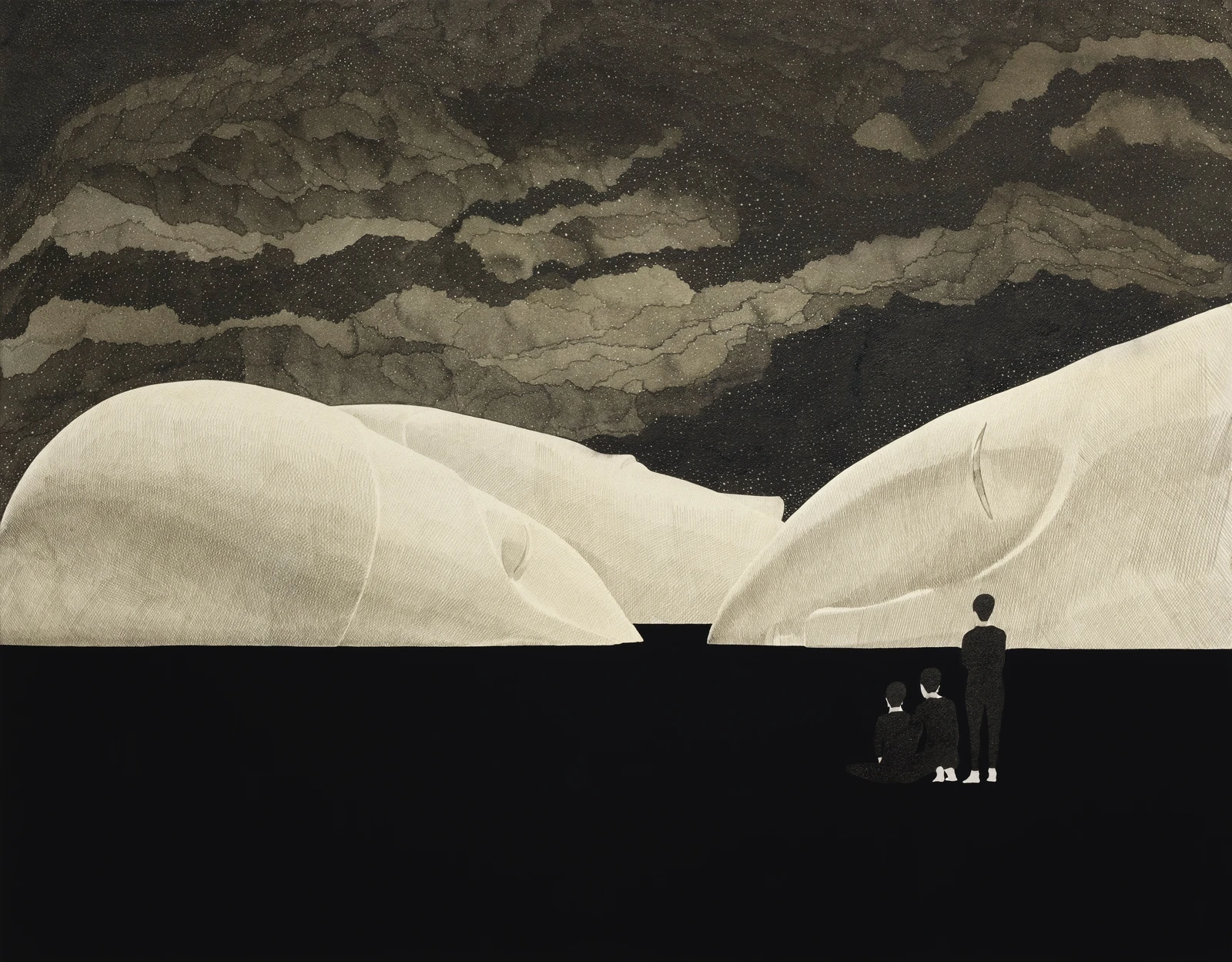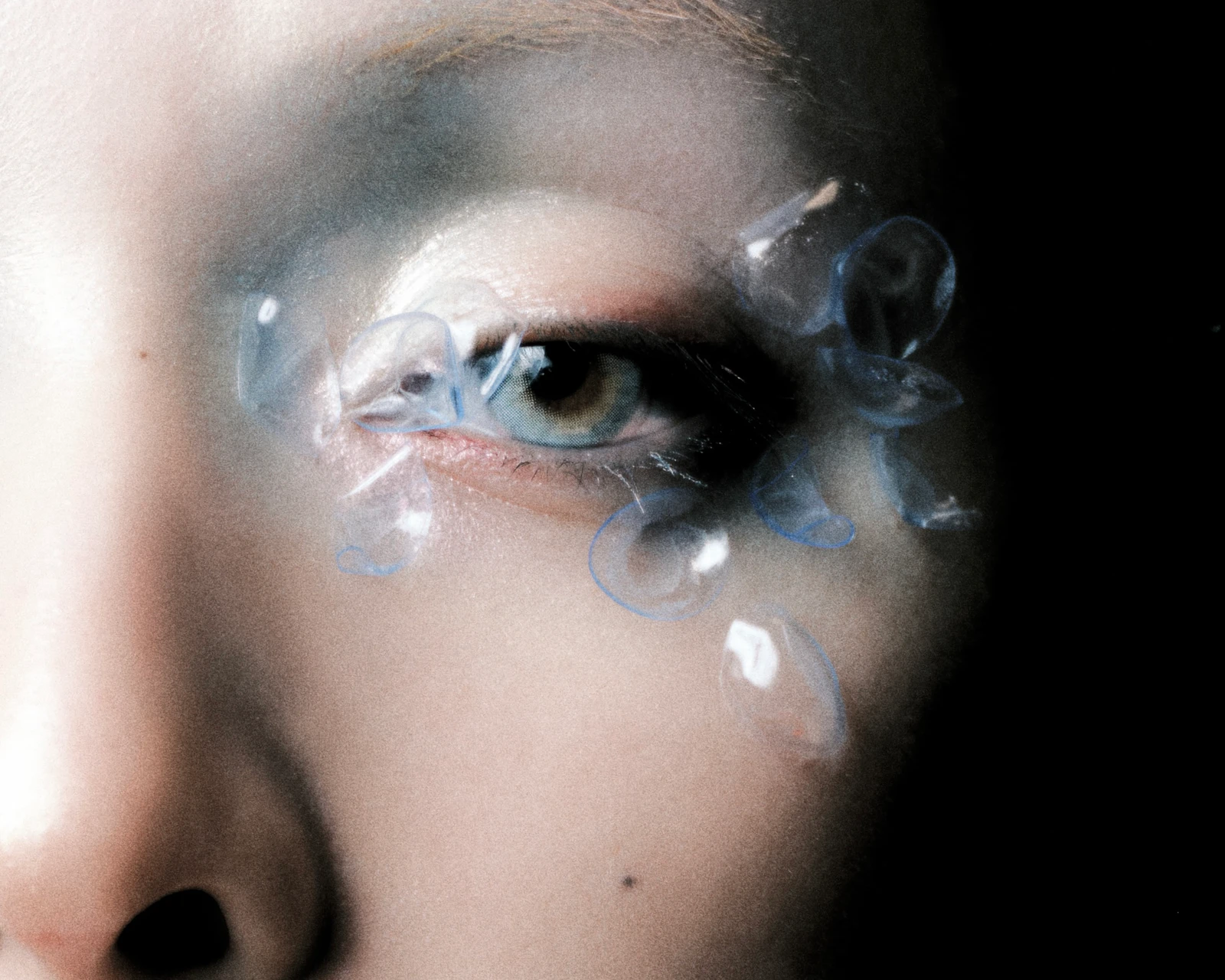
Visual artist and designer Andrés Reisinger creates works that inhabit the threshold between the real and the digital. His practice spans installations, objects and images, blending technology, artificial intelligence and a handcrafted sensibility, transforming spaces and forms into experiences suspended in time. Pink is a recurring signature in his visual vocabulary, a tool for emotional exploration that moves between memory and imagination. Rather than illustrating future worlds, Reisinger expands our perception of the present.


Your visual language blends technology, artificial intelligence, and a handcrafted sensibility. How do these worlds coexist? Are you more interested in maintaining control, or in being surprised by the unpredictability of the digital process?
I don't see these worlds as opposites, but as different manifestations of the same creative impulse. Technology allows me to model and reimagine with almost limitless freedom; craftsmanship brings history, tactility, and imperfections that resonate with our human nature. I'm interested precisely in that threshold where both languages converse. Regarding control and surprise, I believe the most interesting things happen in that delicate balance between both. I establish certain initial conditions, but then allow the process to reveal possibilities I hadn’t anticipated. The most valuable moments in my work often emerge from those imperfect translations, when an idea crosses the threshold from one medium to another and transforms into something unexpected. I don't seek to control every aspect, but rather create conditions for meaningful encounters between different languages and materialities.
Pink is a recurring element in your visual vocabulary. What does this colour represent for you, and why does it continue to return in your work with such necessary presence?
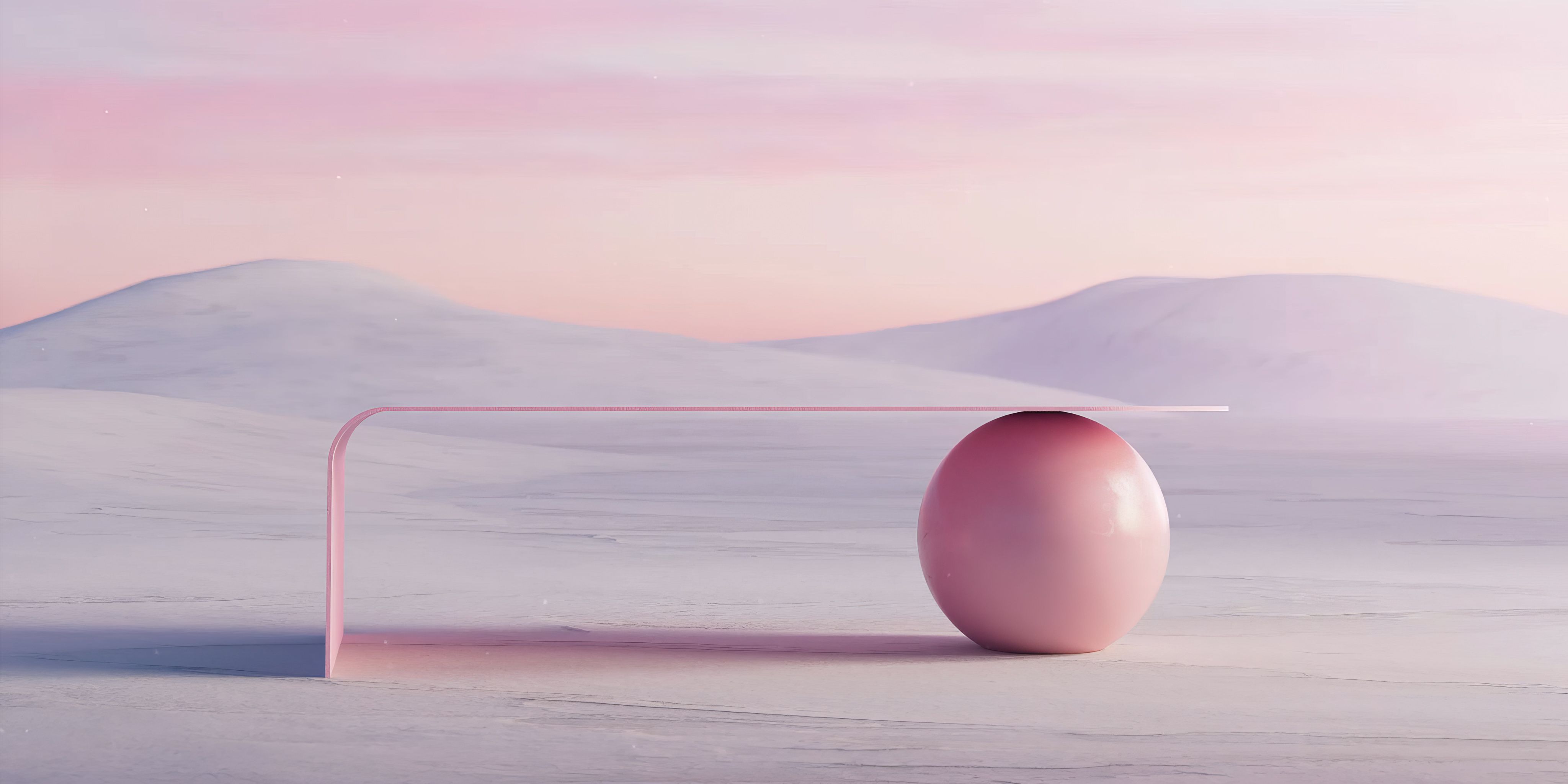
Pink has a unique quality of being simultaneously soft and vibrant, warm and slightly artificial. It's a color that exists in that threshold I'm so interested in: between the natural and the fabricated, the intimate and the scenic. I'm especially drawn to how pink transforms the perception of a space or object. It can make something monumental feel welcoming, or give an everyday element a dreamlike quality. It’s a color that immediately alters our relationship with what we're seeing, inviting a more attentive, more curious gaze. There's also something about pink that evokes a certain temporality, as if it belonged simultaneously to the past and the future. It has that ability to reference nostalgia and at the same time the utopian. This temporal ambiguity resonates with my interest in creating works that exist in multiple temporal dimensions, that cannot be fixed to a specific moment.
Your work moves between the conceptual and the physical, often pushing the viewer to question what is real and what is not. Blurring the boundaries of reality is a powerful gesture, but when those boundaries dissolve, what remains in your view? A sense of freedom, disorientation, or perhaps a new way of seeing?
What remains when these boundaries dissolve is a space of possibility. It's not so much absolute freedom or complete disorientation, but a state of heightened attention where our habitual categories are momentarily suspended and we can perceive connections that we normally overlook.I'm interested in that specific moment when our perception falters, when what we thought we knew becomes slightly strange for an instant. It's in that hesitation where the possibility of seeing differently emerges, of questioning our own frames of reference. I don't seek to permanently eliminate these boundaries, but to create experiences that remind us of their permeability, their constructed nature. It's a reminder that what we call "reality" is always a negotiation between different forms of perception and knowledge, never something fixed or definitive.
Do you remember the moment when Take Over took shape in your mind? Did it come from a precise image or from a conceptual urgency?
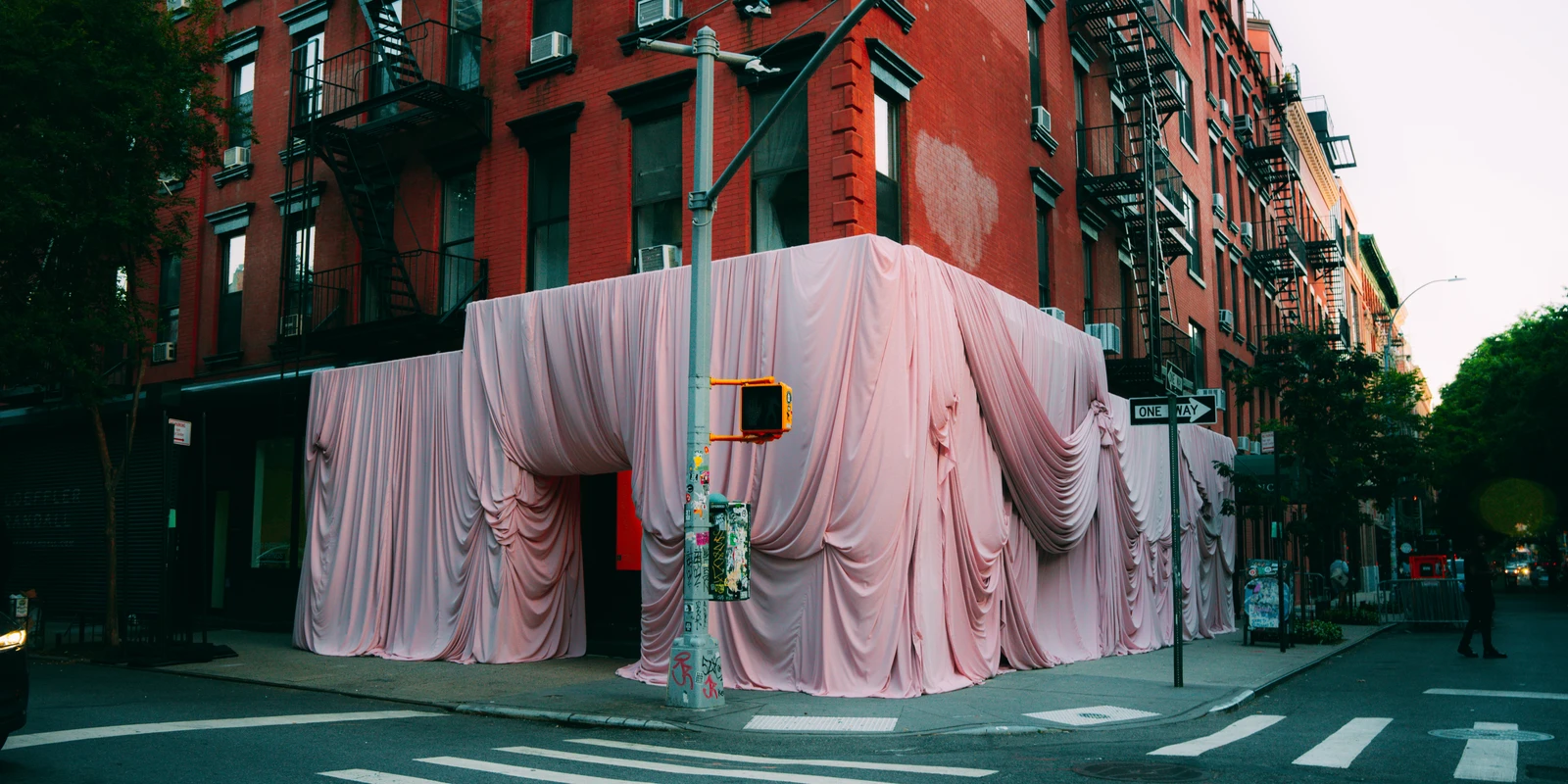
Take Over emerged from a continuous observation of how certain institutional spaces seem to resist nature, keeping it at a distance through strict aesthetic conventions. The idea didn't emerge as a complete image, but as a question: what would happen if the natural reclaimed these aseptic spaces, not violently, but through a soft yet insistent presence? It was the tension between these apparent opposites, the institutional and the natural, the controlled and the organic, that initially attracted me. The visual materialization came later, through a process of experimentation where I was precisely seeking that point of balance where the intervention wouldn't feel threatening, but would invite a reconsideration of the space and our relationship with it.


A digital work is, in some way, fully controlled. But when Take Over became a physical installation, it began to interact with context, audience, and time. What kind of transformation did you perceive? And how did the idea of making it tangible first emerge?
The most significant transformation was how the physical installation generated a completely different type of temporality. In the digital environment, the work exists in a continuous present; in the physical space, it began to breathe with its own rhythm: natural light transforming it throughout the day, spectators modifying their perception according to their movement in the space, small variations in textures responding to environmental conditions. The idea of materializing it arose precisely from the desire to explore these dimensions that only exist in the physical: weight, gravity, the way materials respond to time and contact. I didn't see the physical version as a simple reproduction of the digital, but as a conversation, a translation that would inevitably add new layers of meaning. The fascinating part was observing how certain qualities that seemed exclusive to the digital world—like a certain lightness, a certain luminous quality—found unexpected expressions in the material, creating a work that existed simultaneously in both worlds without fully belonging to either.
In your opinion, is there anything digital art cannot express?
Digital art has its own possibilities and limitations, like any medium. Perhaps what it struggles most to express is precisely unplanned imperfection, material resistance, that quality of the physical that is always in dialogue with time and natural forces.There's also a tactile dimension of experience that, although it can be simulated digitally, has a different quality when it directly involves our bodies. The way an object responds to natural light, how it subtly changes with the passage of time, that immediate physical relationship we establish with a material work. However, I don't see this as a definitive lack, but as part of its specificity as a medium. The digital can express other things that the physical cannot: certain types of transformation, scale, immediacy, accessibility. What interests me is not so much what each medium cannot do, but the dialogue that emerges when we allow different media to inform and transform each other.
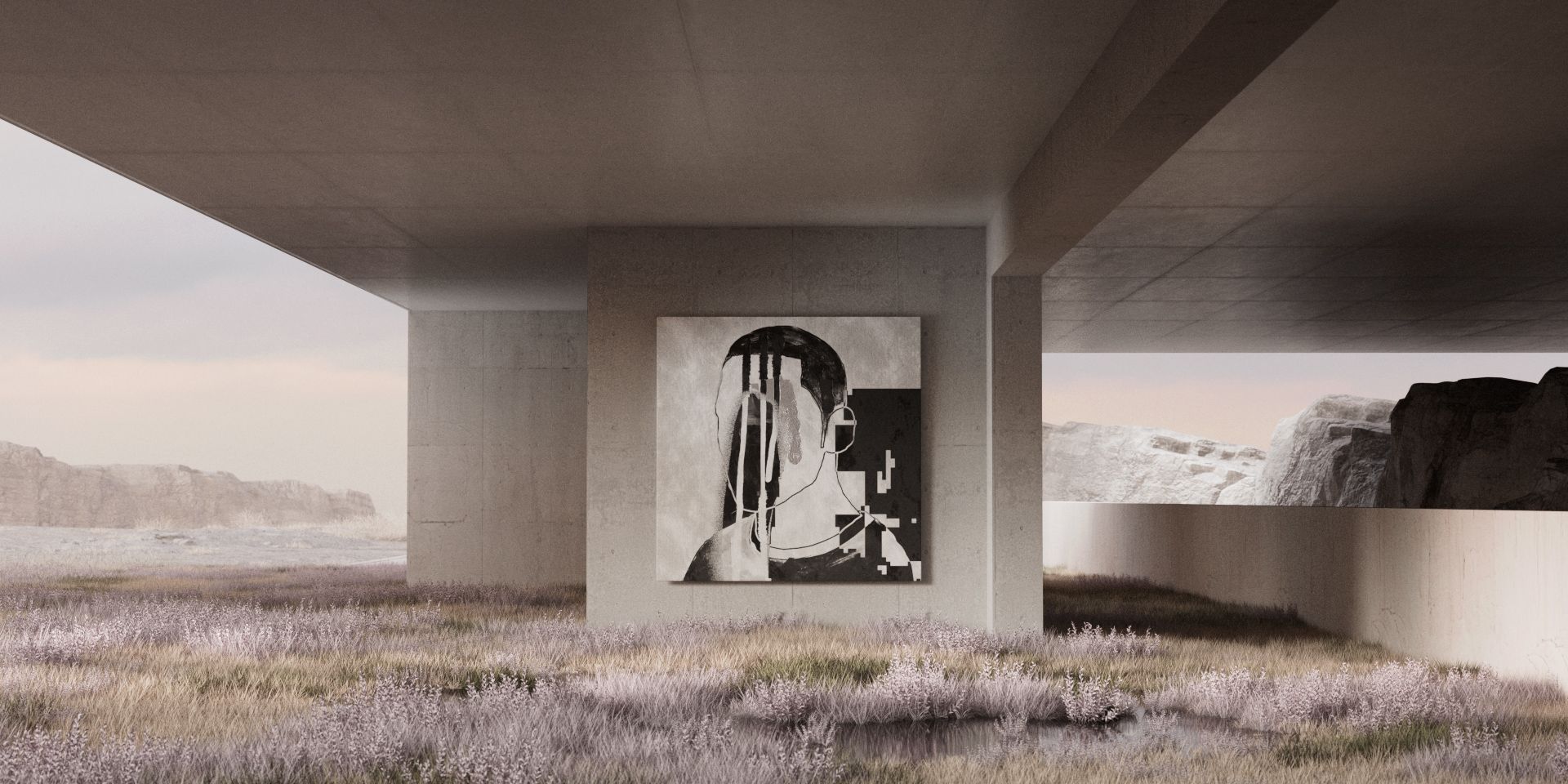
Your works evoke a sense of calm and suspension, as if they belonged to a time outside of time. Is it the future, a dream, or simply your way of pausing reality?
I don't see it as future, dream, or pause, but as a dilation of the present, an attempt to create spaces where different temporalities can coexist. I'm interested in that specific quality of certain moments where time seems to expand, where we can simultaneously perceive what was, what is, and what could be. This sensation of suspension doesn't seek to escape reality, but to intensify it, to allow us to experience it more fully and consciously. It's like a parenthesis that doesn't take us away from the temporal flow, but invites us to inhabit it differently, to pay attention to its textures and rhythms, to those interstices where different dimensions of experience meet. Perhaps it's my way of suggesting that the present is never a singular point, but a field of possibilities, a constellation of interwoven times and perceptions.
How would you define reality?
Rather than a closed definition, I see reality as a constant dialogue between different forms of perception and knowledge. It's not something given that we simply discover, but an active process of negotiation between what we experience sensorially, how we interpret it, and how these interpretations are shaped by cultural, technological, and personal contexts. What interests me is not so much defining what is real and what isn't, but exploring how we construct our sense of reality, how different realities can coexist and dialogue with each other. In this sense, I consider reality to always have something porous about it, permeable to the imagined, the remembered, the projected. My work often inhabits precisely those thresholds where different realities meet, not to determine which is more valid, but to create experiences that allow us to perceive the complexity and richness of our relationship with the world.
Does the future fascinate you or unsettle you? And what do you believe lies ahead for you, as an artist, in the coming years?
The future both fascinates and unsettles me simultaneously, and I believe it's precisely in that tension where its power as a creative horizon resides. I'm especially interested in those futures that aren't simply linear extensions of the present, but open spaces for different ways of perceiving, relating, and creating meaning.For me as an artist, I see the coming years as a continuous exploration of those thresholds between different media, realities, and temporalities. I'm working on projects that deepen the relationship between the digital and the artisanal, that explore how different technical traditions can dialogue with each other to create new expressive languages. I'm also interested in investigating more immersive and participatory forms of artistic experience, where the work isn't simply something to be observed, but an environment to be inhabited, that responds to those who experience it, that evolves over time. I don't seek to predict exactly what form these projects will take, but to remain open to the surprises and discoveries that emerge from the creation process itself.